Sodexo outlines menu planning, tracking and recovery tools that reduced institutional food waste
Loading...
Summary
Sodexo told a MassDEP organics subcommittee it uses menu planning, a Leanpath tracking system and food-recovery partnerships to cut waste and increase donations at colleges, hospitals and K–12 sites in New England.
John Fisher, deputy division director for solid waste at the Massachusetts Department of Environmental Protection, convened the organic subcommittee to focus on food waste prevention and donation on the midway review of the state’s 2030 Solid Waste Master Plan.
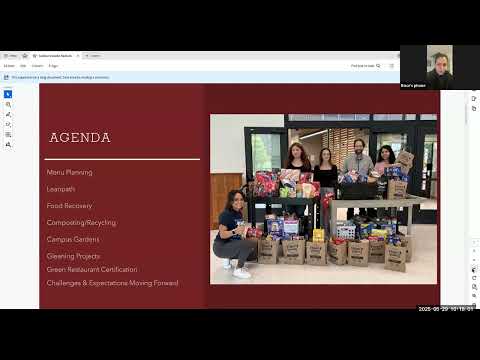
Rose Forrest, a Sodexo representative, described the company’s approach to reducing institutional food waste through menu planning, forecasting, in-house tracking and partnerships with food rescue organizations.
Forrest said Sodexo has moved toward 50% plant-based menu offerings as part of a carbon- and waste-reduction strategy, and that the company uses a recipe and menu system called Drive to require chefs to enter advance forecasts and post-production data so future runs are adjusted to reduce leftovers. “Currently, we’re at 50% plant based,” Forrest said.
For monitoring kitchen- and consumer-facing waste, Sodexo uses Leanpath scales at nearly all accounts to weigh pre- and post-consumer waste and record each transaction. Forrest said a Leanpath transaction takes about 30 seconds and produces data on cost and carbon impact that helps managers identify repeat waste. Sodexo reported roughly 1,000,000 pounds of “prevention” and about 1,400,000 pounds of recorded food waste across participating accounts in a recent reporting period; company staff told the subcommittee their internal target is a 50% waste reduction.
Forrest also described state-level “Mass Impact” metrics that combine velocity reporting and invoices into Power BI. She reported that, in a recent 12‑month period, Sodexo’s Mass Impact accounts purchased about 7% of food within Massachusetts (about $3,000,000) and roughly 20% within New England (about $8,000,000).
Sodexo pairs accounts with local food-recovery organizations and on-campus pantries and uses text alerts, meal-swipe matches and regional “growth collaborative” meetings to coordinate across K–12, higher education and health-care operations. Forrest noted campus garden and gleaning projects, composting and green-restaurant certifications at several Massachusetts campuses as components that support waste reduction and education.
John Fisher and other subcommittee members asked follow-up questions about the scope of Sodexo’s footprint in Massachusetts and about how to interpret Leanpath prevention metrics. Forrest said the 46-account figure she gave earlier referred to universities in New England and estimated Sodexo’s Massachusetts presence across hospitals, K–12 and higher education “gotta be close to a hundred” accounts, while cautioning she was guessing without checking company records.
The presentation closed with Sodexo staff describing communications and training challenges—especially multilingual frontline training and aligning diverse institutional operations—and noting work this summer to strengthen marketing and training materials for the fall rollout.