Get Full Government Meeting Transcripts, Videos, & Alerts Forever!
Get email alerts on the Visa Policy China topic
No spam. Unsubscribe anytime.
State Department says it will increase visa scrutiny for Chinese nationals, gives few public details
Summary
A State Department spokesperson said the department has notified Congress of a reorganization and announced new visa policies that will increase scrutiny of Chinese nationals, including some students and researchers, but declined to specify criteria or timelines.
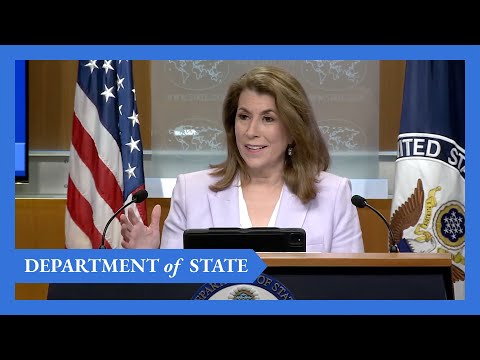
A State Department spokesperson told reporters on Oct. 11 that the department has begun a policy to increase scrutiny of visas for Chinese nationals, including some students and researchers, and will revoke visas “as warranted.” The spokesperson said the department had notified Congress of a broader reorganization and that the visa actions are part of an effort the administration described as putting “America First.”
The spokesperson said the department will not publicly describe the specific methods or criteria used for visa vetting, citing privacy and national security. “We don’t give details about what our methods are regarding visas,” the spokesperson said. “Every prospective traveler to the United States undergoes interagency security vetting.”
The remarks came after reporters pressed for specifics about which affiliations with the Chinese Communist Party or what “critical areas of study” would trigger heightened review. Reporter Matt asked for examples of what CCP connections or fields would make someone ineligible; the spokesperson replied that the department would not disclose those details and that such determinations vary by case. The spokesperson said “when we think of critical fields… we think about national security,” and that case-by-case decisions are up to adjudicators.
Reporters asked whether the new actions would exceed visa revocations from the prior administration, which the spokesperson acknowledged had revoked more than 1,000 visas for Chinese students and researchers during its first term but declined to provide firm numbers. Daphne, a Reuters reporter, asked what proportion of the “hundreds of thousands” of Chinese students in the U.S. might face revocation; the spokesperson said she could not answer and warned against relying on specific counts because consular affairs does not disclose detailed issuance or revocation numbers.
The spokesperson said the department will issue more guidance to posts and that some internal social-media vetting guidance had been leaked; a timeline for publishing expanded guidance was not provided. On operational questions, the spokesperson described the visa process as a two-step workflow—applicants submit an application and then obtain an appointment for an in-person adjudication—and encouraged applicants to keep checking the online appointment system if slots are not immediately available.
The spokesperson also framed the policy as part of broader concerns about exploitation of U.S. universities and theft of research and technology, saying the United States “will not tolerate the CCP’s exploitation of US universities or theft of US research, intellectual property, or technologies to grow its military power.”
No new legal standard, statute, or specific regulatory citation was provided during the briefing, and officials declined to name particular fields or affiliations that would trigger revocation. The department described the actions as a national security measure applied through existing visa adjudication processes and said more detail would be released in the coming days or weeks as appropriate.