Get Full Government Meeting Transcripts, Videos, & Alerts Forever!
Get email alerts on the Lumber Grading Pilot topic
No spam. Unsubscribe anytime.
House approves pilot lumber‑grading certification to help small mills, landowners
Summary
The House passed Senate Bill 10 61 to create a pilot lumber‑grading training and certification program (OSU + DCBS) so small mills and landowners can grade lumber for certain residential uses; debate centered on a roughly $53,000 OSU start‑up cost and whether the bill should have gone to ways and means for an appropriation.
The Oregon House on June 2 approved Senate Bill 10 61, a bill directing Oregon State University, in consultation with the Department of Consumer and Business Services, to establish a pilot lumber‑grading program that would train and certify individuals and small sawmills to self‑grade lumber for use in structures governed by the Oregon Residential Specialty Code.
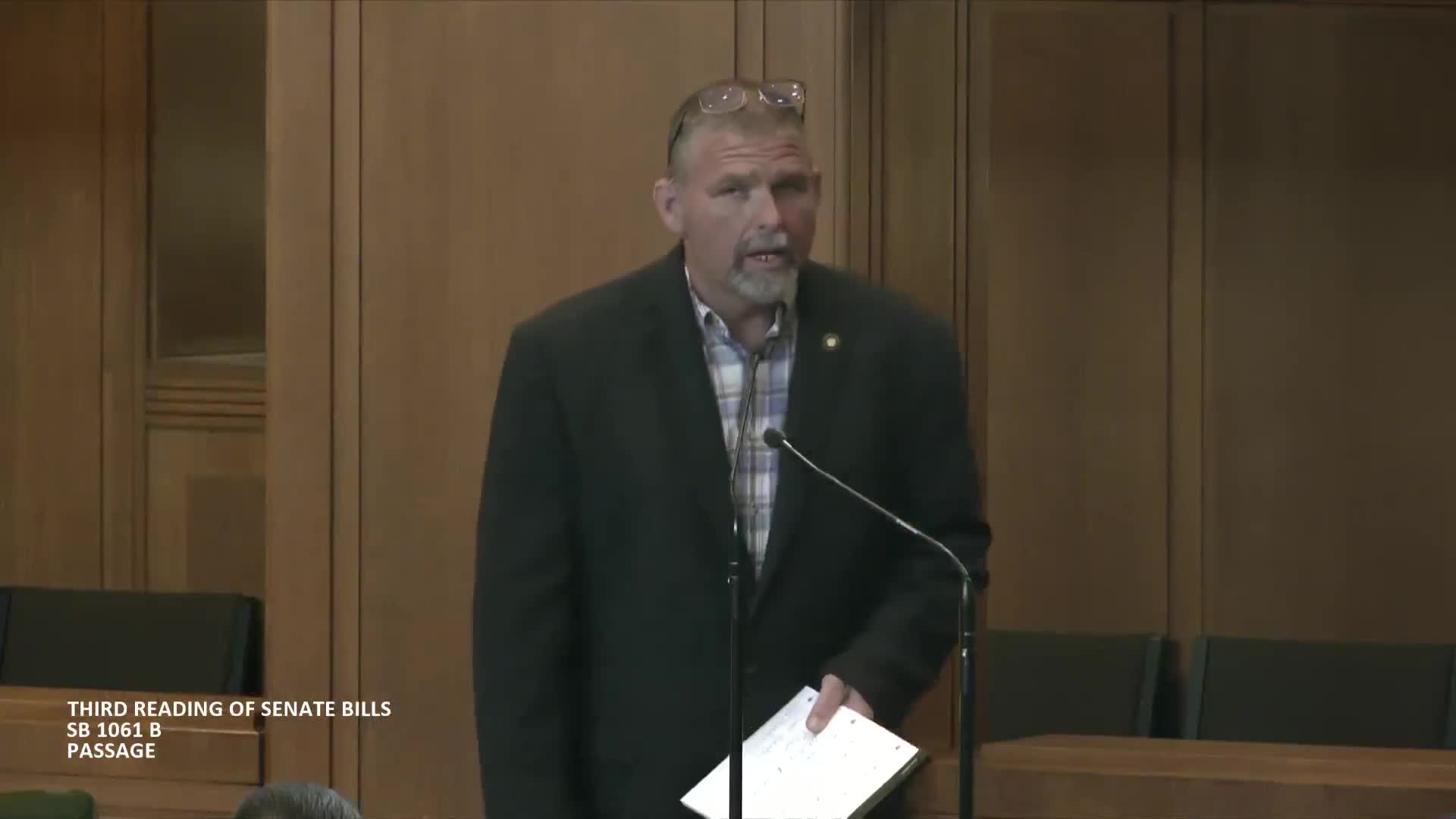
Representative Owens, speaking in favor, said the pilot is intended to help small woodland owners and rural communities add value to locally harvested timber and reduce barriers to using locally milled lumber. “This would allow a person to go get that training and come and certify that their own lumber for the use of a building or structure in a residential code,” Owens said on the floor, describing required disclosures and deed recording procedures the bill would create.
Representative Scharf raised procedural and fiscal questions, noting that Oregon State University told committees it does not currently have staff trained for lumber grading and estimated implementation costs of about $53,021 for an initial pilot (travel, honoraria, meeting costs and OSU personnel). Scharf said that without a state appropriation OSU would need to divert resources from other extension programs or counties would be asked to cover costs, and argued the bill should have been referred to Ways and Means to consider funding. “OSU requests that you send senate bill 10 61 a to ways and means so that an appropriation could be considered,” Scharf said, quoting the university’s letter.
Supporters including Representative Helm and Representative Osborne defended the pilot as a modest program that could become self‑funding by charging training fees and as an economic development and rural empowerment measure. Helm disclosed he personally mills his own lumber and described historical practices of building with ungraded local lumber; other supporters said the pilot could help small mills sell higher‑value products.
The House adopted the bill on third reading; the clerk declared Senate Bill 10 61 “having received the constitutional majority” and passed. Floor discussion recorded the OSU estimate of roughly $53,021 and the sponsor said program fees and county interest could help cover initial expenses.
Ending: Sponsors said the pilot is meant to be limited and transparent (recording disclosures at the county level) and that if successful it could be expanded; opponents asked for a funding review before statewide rollout.