Get Full Government Meeting Transcripts, Videos, & Alerts Forever!
Get email alerts on the Health Care Sharing Ministries topic
No spam. Unsubscribe anytime.
Committee hears competing views on regulating health‑care sharing ministries under HB 2,268
Summary
Supporters of HB 2,268 urged registration and disclosure requirements for health‑care sharing ministries to protect consumers; industry representatives argued the proposal is intrusive, raises constitutional concerns and that existing consumer‑protection laws and accreditation are sufficient.
SALEM, Ore. — Lawmakers heard sharply divided testimony on May 29 about House Bill 2,268, a bill that would require registration and public reporting by health‑care sharing ministries operating in Oregon.
Supporters told the House Committee on Behavioral Health and Health Care that ministries and other sharing arrangements often market themselves like insurance but are not legally required to pay claims or cover essential benefits; they urged the bill as a transparency and consumer‑protection measure. Representatives of the industry said the proposal would impose invasive reporting requirements, risk constitutional problems and duplicate existing consumer‑protection tools.
Fish Stark, executive director of the Center for Free Thought Equality, told the committee that health‑care sharing ministries “talk like insurance and advertise like insurance until the moment you actually need coverage.” He cited cases in other states in which members who believed they had coverage were left with six‑figure medical bills when ministries denied sharing, and said HB 2,268 would not ban ministries but would require registration, disclosure of exclusions and basic financial reporting so consumers can make informed choices.
Jesse O’Brien, policy manager at the Division of Financial Regulation at DCBS, told lawmakers the agency had no position on the bill but provided background: Oregon lacks statutory rules specifically for such arrangements and DCBS does not license or review them; its ability to act is limited unless an entity is transacting insurance or violates existing consumer‑protection laws. O’Brien said DCBS has taken enforcement action in past years against entities found to be operating as insurance, a process that required extensive investigation.
Angela Donnelly of Oregon Consumer Justice supported HB 2,268 as basic consumer protection that would require ministries to disclose material coverage limits and notify members in advance of major benefit changes. She said the current absence of mandatory reporting leaves regulators unable to determine how many Oregonians participate, how much they collect or how many eligible claims are paid.
Katie Talento, executive director of the Alliance of Healthcare Sharing Ministries, said the ministries represented by her group are religious charities and are not insurance. She said ministries facilitate voluntary sharing among members and that many ministries already post robust consumer notices, accreditation and audited financials. Talento opposed HB 2,268’s proposed reporting and fingerprinting requirements, arguing that Colorado’s reporting law (the model cited by bill supporters) produced misleading data and that the Oregon proposal could require disclosure of members, vendors and internal communications in ways that implicate free‑exercise and association rights. She also pointed to existing state enforcement tools, including actions by DCBS and attorneys general against bad actors.
Committee members asked about how ministries market their products and how members are recruited. Witnesses described online advertising and broker networks; supporters said broker commissions can be substantially higher for ministries than for ACA‑compliant plans, creating incentives to sell sharing arrangements to consumers who might qualify for subsidized insurance. DCBS said it receives occasional inquiries about ministries but often lacks statutory authority to act when a ministry is not transacting insurance.
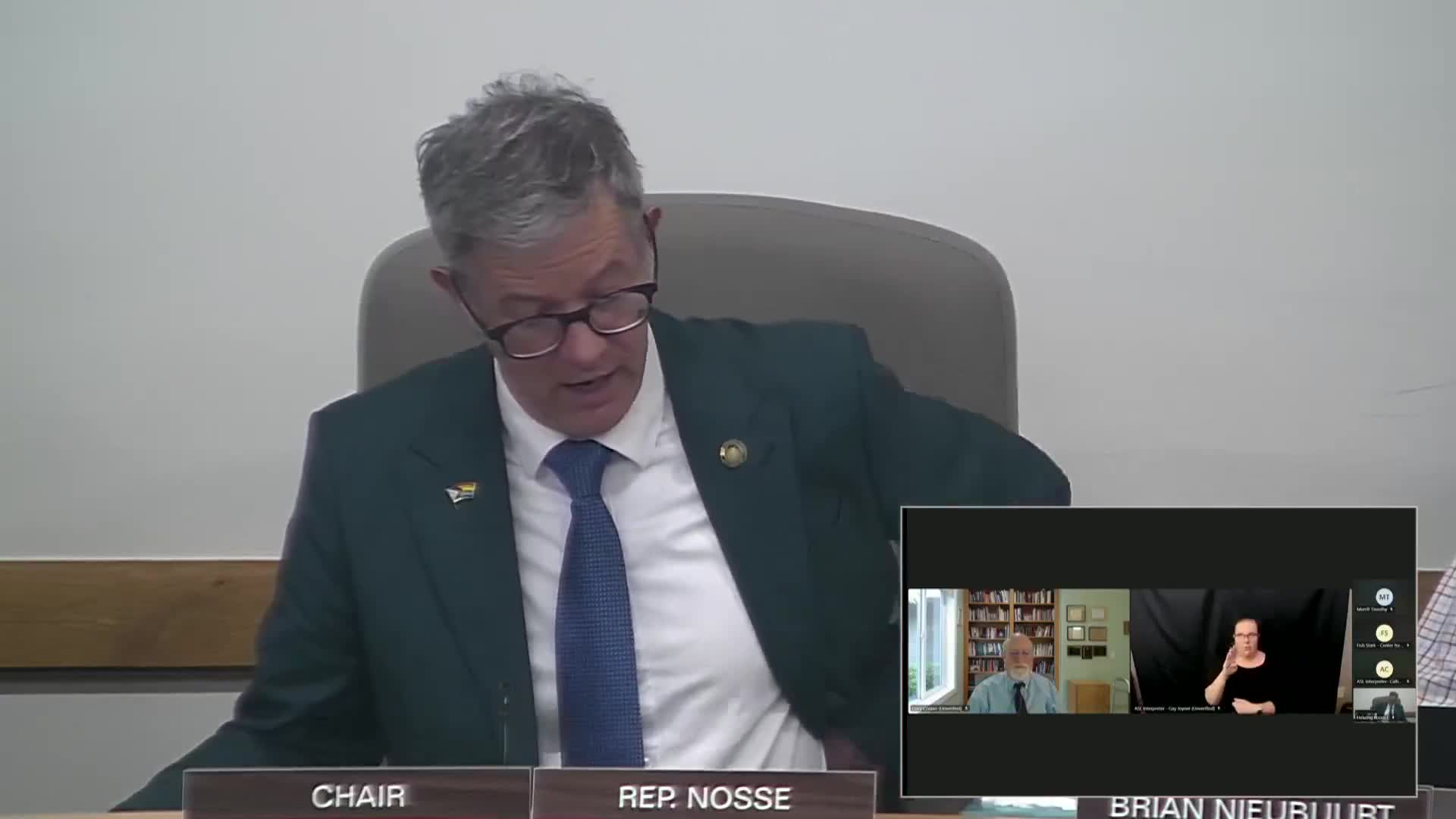
Chair Rep. Noss closed the informational hearing without advancing the bill and said the topic requires more time and study. No formal action was taken.