Get Full Government Meeting Transcripts, Videos, & Alerts Forever!
Get email alerts on the Economic Development topic
No spam. Unsubscribe anytime.
Fall River RDA approves $10,000 match for state vacant‑storefront tax‑credit application
Summary
The Fall River Redevelopment Authority voted to provide a $10,000 match to strengthen a state vacant‑storefront application that would allocate up to $50,000 in transferable tax credits toward filling long‑vacant commercial spaces in target downtown neighborhoods.
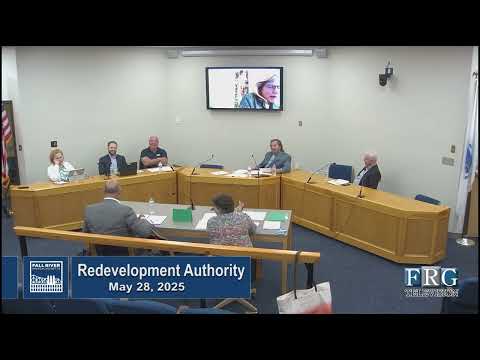
The Fall River Redevelopment Authority voted May 28 to provide $10,000 in matching funds to support a state vacant‑storefront “one‑stop” application that would allocate up to $50,000 in tax credits for projects to fill long‑vacant storefronts in downtown target areas.
The match, approved by roll call, is intended to make the authority’s application more competitive; the program provides tax credits to businesses occupying qualified storefronts and can operate like a reimbursement if a tenant cannot use the credits on their tax return. Sarah Page, a staff member working on the application, told the authority, “we are asking for 50,000 in tax credits,” and said the program now allows flexibility to use the full allocation on a single project if warranted.
Why it matters: the vacant‑storefront grant targets Pleasant Street, the North Downtown area and South Main Street, all areas the authority has prioritized for commercial revitalization. Filling storefronts is a central part of the authority’s downtown strategy and could leverage state resources to reduce up‑front costs for incoming businesses.
Details and how the match would work: Page said the state award would provide $50,000 in tax credits and that the local match functions as a contribution against any project that receives funds. The authority and board members discussed examples showing that a $10,000 match would typically represent roughly 20% of project funding if the full $50,000 is used, meaning the state grant would cover the remaining 80% for eligible expenditures. Page also said storefronts must have been vacant at least six months to qualify.
Questions from members focused on program mechanics and eligible uses. Board members pressed whether the funds would cover signage, equipment or only construction and build‑out. Page said the program primarily supports build‑out and related costs rather than likely equipment purchases, and noted property owners are required to contribute (for example, via rent relief or build‑out), per program rules she reviewed. She also said staff time would be shown as part of the local match and that businesses must provide receipts if they receive reimbursement from the Department of Revenue.
Administration and deadlines: the city’s housing department will play a role in reviewing applications and approving scores sent to the state. Page said local outreach will target neighborhood business owners, and partners such as the North Downtown Group and a “Love Your Block” fellow will help recruit applicants. The application deadline for this round is June 4, 2025. The authority approved the $10,000 match by roll call vote.
Next steps: staff will finalize the application materials and submit them to the state by June 4. The authority did not identify specific storefront recipients at the meeting; Page said staff are still mapping potential sites and will return with details if projects materialize.