Get Full Government Meeting Transcripts, Videos, & Alerts Forever!
Get email alerts on the Emergency Services Funding topic
No spam. Unsubscribe anytime.
Grayson County grapples with EMS funding, volunteer retention as Galax requests bigger share
Summary
At a Grayson County budget work session, residents, volunteer squads and county staff debated rising requests from Galax-area emergency services, discrepancies in accounting for county support, and long-term options including a fire/EMS tax or renegotiating an interlocal agreement.
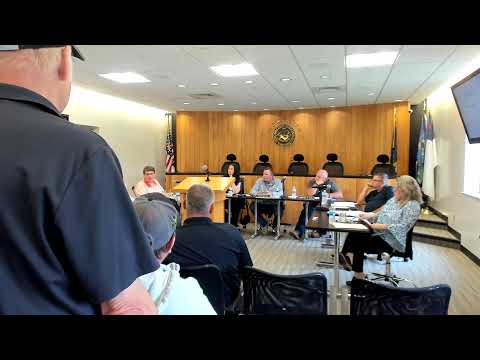
Ralph Norris, speaking for the county Emergency Services Commission, urged the Grayson County Board of Supervisors to reexamine how the county distributes direct funding to volunteer fire and rescue agencies and to address perceived disparities in support.
"I am here to speak on behalf of Grayson County Emergency Commission about the current funding and representation that each fire and rescue agency receives," Norris said during the public-comment period.
Norris and other speakers told the board that Galax-area agencies have received substantially larger increases in county support than other rescue squads. County staff presented line‑item numbers showing direct payments and other local support to rescue squads and to Grayson County Emergency Services (the countywide entity). The staff presentation cited the request from Galax-area emergency services for $423,575 in fiscal 2026 compared with a $150,000 request identified for fiscal 2023; staff also reported larger increases in other local support lines for rescue squads over a multi‑year period.
"Grayson County Emergency Services has grown in expense by about $1,800,000," a county finance official told the board while walking members through six years of budget data and examples of direct payments, vehicle purchases and volunteer insurance the county provides.
Supervisors and volunteer leaders said the county faces two linked problems: a fragile volunteer base and uneven revenue flows tied to transports and billing. Board members and staff described divisions between the funding formula the Emergency Services Commission adopted in February 2023 (a compensable‑reimbursement model tied to calls) and other county support that is not captured in the same line items. That mismatch, speakers said, makes it difficult to reconcile how much money each squad actually receives.
County staff told supervisors that a 2009 interlocal agreement between the City of Galax and Grayson County remains a legally binding shared‑services arrangement that affects cost shares for the Galax station. Several supervisors asked staff to bring back a clearer accounting: an annual report showing revenue, transports, call volumes and the components rolled into the county's direct support figures. One supervisor specifically asked county staff to consult with the county attorney about renegotiating the contract if possible.
Volunteer leaders described operational strain: crews leaving because of pay competition from neighboring agencies, difficulty staffing transports, aging volunteer rosters and the cost of equipping and training new members. Speakers suggested options ranging from expanded county support and direct purchases of apparatus to a dedicated fire/EMS tax to provide an earmarked revenue stream for volunteer squads.
Board members and staff agreed to tighten the data trail before making budget decisions. They asked staff to provide a more detailed, itemized accounting of all county support to rescue squads and Grayson County Emergency Services, to review the formula used to allocate compensable reimbursements, and to report back on call‑volume and transport data for the next budget meeting.
The discussion did not produce a formal policy change at the session; supervisors characterized the outcome as direction to staff for additional analysis and to involve the Emergency Services Commission in budget discussions earlier in the annual process.