Get Full Government Meeting Transcripts, Videos, & Alerts Forever!
Get email alerts on the Paid Sick Leave Minimum Wage topic
No spam. Unsubscribe anytime.
Legislature passes LB4 15 after heated debate; motion to recommit fails
Summary
After hours of floor debate and a failed motion to recommit, senators voted to pass LB4 15, the ballot‑initiative implementation bill affecting paid sick leave and related workplace provisions. Sponsors and opponents clashed over voter intent, impacts on small businesses and youth employment.
The Legislature passed LB4 15 following a protracted final‑reading debate and a failed motion to recommit the measure to committee. The bill implements elements tied to recent citizen initiatives on paid leave and minimum wage while revising portions that sponsors said are necessary to make the measure workable for employers and schools.
Sponsors said the measure balances worker protections and business realities. Senator Ballard, who carried technical changes on the floor, told colleagues the amendment package "clarifies... paid time off and payment of time off for separation of employment" and preserves employer paid‑time‑off plans that already meet or exceed the initiative requirements.
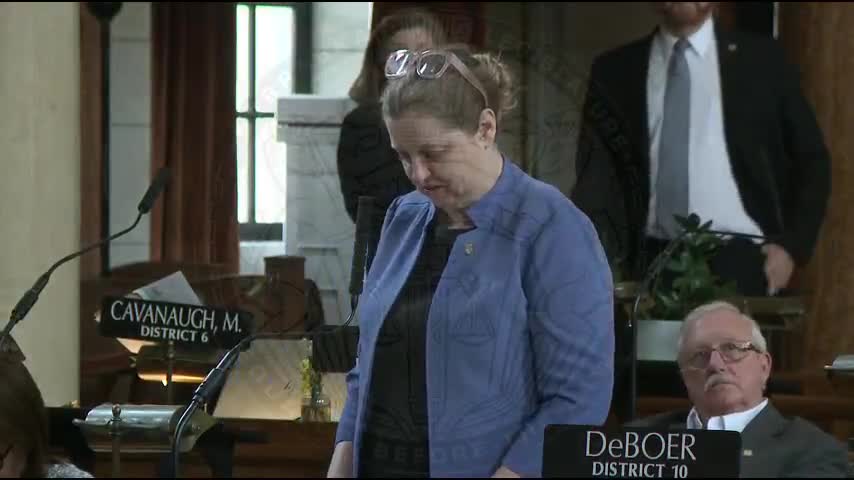
Opponents and backers used the floor to make broader arguments about the role of the Legislature and the will of voters. Senator Conrad and other supporters urged colleagues to respect the ballot result and allow broadly written citizen initiatives to take effect. "The measure that they voted for already had a differential for small businesses versus large businesses," she said, arguing that the citizen vote should be implemented rather than narrowed.
Other senators said they supported targeted changes to avoid unintended consequences for small firms or for youth employment. Senator Jacobson cautioned that some small, rural businesses or employers with unique operating models could be unable to comply at short notice, and he argued for modifications to avoid forcing closures.
Procedural votes punctuated the debate. Senators rejected a motion to recommit LB4 15 to committee and then voted to invoke cloture to limit further debate. The Clerk’s roll call recorded 33 ayes and 15 nays on the final passage question. The Clerk later recorded the bill as passed and the measure will proceed to the governor’s desk per standard enactment procedures.
Supporters said the statute will create broader access to paid sick leave for many workers and lock in the minimum‑wage schedule that voters approved, while opponents said the changes still risked harming small enterprise and youth employment opportunities. Sponsors said they will continue to monitor implementation and make technical fixes in future sessions as needed.
What the bill does not change immediately is local ballot language or the fact that many specifics of implementation will be handled in administrative rules and employer payroll practice. Lawmakers said the department charged with implementation will need staff guidance and outreach to help employers comply with accrual and recordkeeping requirements.
Senators and staff said further technical work may be needed during the interim and in the next session as businesses and workers adapt to the new statutory framework.