Get Full Government Meeting Transcripts, Videos, & Alerts Forever!
Get email alerts on the Education School Finance topic
No spam. Unsubscribe anytime.
Senators advance bill to create ongoing TEOSA financing review commission
Summary
The Legislature adopted an amendment creating a standing Financing Review Commission to study Nebraska’s school-funding formula (TEOSA). Sponsors said the panel will provide ongoing technical review and recommendations; members pressed for clarity on appointment rules and representation.
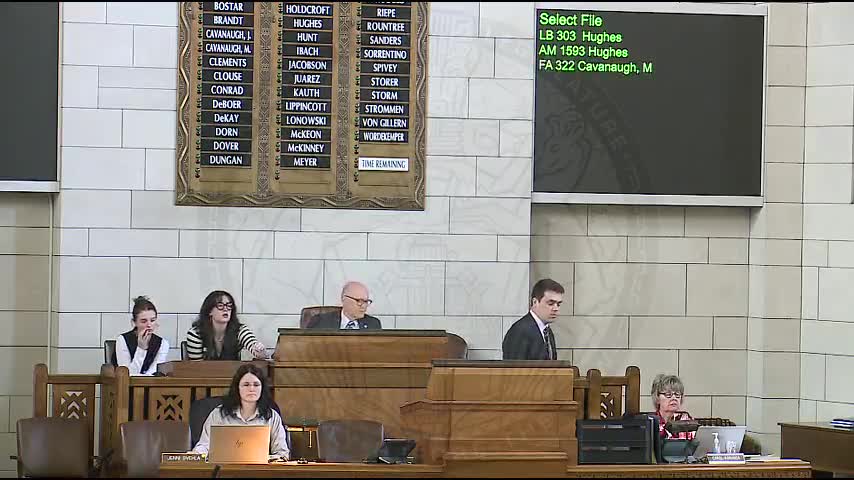
Senators adopted an amendment to LB303 on the floor Thursday to create a Financing Review Commission to regularly study Nebraska’s school-funding formula known as TEOSA and report findings to the Legislature.
Supporters said the commission is intended as a technical resource that can follow the formula year to year and provide context for lawmakers who face turnover from term limits. "A commission has more time and arguably more expertise than our legislative body does to focus on the issue of school finance," said Senator DeBoer, who outlined the history of the original TEOSA oversight panel and said the new body would give lawmakers a recurring, expert briefing on complex funding factors.
Senators backing the amendment argued the formula is complex and has been altered repeatedly. "TIOSA needs to be comprehensively examined," Senator DeBoer said, adding that a standing body can bring stakeholders together and produce a regular "cliff notes" update for the Legislature. Senator Greco told colleagues the commission would provide a more regular, professional look at how the formula is functioning and at the state’s heavy reliance on property taxes.
Members asked several procedural questions on the amendment and the commission’s structure during floor debate. Senator Hunt pressed for clarity on how the commission will define and measure "needs" and "resources," how the commission would translate findings into actionable outcomes, whether its recommendations would be advisory or binding, and which out‑of‑state comparisons the panel would use. "What will the commission define as a need and what will they count as a resource?" she asked.
Other senators raised questions about membership selection and geographic and political balance. Senator Juarez said she had urged that appointments be made by the full committee rather than solely by committee chairs to ensure broader input. Supporters said the amendment attempted to balance representation among school types and to include at‑large members with subject‑matter expertise; Senator Hughes said she hoped some appointees would be retired practitioners able to view the state as a whole rather than another current local actor.
On the procedural record the Legislature adopted the amendment AM 15 93 by voice/roll call: the Clerk recorded 43 ayes and no nays on adoption. With that amendment adopted, senators advanced LB303 toward engrossment.
Observers and stakeholders who testified at earlier hearings urged the Legislature to preserve the commission’s technical focus and to specify appointment rules and reporting deadlines so the panel can produce timely, useful findings for the education and revenue committees.
The bill as amended sets up the review commission and directs it to evaluate how TEOSA performs across districts and over time, to consider outcomes for high‑need student groups, and to present findings to the Legislature for possible statutory changes. Further technical drafting on appointments, reporting cadence and staff support were discussed but left to the implementing language in the amendment.
Senators said the commission is intended to be an ongoing resource in a time of frequent turnover among legislators, to help prevent ad hoc tweaks that can have long‑term, unintended effects on school funding and property taxes. The legislation moves next through engrossing and enrollment review before final reading.