Get Full Government Meeting Transcripts, Videos, & Alerts Forever!
Get email alerts on the Housing Production topic
No spam. Unsubscribe anytime.
Developers, planners and business groups push zoning, permitting and construction cost reforms to speed housing production
Summary
Municipal leaders, regional planners, developers and business groups urged lawmakers to combine zoning and permitting reform, incentives and cost‑reducing measures — including a proposed sales‑tax exemption on construction materials and support for modular manufacturing — to accelerate housing production.
Leaders from the Massachusetts Municipal Association, the Metropolitan Area Planning Council, NAIOP, the Massachusetts Association of Realtors and the Massachusetts Taxpayers Foundation told the Joint Committee on Housing that increasing housing production requires coordinated changes to zoning, permitting, construction cost structure and incentives.
Adam Chaplain, executive director of the Massachusetts Municipal Association, said municipalities need flexibility and targeted funding to meet local housing goals and urged the committee to consider local‑option revenue sources and reforms to tools such as inclusionary zoning, 40R smart‑growth overlays and site‑plan review definitions. He said local officials welcome state partnership but also fear losing local authority on land use.
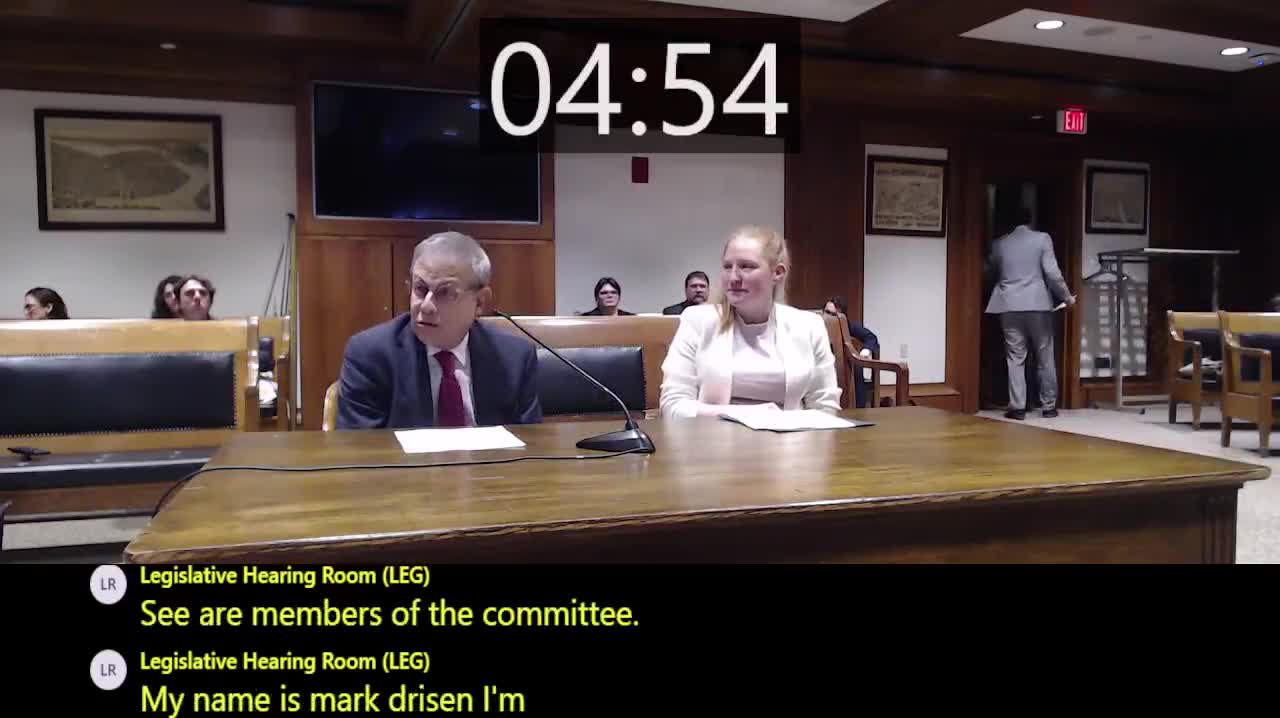
Marc Draisen, executive director of the Metropolitan Area Planning Council, emphasized that supply growth is essential but “supply alone does not get us out of this.” He called for preservation of subsidized and naturally occurring affordable housing, and promoted modular/off‑site construction as a way to lower per‑unit costs if production capacity can be built in Massachusetts rather than imported.
Commercial development groups and developers argued for specific incentives and streamlining. Tamara Small, CEO of NAIOP Massachusetts, highlighted a recommendation from the governor’s Unlocking Housing Production Commission to exempt construction materials from the 6.25% sales and use tax; the commission estimated that exemption could reduce total project costs by up to 5 percent and help some projects become financially feasible.
Why it matters: The committee heard that reaching the administration’s statewide production benchmark — the administration and planning agencies have cited a goal of roughly 222,000 additional units over the next decade — will require both local capacity building and state policy changes to reduce per‑unit cost and accelerate permitting timelines.
Details and proposed fixes: Witnesses urged revisiting 40R and 40S incentive levels, increasing 40R/40S payments to offset education costs, lowering inclusionary zoning thresholds to encourage adoption, and aligning state planning and infrastructure funding with housing goals. MAPC and others called for federal and state investment to build local modular manufacturing capacity and to expand access to workforce training. Municipal and business groups also suggested standardizing permitting steps and, where appropriate, delegating more routine approvals to planning boards to reduce time spent in town meeting or council votes.
Open questions: Speakers asked the committee to examine how wetlands and Title 5 (septic) rules can be made science‑based and more consistent statewide so that communities cannot use more stringent local standards to effectively block development without a scientific basis. They also asked for clear funding to help towns upgrade infrastructure, such as wastewater and water systems, that limit development in many communities.
Ending note: Witnesses told legislators that no single reform will suffice; they recommended a portfolio approach of zoning reform, targeted incentives, material‑cost relief and permitting streamlining to increase housing production while protecting affordability and community priorities.