Get Full Government Meeting Transcripts, Videos, & Alerts Forever!
Get email alerts on the Recycling topic
No spam. Unsubscribe anytime.
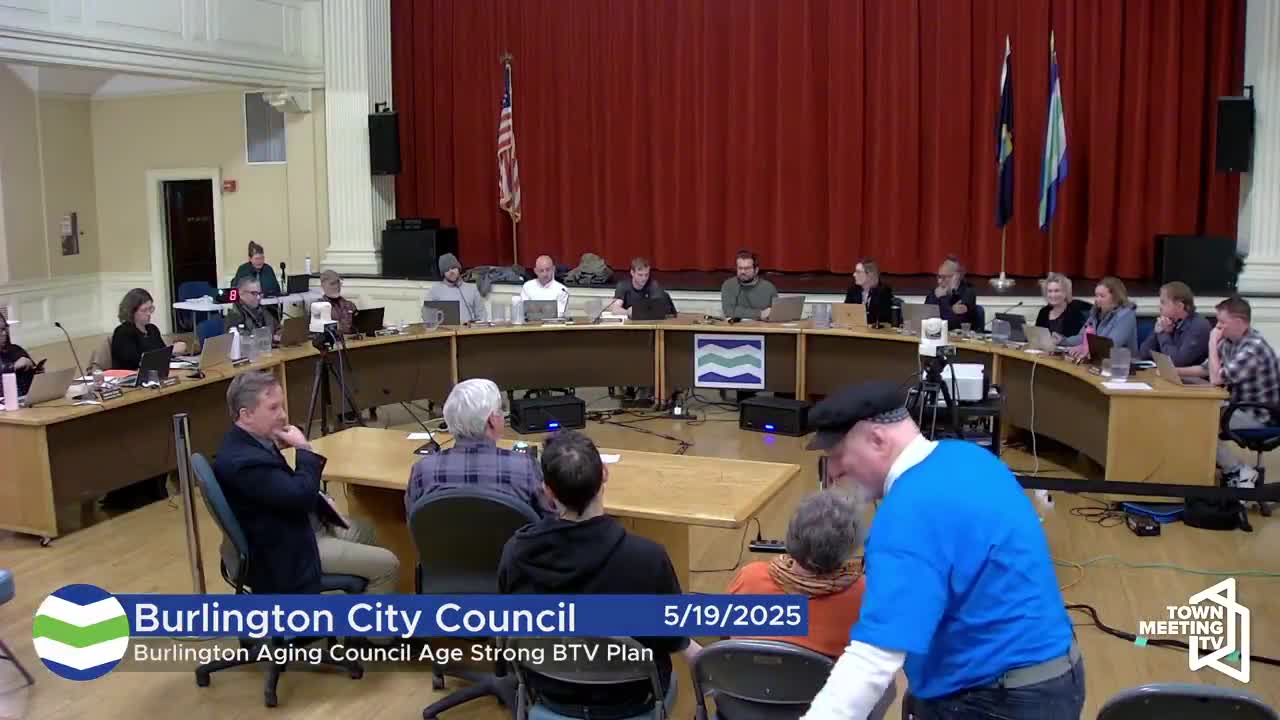
Council approves short-term plan for municipal recycling, seeks longer study of consolidated waste collection
Summary
The City Council on May 19 approved a short-term and phased approach to Burlington's recycling program: recruitment and retention incentives for DPW recycling crews, issuing an RFPQ to haulers for three- to five-year operating proposals while staff build a municipal full-cost model, and asking a committee to present a consolidated-collection plan by November 2025.
City Councilors on May 19 approved a four-part motion to stabilize Burlington's curbside recycling service in the short term and to develop both a municipal operating model and competitive pricing information as the city considers longer-term options.
What the council approved
The motion endorsed four linked steps: 1) authorize the Department of Public Works director to execute a recruitment and retention memorandum of agreement with AFSCME Local 1343 (bonuses and hiring incentives to recruit recycling drivers and helpers); 2) issue a request for price quotes (RFPQ) to area haulers for a possible three- to five-year contracted recycling operation while budgeted municipal options are refined; 3) develop, in parallel, a full-cost municipal operating model for recycling to allow a side-by-side comparison with private proposals; and 4) ask the Transportation, Energy and Utilities Committee to work with staff on a plan and timeline to evaluate fully consolidated collection (trash, compost and recycling) and report back by November 2025.
Funding and short-term steps
DPW Director Chapin Spencer briefed councilors on staffing and equipment constraints and said two of the city's recycling trucks are end-of-life. Council leadership and administration recommended short-term recruitment and retention funds (hiring bonuses, referral bonuses and overtime adjustments) to hold operations while the medium- and long-term analysis proceeds. The FY26 budget presented by staff includes two new positions (one recycling driver and one working helper) and an option to add a manager if the city retains municipal operation long-term.
Proposed solid-waste tax change
Staff also proposed a change to the city's solid-waste generation tax: an increase from $6.90 to $12 per residential unit per month. Staff said approximately two-thirds of the increase would be earmarked for recycling operations and capital needs, with the remainder funding landfill post-closure maintenance and soil-management-site improvements. The tax change is part of the FY26 budget process and was not voted by council at this meeting.
Competitive process and municipal comparison
Councilors asked whether the RFPQ could become a foregone conclusion that would push the city toward privatization. DPW staff said the RFPQ is intended to provide comparative data and that staff will present a municipal full-cost model alongside any private proposals so the council can decide whether municipal operation or contracting better serves the public interest. Staff also said the city would retain ownership of some physical assets (such as carting equipment) in any interim contracting scenario.
Council vote
The council approved the motion after debate by a raise-of-hands vote, 10'to'1 (councilors Broderick and Kane voted no). The DPW was directed to proceed with the MOA for recruitment/retention, launch the RFPQ, and continue to develop a municipal cost model; the Transportation, Energy and Utilities Committee will prepare a consolidated-collection plan for the council by November 2025.
Why this matters
The action preserves service continuity while producing the financial and operational comparisons needed to decide whether Burlington should run recycling as a municipal service or contract it out, and it starts a longer study on whether waste, compost and recycling should be consolidated to achieve economies of scale and reduce truck traffic.
Next steps
DPW will implement the recruitment and retention MOA, issue the RFPQ, present municipal cost estimates and coordinate a consolidated-collection study through the Transportation, Energy and Utilities Committee; councilors will review the information later this year.