Get Full Government Meeting Transcripts, Videos, & Alerts Forever!
Get email alerts on the Human Resources Workers Compensation topic
No spam. Unsubscribe anytime.
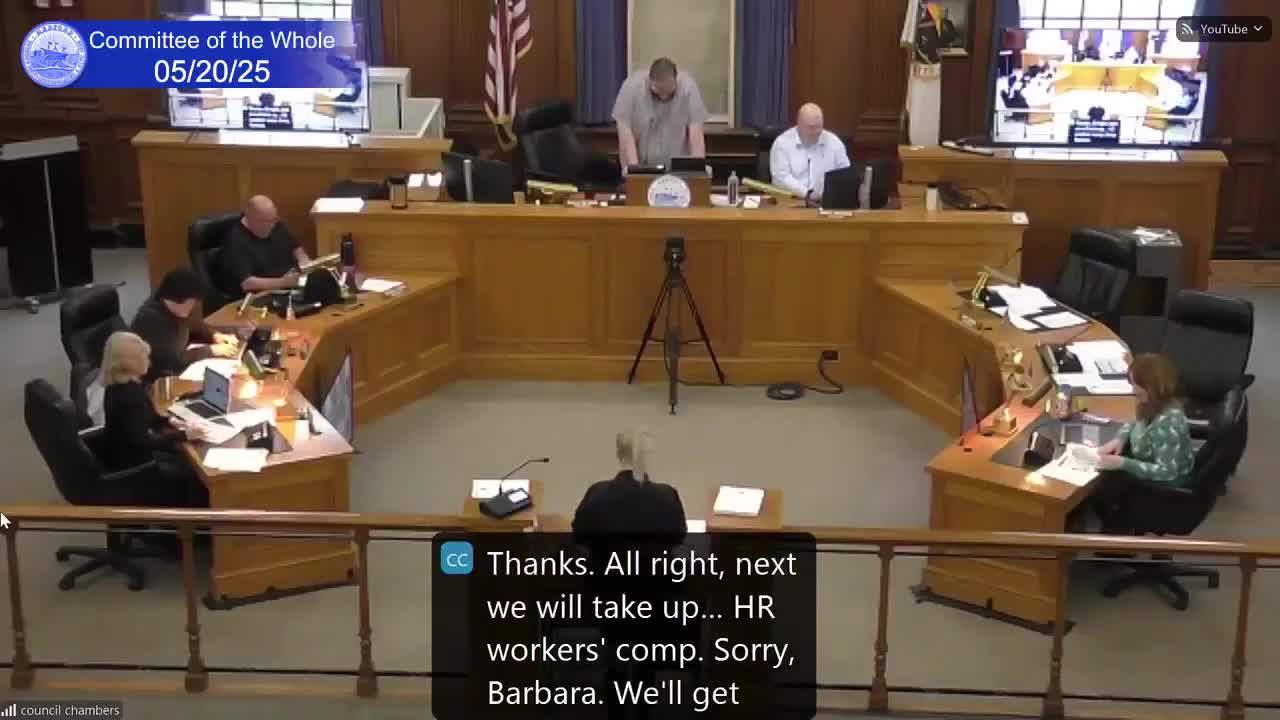
Medford HR budget rises as workers' compensation costs climb; council hears case‑management plan
Summary
Human Resources requested an FY26 general‑fund budget increase driven by personnel and a $140,000 projected rise in workers' compensation; HR proposed a $10,000 case‑management line to better manage claims and noted several contract ratifications achieved in the last year.
Medford’s Human Resources office told the City Council the fiscal 2026 request includes a notable personnel increase and a higher workers’ compensation estimate, with the HR general fund rising to cover step and COLA increases and the workers’ compensation cost projected to grow from roughly $788,000 to $928,000.
HR Director Barbara Crowley highlighted that the department ratified five contracts during the last year (fire, clerical, DPW, parking and traffic supervisors) and is negotiating others (library, dispatchers, police supervisors). Crowley said the office developed a master employee tracking system, standardized the new‑hire process, completed an I‑9 audit and expanded online compliance training to make training flexible for first responders.
Regarding workers’ compensation, Crowley said the city pays “about right now we pay $8,335 a week in workers comp payouts,” which she estimated as approximately $433,000 annually of ongoing payouts (separate from total fund reserves). She described workers’ compensation as difficult to predict, noting some claims are lifelong and payouts can spike; the FY26 projection reflects a multi‑year backlog the department has been closing.
To manage claims proactively, HR added a $10,000 case‑management line to allow third‑party nurse case managers to coordinate with treating physicians — “so we can make sure that the employees out on compensation is really doing what he's supposed to do to try to get back to him,” Crowley said. The case‑management line is intended to supplement efforts to obtain medical information without violating HIPAA, shorten claim durations and reduce unnecessary costs.
Councilor Scarpelli and others pressed about pending contract negotiations and legal costs tied to grievances and arbitration; Crowley said attorney and arbitration fees are billed to the solicitor/legal budget, not HR. Crowley said HR has increased hiring throughput and plans more training for managers, a comprehensive employee handbook, an internal newsletter and exploration of an HR information system to reduce paper processes.
Why it matters: Rising workers’ compensation estimates and ongoing negotiations with several bargaining units are material drivers of FY26 personnel costs. The case‑management fund and expanded training aim to reduce long‑term payouts but provide no immediate guarantee of lower costs.
What’s next: Councilors asked for follow‑up on the workers’ compensation trendline and legal spending tied to labor arbitration; no vote occurred at the hearing.