Get Full Government Meeting Transcripts, Videos, & Alerts Forever!
Get email alerts on the Land Use Zoning topic
No spam. Unsubscribe anytime.
Pearland council rejects first reading of McCard Road planned development after heated public hearing
Summary
City council declined on a 4-3 vote to advance a first reading that would have rezoned about 8 acres at 8210 McCard Road from SR‑12 to a Planned Development for a 73‑unit build‑to‑rent townhouse‑style community after extended public testimony focusing on impervious cover, drainage and access.
A first reading ordinance to rezone about 7.97 acres at 8210 McCard Road to a Planned Development for a 73‑unit, build‑to‑rent townhouse‑style development failed on a 4‑3 vote at the Pearland City Council meeting on May 19.
The proposal, filed by Andrew Aleman of Beacon Land Services LLC on behalf of BEGP 1 LLC, would have changed the property’s zoning from Suburban Residential (SR‑12) to a PD to permit the attached, ground‑entry units, with a central amenity center, wet detention pond, a dog park and internal walking paths. Staff said the PD document reduced units from a previously proposed 101 to 73 and added design and landscaping commitments including a row of parking along the southern property line and a hedgerow with one large tree per 25 feet along the south property line.
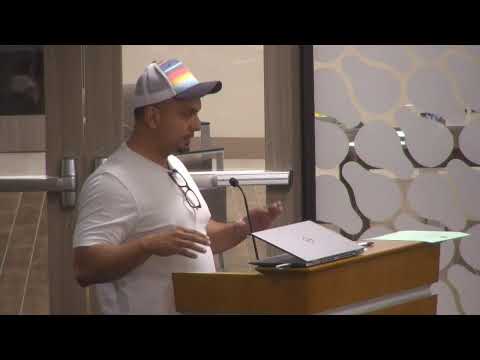
The PD drew sharp public reaction. Opponents — including immediate neighbors who said they own multi‑acre homes along Adamo Lane — spoke about increased impervious cover, drainage and traffic. Benito Valadez, who said he lives directly south of the site, warned the proposal’s 62% lot coverage “is a significant deviation” from the city’s multifamily allowance of 40% and said that greater coverage could worsen flooding and change neighborhood character. Clayton Smith, another nearby resident, told council he found the engineering information internally inconsistent and questioned how stormwater would be routed to the proposed retention area.
Supporters — including family members of the sellers and residents who called for more housing choice — said the design was a compromise from earlier submissions and argued the project would provide an option for teachers, firefighters and other local workers who can’t afford single‑family homes. John Lysol, whose family owns the land, said the townhome plan would allow the family to sell property they cannot develop themselves and called the proposed units appropriate for “young professionals” and older residents wanting to downsize.
City staff and planning staff told council the application meets most PD criteria in the Unified Development Code and the city’s comprehensive plan future land‑use designation of “urban living,” though staff identified exceptions related to the site’s existing neighborhood character. Staff listed eight recommended conditions (four from staff, four matching Planning & Zoning Commission conditions) including confirming elevations and transparency on McCard‑facing buildings, clarifying AC‑unit location and screening, correcting a trail/maintenance note, and strengthening landscaping along the southern lot line. Staff also noted that because the combined public comments touched 52% of adjoining property, state procedures require a supermajority (six of seven) for approval.
The PD application requests several deviations from the UDC that drew the most attention: an increase in impervious coverage (62% proposed vs. 40% allowed for multifamily), and a reduced density request (10 dwelling units per acre proposed where multifamily allows 16 du/acre). Staff said the detention pond would count toward required buffers but the pond maintenance berm cannot support the full vegetative buffer, prompting a deviation related to vegetative buffer plantings.
Applicant Andrew Aleman, who identified himself at the podium as representing Beacon Land Services, and developer Lehi Hassan described changes since a November workshop and an April Planning and Zoning review, including reduced density, added amenities and a clarified emergency access. Aleman said the Adamo Lane connection was intended for emergency egress and the project team would improve the adjacent section of Adamo Lane and local stormwater infrastructure. Hassan said the project is “not a subsidized project” and aims for “affordable for the people as a housing choice for teachers and firemen,” while acknowledging it will not be a subsidized development.
After roughly 30 public speakers and extended council discussion about drainage, precedent, impervious cover standards, parking and the Adamo Lane access, Council voted on first reading of ordinance 2000m‑272 (the PD rezoning). The roll call vote was Carbone, Chavarria, Fernandez and Cozza in favor; Cade, Patel and Mayor Pro Tem Biram opposed. The motion failed 4‑3.
The council’s first‑reading defeat ends this ordinance at this stage; applicants may revise and return to Planning & Zoning and city council for future hearings. Staff noted several of the technical concerns — stormwater routing, traffic analysis and design elevations — remain matters to resolve before any future approval.