Get Full Government Meeting Transcripts, Videos, & Alerts Forever!
Get email alerts on the Electric Vehicle Charging topic
No spam. Unsubscribe anytime.
Framingham plans pilot on‑street EV chargers with state grant, seeks public input
Summary
City sustainability staff outlined a MassCEC-funded plan to install on‑street level‑2 electric‑vehicle chargers in residential areas lacking off‑street parking; DPW and the traffic commission will review signage, parking rules and siting as public outreach begins.
Framingham officials described a plan on Tuesday to install on‑street electric‑vehicle charging stations in neighborhoods that lack private parking, funded by a Massachusetts Clean Energy Center grant.
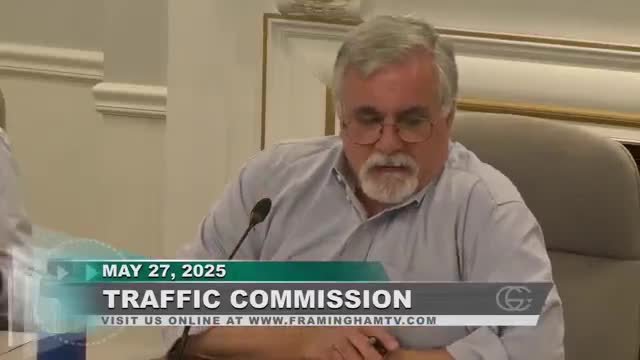
Sean Lutz, Framingham sustainability coordinator, told the Traffic Commission the two‑year program (November 2024–December 2026) will provide up to $500,000 per community and is expected to support about two to five dual‑port level‑2 chargers per site at roughly three sites as a ballpark figure. "The goal of this program is to enhance access to EV adoption across the community, particularly in parts of the community that maybe don't have access to their own parking space," Lutz said.
The commission and city staff framed the pilot as an equity measure intended for dense, multifamily areas where residents cannot install private chargers. Lutz said the project team aims to have stations installed in the ground by January 2026 and commissioned afterward. The chargers would be marked with EV‑only signage; the city plans to collect user fees either by energy (kWh) or by timed sessions to encourage turnover.
Commission members and public safety officials raised operational questions. "We have to consider businesses downtown," the police chief said, warning that dedicated EV parking could reduce retail turnover if drivers remain in vehicles while charging. City staff and the project consultants said they will do targeted outreach to businesses and residents before final site selection. DPW staff and the sustainability office also noted equipment choices (bring‑your‑own‑cable pedestals versus managed cable stations) affect sidewalk space and cable management.
Lutz said the program will include technical site assessments after community outreach, and that software options can limit session length or apply time‑based fees so vehicles do not occupy chargers after charging completes. "We can set a max charging time. After that, the session ends," he said, describing features already used in a school pilot.
Next steps: the city will start community engagement in June, hold on‑site technical assessments and work with the Traffic Commission on any changes to parking rules and signage needed to designate EV‑only spaces.