Get Full Government Meeting Transcripts, Videos, & Alerts Forever!
Get email alerts on the Public Safety Fire Ems topic
No spam. Unsubscribe anytime.
Hudson council endorses move to hybrid fire/EMS staffing, debates long-term funding
Summary
Hudson City Council’s Fire and EMS Subcommittee recommended moving the fire department from a paid‑volunteer model to a hybrid staffing model, with daytime staffing possible by July and a full 24‑hour staffing plan forecast for 2026 that staff said would add roughly $850,000 in annual personnel costs.
Hudson City Council’s Fire and EMS Subcommittee recommended moving the city’s fire department from a paid-volunteer model to a hybrid system that would add daytime staffing immediately and move to 24-hour staffing in 2026, with staff estimating roughly $850,000 in additional annual personnel costs and an estimated $368,000 in renovations to the existing station.
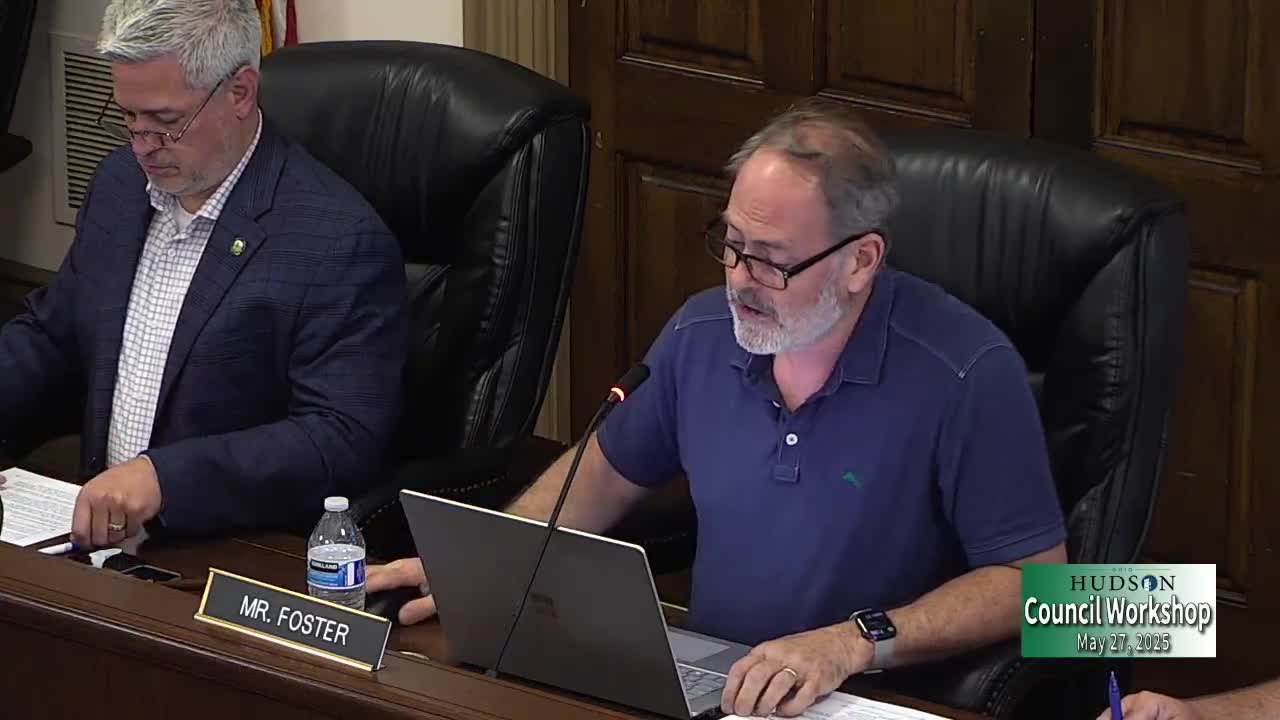
The recommendation, presented at the May 27 workshop by subcommittee members and city staff, was framed as a step to reduce response times and align them “with national standards,” and staff said the city could implement daytime staffing as soon as July. City staff and the finance department proposed covering the near-term cost by using a combination of the fire fund balance (about $8.6 million currently shown in the materials) and annual general fund transfers of roughly $600,000, with the plan to revisit funding annually.
Why it matters: Councilors said the staffing change would affect public safety and the city budget for years. Several councilors pressed for a clear, long-term funding approach rather than an annually repeated transfer, warning that a year‑to‑year plan could push the funding burden onto future councils.
City staff laid out the options and costs. The staff memo and presentation estimated the additional personnel cost at roughly $850,000 beginning in fiscal year 2026 and listed station renovation needs in the low hundreds of thousands of dollars. Finance staff proposed two near‑term options: allocate about $600,000 annually from the fire fund balance or transfer $600,000 a year from the general fund into the fire and EMS budget each fall when the budget is adopted. Staff characterized the approach as a multi‑year bridge that should be reviewed under the city’s five‑year planning process.
Council debate focused on durability of the funding plan. “We’re still effectively bankrupt in eight years,” said Mr. Sutton, urging that the city lock funding in place rather than rely on annual transfers that future councils might reverse. Several councilors agreed the city should formalize a permanent transfer or put a funding measure to voters instead of a temporary stopgap. Council members also asked staff to present updated modeling and to include recently signed development agreements and payroll projections in future forecasts.
Operational timing and next steps: Councilors gave staff permission to begin implementing the daytime staffing schedule in July. Councilors also confirmed that the related RFP may be advertised now. Staff proposed bringing a more detailed, long‑term funding proposal into the budget discussion beginning in September so council can consider whether to codify a transfer, pursue a ballot measure, or identify other funding sources.
Quotes are drawn from the workshop discussion. Fire and EMS Subcommittee members and city staff emphasized the plan's operational benefits and the need for regular financial review. “We visit this every year as part of the five‑year plan,” said Jeff (finance department staff). The Fire Chief described the change as “the biggest step that we’ve taken since the fire department was started,” and said most of the department’s calls (about 73 percent) arrive during daytime hours, supporting the case for daytime staffing.
Ending: Council asked staff to return with updated financial tables that incorporate recent development and income tax projections and to include a detailed budget item for consideration in the fall. The council did not adopt a permanent funding mechanism at the workshop; that decision was deferred to the formal budget process.