Get Full Government Meeting Transcripts, Videos, & Alerts Forever!
Get email alerts on the Energy Data Centers topic
No spam. Unsubscribe anytime.
Senate concurs with House on data-center electricity bill after negotiation; sponsors call it a template for other states
Summary
Senate concurred with House amendments to Senate Bill 6, legislation addressing electricity needs for data centers and grid reliability; sponsors said the final language largely preserved Senate objectives while accepting a local amendment.
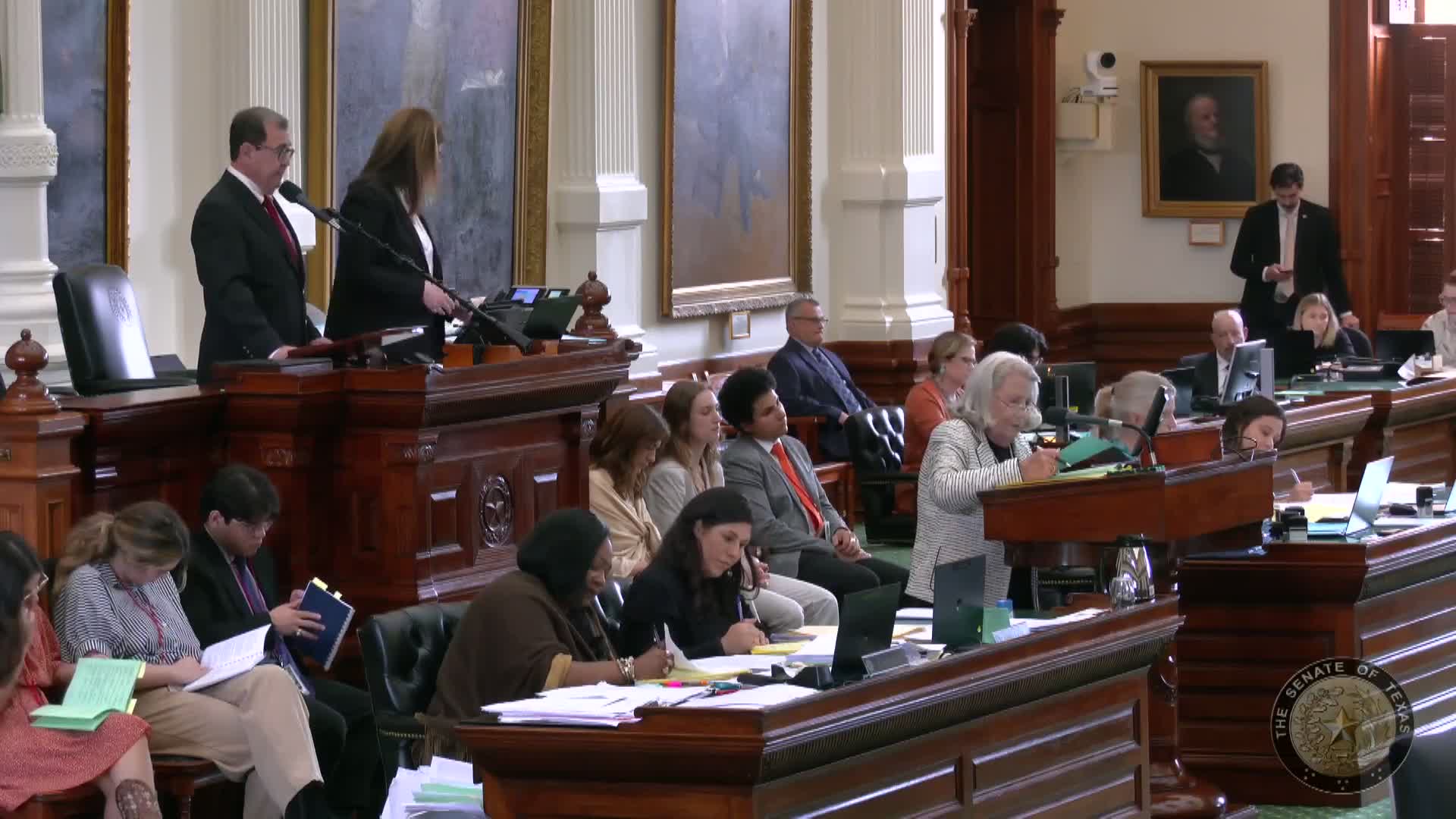
The Texas Senate on the floor concurred with House amendments to Senate Bill 6, a measure intended to address electric-system planning and the integration of large electric loads such as data centers.
Senator Kelly Hancock (floor remarks delivered by Senator King in the transcript) said the final text largely reflected the Senate’s priorities and noted that a single local amendment intended for Laredo was accepted by the House. "It is what the Senate worked on and put together," the floor sponsor said, urging colleagues to support concurrence.
Why it matters: SB 6 seeks to ensure the state’s electric system can accommodate large new industrial loads such as data centers without harming reliability or causing rate impacts to other customers. Supporters framed the bill as balancing economic development with grid stability.
Action: The Senate recorded concurrence on the House amendments by voice/roll call; the chair announced the motion adopted with the recorded outcome reported as unanimous (no recorded nays). The motion to concur was adopted on the floor.
Discussion and limits: Sponsors thanked members of the Senate’s Business and Commerce and Natural Resources committees for work on the bill. Floor remarks noted the bill’s complexity and potential to serve as a model for other states, but the transcript did not include the House amendment text itself nor detailed fiscal estimates.
Next steps: With concurrence from the Senate, the bill proceeds through the final steps required by the legislative process. Implementation details—such as rulemaking and coordination between grid operators—were not spelled out on the floor and will depend on statutory language and subsequent agency action.