Get Full Government Meeting Transcripts, Videos, & Alerts Forever!
Get email alerts on the Criminal Justice Bail Reform topic
No spam. Unsubscribe anytime.
Senate concurs with House changes to constitutional amendment tightening bail for most serious offenders
Summary
The Texas Senate agreed to House amendments to SJR 5, a proposed constitutional change that narrows circumstances for granting bail in the most serious offenses and establishes evidentiary standards and reporting requirements for judges.
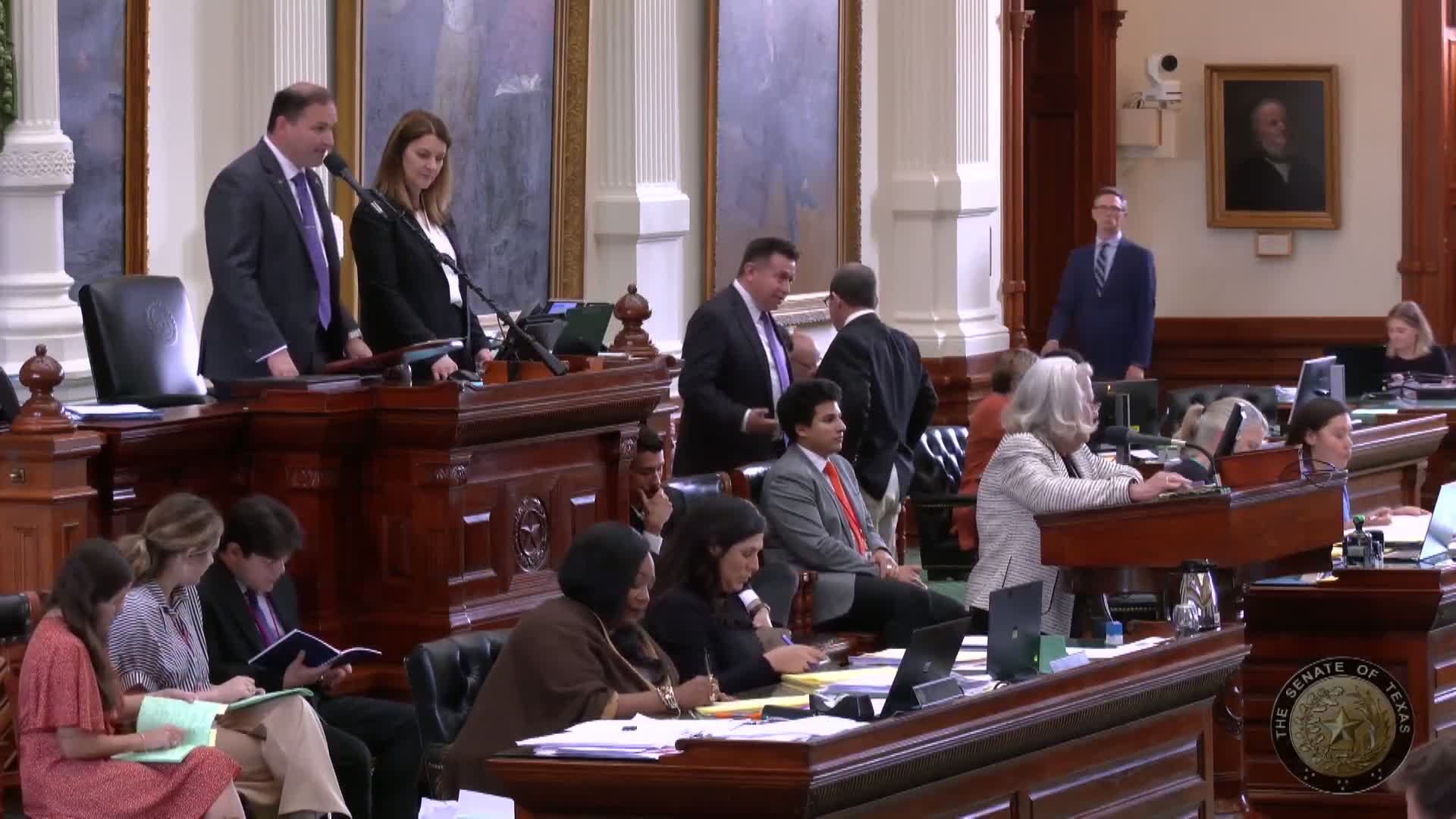
The Texas Senate on the floor agreed to concur with House amendments to SJR 5, a proposed constitutional amendment targeting bail eligibility for certain serious offenses and establishing a more formalized hearing process.
The measure, described on the floor by Senator Joan Huffman as part of a coordinated package of bills, would allow denial of bail after a hearing when the state meets specified burdens of proof for the most serious offenses, including murder, aggravated assault that causes serious bodily injury, aggravated kidnapping, aggravated robbery, certain sexual offenses involving children, and human trafficking offenses. "This is going to make a difference to Texas," Huffman said on the floor as she moved concurrence.
Why it matters: The amendment would change the process for determining eligibility for bail in cases the legislature designates as among the most serious. The House-added language created a bifurcated evidentiary standard: the state may show by a preponderance of the evidence that bail is insufficient to reasonably prevent willful nonappearance, or by clear and convincing evidence that bail is insufficient to reasonably ensure safety of the community, law enforcement or victims.
Key facts and actions: Senator Huffman moved that the Senate concur in House amendments to SJR 5; the secretary called the roll and the motion passed by recorded vote. The tally reported on the floor was 31 ayes and 0 nays; the motion was adopted. The Senate also debated related statutory and procedural elements during the remarks preceding the vote.
Discussion highlights: Huffman framed SJR 5 as part of a package designed to give judges and prosecutors tools to keep dangerous defendants detained prior to trial while preserving due process. She noted the House maintained the requirement for written orders but shifted when a written order is required: under the House changes, a written order is required when a judge grants bail explaining why bail is sufficient, rather than requiring a written order only when bail is denied. Senator West asked several procedural questions about records and counsel at bail hearings; Huffman clarified that defendants retain a right to counsel in these proceedings and that a public safety report (PSR) and probable cause information would be part of the record in many jurisdictions.
Limits and next steps: This concurrence sends the joint resolution back along the legislative process; because SJR 5 is a proposed constitutional amendment, if ultimately adopted by the Legislature it would go to voters for approval. Implementation details such as county-by-county courtroom practices and the presence or absence of court reporters for every bail hearing will vary by local practice and are not dictated uniformly in the amendment text as described on the floor.
The Senate’s action was procedural (concurrence with House amendments). Any change to the constitution would still require final legislative approval and voter ratification before it takes effect.