Get Full Government Meeting Transcripts, Videos, & Alerts Forever!
Get email alerts on the Voter Registration Ids topic
No spam. Unsubscribe anytime.
Committee advances bill to mark noncitizen status on IDs and add notice; supporters say it prevents inadvertent illegal voter registration
Summary
The Senate committee reported House Bill 554 favorably after testimony from the attorney general and the secretary of state; the bill would place a notice and a restricted-code indicator on identification cards issued to persons who are not U.S. citizens, to reduce inadvertent voter-registration errors.
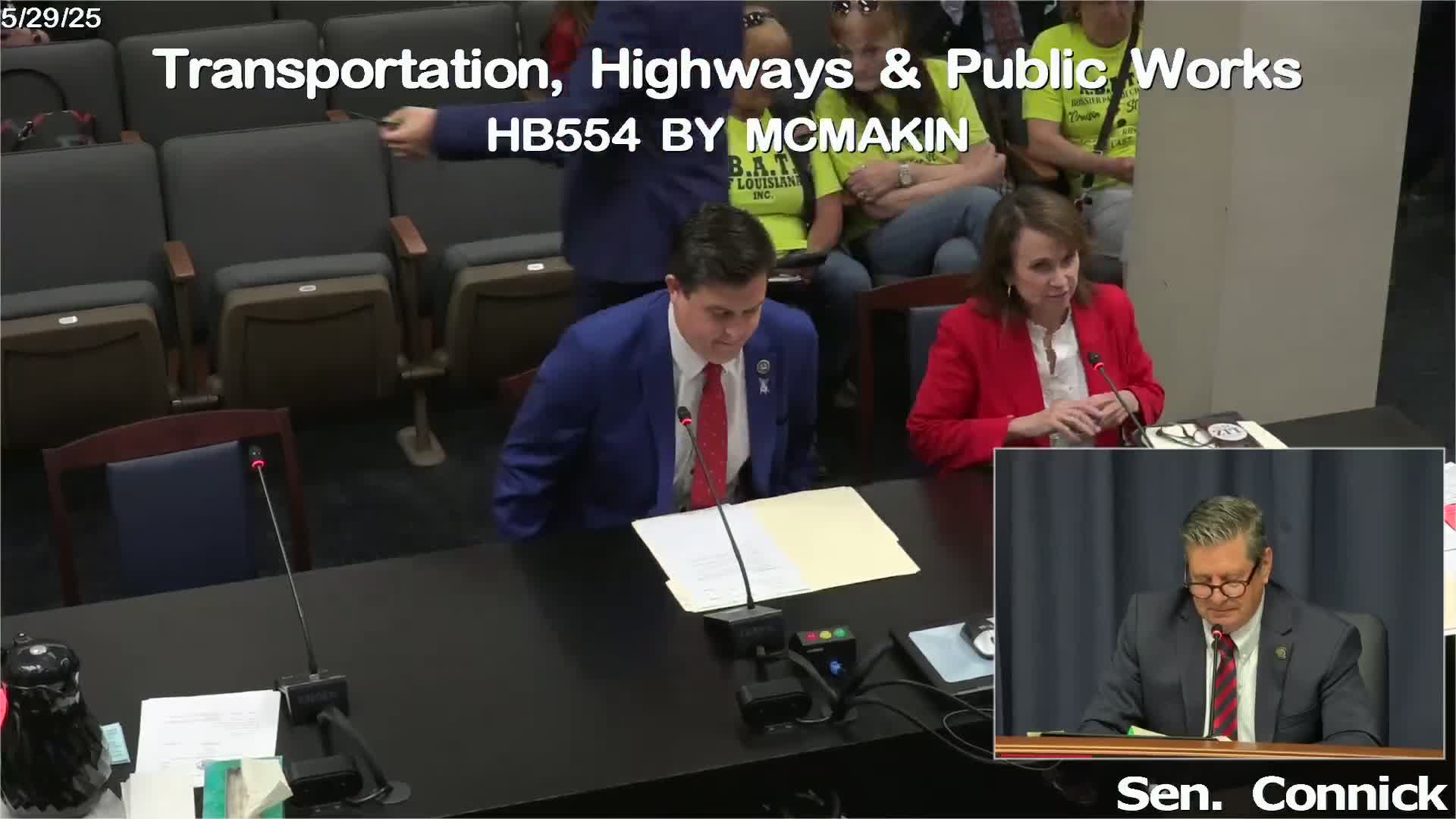
The Senate Transportation Committee on May 29 reported House Bill 554 favorably after debate about whether state-issued identification should include a restriction code or notice identifying non-U.S. citizens. Sponsors said the change would prevent people who are lawfully present but not citizens from inadvertently registering to vote or being misinformed about voting eligibility.
Representative McMahon (bill sponsor) and the attorney general described the bill as an informational and compliance measure. Secretary of State Nancy Landry and first assistant Catherine Newsom described the Office of Motor Vehicles and voter-registration interfaces: OMV is a required voter-registration site under federal law, and staff often provide voter-registration forms to applicants. The secretary’s office said prior audits and data matches identified a small number of noncitizens on the voter rolls and that better notice and data sharing can reduce inadvertent errors.
Opponents and some senators pressed for clarity on enforcement and the mechanics of registration verification. Committee members questioned whether forms already include citizenship questions and how local registrars vet submitted registrations. The secretary’s office said registrars use system verification steps and that adding a visible notice and an identifier on an ID would supplement existing processes.
A motion to report the bill favorably passed in committee after a roll-call; the committee record shows a reported favorable outcome. The bill proceeds to additional Senate consideration.
Ending: Sponsors argued the measure is a straightforward consumer-protection and compliance step; critics sought stronger data on how many inadvertent registrations occur and how the change would interact with existing voter-roll verification practices.