Get Full Government Meeting Transcripts, Videos, & Alerts Forever!
Get email alerts on the Restraint Seclusion Special Education topic
No spam. Unsubscribe anytime.
Committee advances bill to require training, limits and cameras in special‑education classrooms
Summary
Lawmakers advanced HB 684, a measure that narrows use of mechanical restraints, adds crisis‑intervention training to teacher preparation, tightens reporting and requires cameras in special‑education classrooms using previously allocated funds. Parents, disability advocates and affected students testified about trauma from seclusion and restraint.
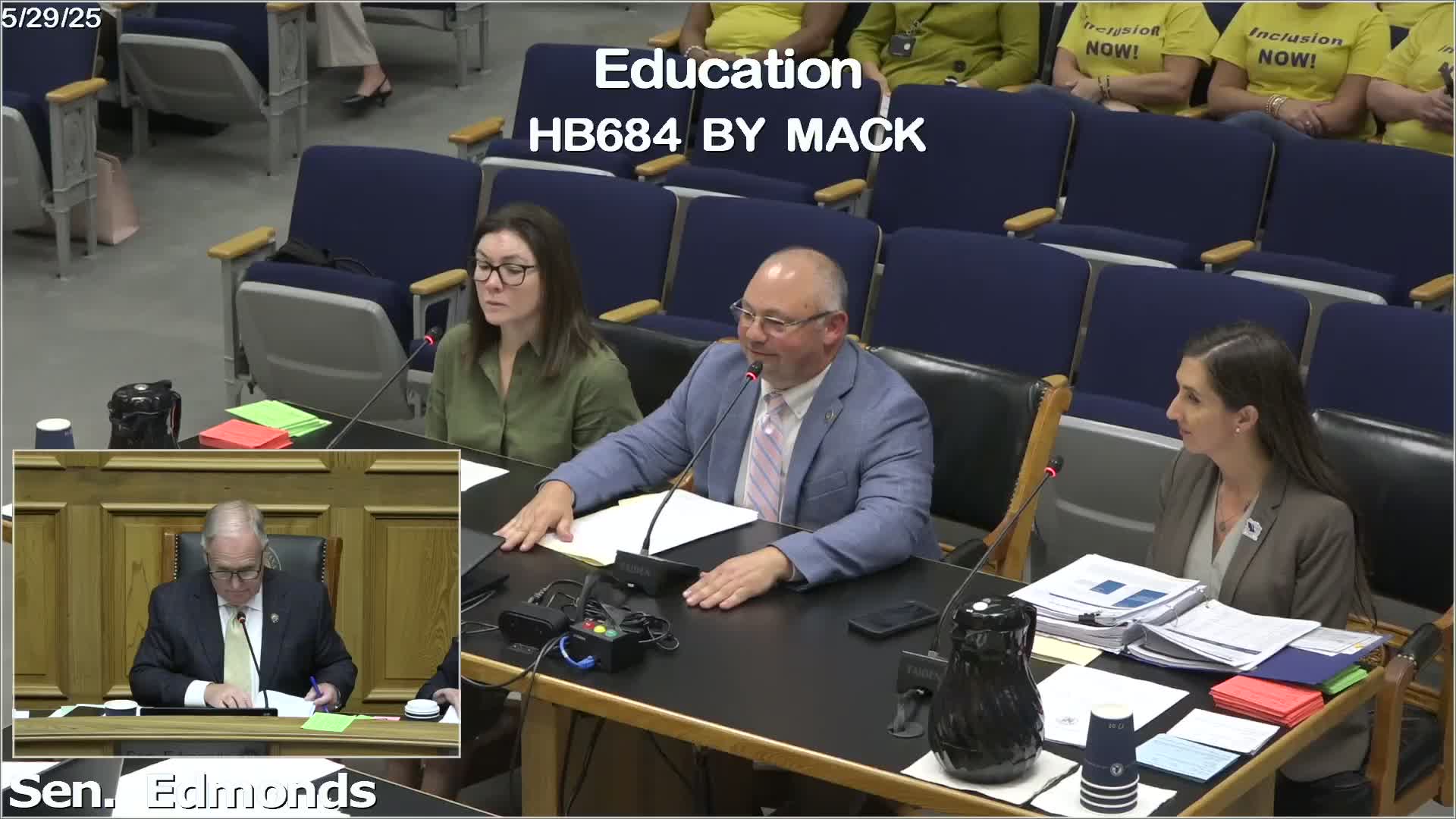
The Senate Education Committee voted to report HB 684 favorably after extended testimony and negotiations that reshaped the bill. The measure, as amended, narrows permitted physical‑restraint practices, requires crisis intervention training for certain school staff, strengthens incident reporting and requires local education agencies to install cameras in special‑education classrooms using previously allocated camera funds.
Representative Lance Mack, the bill’s author, described the measure as “improv[ing] the educational experience for our children with disabilities” by adding transparency and by requiring crisis intervention training and classroom cameras. Ashley McReynolds of The Arc of Louisiana and other advocates urged the committee to limit seclusion and restraint, to require staff training and to adopt strong reporting and review requirements. McReynolds said the bill’s posture reflected compromise and that the measure would “make classrooms across Louisiana safer, not just for our students with disabilities, but also teachers and other school employees.”
Multiple students and family members testified about traumatic experiences. A 19‑year‑old who identified himself as a student with autism described repeated restraint and confinement to a “seclusion” room that he said felt like physical harm and left lasting trauma. His sister and mother joined testimony describing similar experiences. Testimony emphasized that unexpected touch and restraint can trigger a “fight or flight” reflex in many students with sensory disorders and that seclusion and restraint can escalate rather than de‑escalate those episodes.
The Department of Education and disability‑advocacy groups worked with the bill’s author to alter the original language. The adopted amendments: remove mechanical restraint; require development of a crisis‑intervention training module (to be available for select staff and created with IDEA funds); lower the time threshold for an incident to be considered a physical restraint from five minutes to three; require IEP teams to reconvene after multiple incidents; clarify who may use restraint in emergencies; require administrators or special‑education directors to review classroom camera footage following incidents in rooms equipped with cameras; and strengthen parental notification and reporting timelines.
Representatives of charter schools, the Department of Education and disability advocates said they had worked for weeks to reach consensus language. The committee adopted the author’s technical amendments and additional amendment 24‑46 and then reported HB 684 favorable.
Supporters hailed the package as a practical, negotiated reform that increases oversight and training while opponents raised questions about implementation details and ensuring a clear standard for when restraint is permitted. The bill now moves to the Senate floor.