Get Full Government Meeting Transcripts, Videos, & Alerts Forever!
Get email alerts on the Public Transit Governance topic
No spam. Unsubscribe anytime.
Senate panel approves bill adding retired union representative to CATS board after amendments
Summary
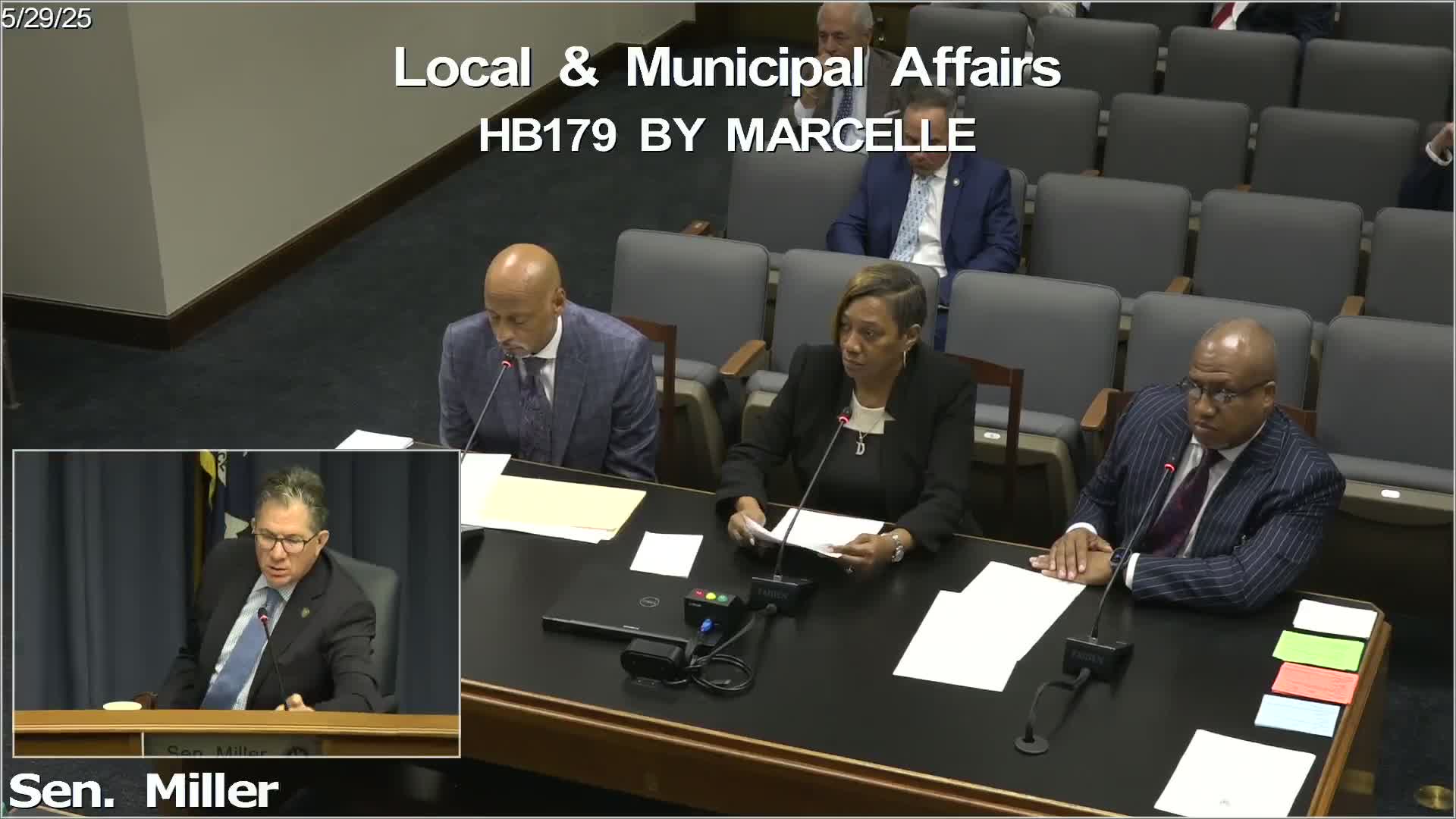
The Senate Committee on Local Municipal approved HB 179 as amended to add a nonvoting, retired union representative to the Capital Area Transit System board; amendments barred the member from executive sessions on personnel or collective bargaining and changed the appointee to a retired (not active) union member.
The Senate Committee on Local Municipal voted to report HB 179 favorably, after adopting two amendments that change the bill’s proposed transit-board appointment and limit that appointee’s participation in executive sessions.
The bill, presented by Representative Marcel, would add a nonvoting representative to the Capital Area Transit System board who would bring transit-worker perspective to board discussions. Committee amendments require that the representative be a retired union member and prohibit that representative from taking part in executive sessions concerning personnel or collective bargaining. Senator Fall moved the motion to report the bill as amended; seeing no objection, the committee approved it.
Why it matters: supporters said the change would put transit experience at the table without giving the union a voting seat; opponents raised concerns about creating a special-appointment slot and the potential for a slippery slope of affinity-based appointments. Rodney Braxton and Kevin Cunningham, representing Katz, said the agency remains concerned but accepted the compromise as less objectionable than the original proposal. Braxton said the compromise mirrored a practice in New Orleans where a retired union member serves in a similar role.
Committee debate and amendments: Senator Miller offered an amendment (set 2409) to bar the union representative from executive sessions on personnel or bargaining; Senator Fall later offered and the committee adopted amendment set 2436 to require the appointee be a retired union member rather than an active employee. Representative Marcel said the changes were negotiated with lobbyists and would leave the seat nonvoting.
Stakeholder positions and concerns: Katz representatives emphasized a broader concern: they oppose privileging an affinity group appointment because it bypasses the usual public-selection process, and warned of a “slippery slope” if other groups sought guaranteed seats. Kevin Cunningham said Katz’s objections remain but described the amended bill as “less objectionable.” Representative Marcel said she did not have notice of Katz’s earlier resolution when the bill passed the House and that she worked with Katz lobbyists to address their concerns.
Outcome and next steps: With the amendments adopted, Senator Fall moved to report HB 179 as amended and the committee advanced the bill to the floor. Supporters said they will continue discussions with Katz outside the committee to address remaining concerns.