Get Full Government Meeting Transcripts, Videos, & Alerts Forever!
Get email alerts on the Medicaid Disability Epd topic
No spam. Unsubscribe anytime.
Oregon committee hears advocates, agency on Senate Bill 20 to remove EPD income and asset caps
Summary
Lawmakers and advocates told the House Early Childhood and Human Services Committee that Senate Bill 20 would eliminate EPD income and asset limits, expand eligibility and require a federal waiver; the Oregon Department of Human Services estimated a biennial general‑fund cost of about $1.8 million to implement.
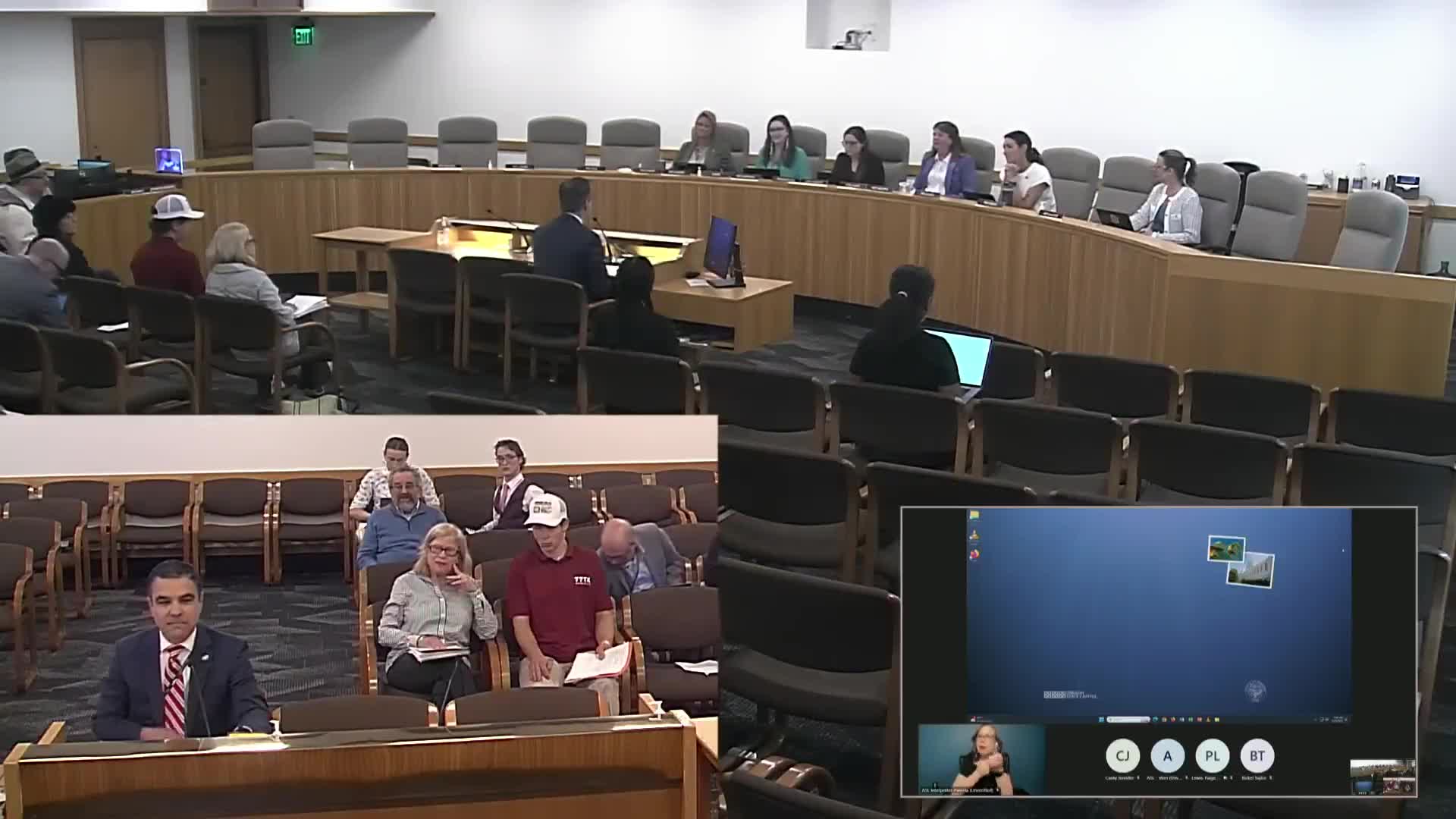
Chair Hartman opened an informational meeting of the House Early Childhood and Human Services Committee on Senate Bill 20 on May 29, and state and community speakers described the bill’s plan to remove income and asset limits from the Employed Persons with Disabilities program (EPD).
Sen. Anthony Broadman (R‑Central Oregon), a chief sponsor, said the bill “is a crucial opportunity to mend what is, a structure that doesn't work and then and is inequitable.” He told the committee the measure would “allow more folks who wanna work, who are able to work, to do so” by removing limits that force participants to keep income artificially low to retain Medicaid‑funded long‑term services.
Jane Ellen White Dance, deputy director, Employed Persons with Disabilities program, Oregon Department of Human Services (ODHS), and Ara Ozuna, manager of the Medicaid Financial Eligibility Unit for Aging and People with Disabilities, described current EPD rules and projected fiscal effects. ODHS said EPD currently serves just over 3,000 Oregonians. Under current rules, participants may have countable resources at or below $5,000 and adjusted earned income at or below 250% of the federal poverty level (stated in testimony as $3,261 monthly), with gross income generally not exceeding $6,607 unless qualifying expenses apply.
ODHS testified the bill would use federal authority in the Social Security Act to eliminate income and resource limits, lower the program’s minimum age from 18 to 16 and allow continued eligibility for people who have ‘medically improved’ but still need long‑term supports. The agency modeled fiscal impact based on service settings (about 90% in‑home services, 10% in community‑based care) and estimated ODHS implementation costs for the current biennium at roughly $1.8 million in general funds (including Oregon Eligibility Partnership costs), with a higher estimate in the next biennium as implementation ramps up. ODHS said additional staffing — four staff to assess medical improvement and at least one additional case manager by the following biennium — would be required.
Advocates framed the change as both a civil‑rights and economic issue. Andrew Caruana, legislative advocacy coordinator for the Disability Health Equity Employment Coalition, said the current structure “is a work‑incentive program that actively de‑incentivizes people from getting full‑time employment.” Retired advocate Jim Davis and participants David Nichols and Pete Dunman described years of constrained earnings and choices forced by asset and income caps. Nichols, who described a traumatic brain injury and current part‑time employment, said EPD insurance is “very generous and good insurance at low cost,” but that the eligibility rules require close management of hours and bank balances. Dunman said he has declined promotions and avoided savings because of the $5,000 limit.
ODHS told the committee the change will require a 1915 waiver amendment and a state plan amendment, and that in staff members’ experience CMS has not historically denied the types of approvals being sought. The agency also said many participants who become eligible for employer‑sponsored insurance would have Medicaid serve as secondary coverage, reducing per‑case Medicaid costs.
Committee members asked about fiscal assumptions, the projected effect of lowering the age to 16, and federal uncertainty around Medicaid. ODHS said the estimate of denied or disenrolled individuals used to model the bill did not include the 16–18 population and that federal action remains uncertain, though ODHS had not heard of changes that would eliminate the federal options the bill would use.
No formal action or vote took place; the meeting was informational and the bill remains in ways and means. Testimony and agency estimates will be part of the package the committee and ways‑and‑means members use when they consider funding and policy choices.
The committee closed the informational portion and moved to other agenda items after public advocates and several EPD participants spoke.