Get Full Government Meeting Transcripts, Videos, & Alerts Forever!
Get email alerts on the Procurement topic
No spam. Unsubscribe anytime.
Community Economic Coalition urges $350,000 study to boost in‑state procurement
Summary
A community coalition asked the General Government subcommittee for a $350,000 budget note to study barriers to local procurement and recommend reforms to increase contracting with in‑state small businesses and disadvantaged communities.
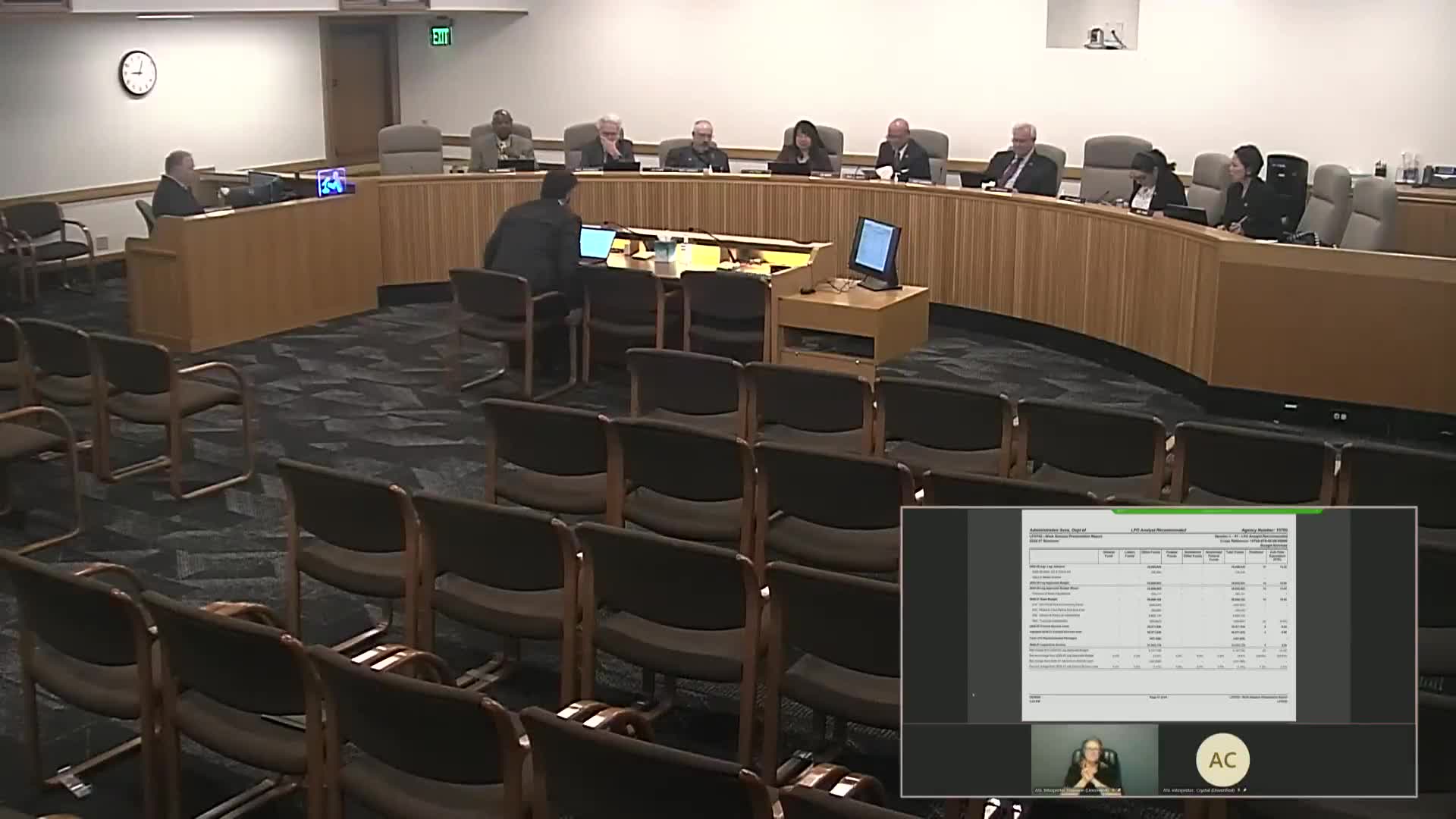
Kaz Zaidi told the subcommittee on May 29 that the Community Economic Coalition seeks a $350,000 budget note to study Oregon’s public procurement system with the goal of increasing the share of state contracts awarded to in‑state and small businesses, particularly in economically distressed communities. Zaidi summarized the planned scope: a legal analysis of procurement laws, a five‑year spending assessment, a tax‑impact comparison of local versus nonlocal contracts, a best‑practices review, and stakeholder engagement leading to a final report with implementation pathways. He said the funds would pay consultants, data collection, and stakeholder outreach.
Zaidi said, “The report would provide a foundation for reforming Oregon's procurement system to keep more state dollars within the local economy, stimulating job creation and economic growth.” Representative Tran asked whether the study would report back to the committee; Zaidi said it could be included in a budget note and reported to the committee. Tran and other members asked that the study examine the effectiveness of existing tools such as certified‑disadvantaged vendor programs, B Corps, employee‑stock ownership (ESOP) firms, and the ability of agencies (for example, Park and Recreation operations) to obtain procurement flexibility in emergency or time‑sensitive situations.
Kim (LFO analyst) clarified that the specific budget request discussed by the coalition was not included in the DAS budget presented in HB 5002. Kim also reminded the committee that a 2023 state procurement disparity study exists and that DAS maintains an internal procurement equity team to address related issues. The subcommittee did not adopt the coalition’s request on the record during this session; the coalition’s representative said he would like the study included in a budget note and available to the committee for consideration.
The exchange highlighted lingering interest among legislators in balancing centralized procurement efficiencies with flexibility for agencies that run 24/7 services or operate in remote locations. Members asked staff to track procurement flexibility questions and consider them during interim work and any procurement‑related budget proposals.