Get Full Government Meeting Transcripts, Videos, & Alerts Forever!
Get email alerts on the Wildfire Housing Recovery topic
No spam. Unsubscribe anytime.
Oregon officials review wildfire housing recovery: $150M state, $422M federal aid and lessons for future disasters
Summary
Oregon Housing and Community Services told the House Committee on Housing and Homelessness that state and federal aid helped hundreds of households recover after the 2020 wildfires, but gaps in coordination, data and local power-sharing delayed housing for many survivors.
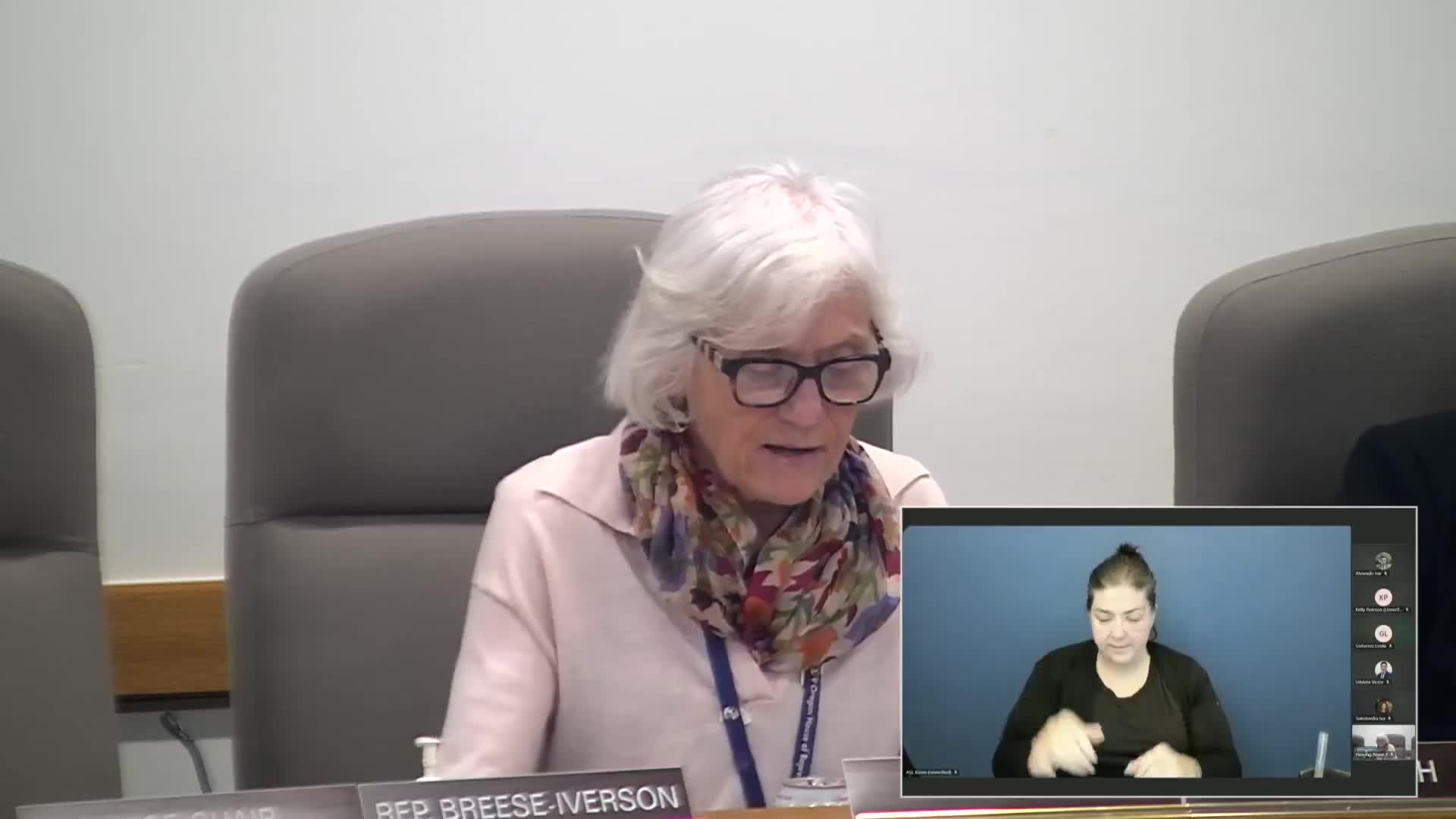
Chair Marsh convened the House Committee on Housing and Homelessness on May 28 to hear a progress report from Oregon Housing and Community Services (OHCS) on recovery from the 2020 wildfires, including lessons for future disasters.
Kayla Bianta, deputy director at OHCS, told the committee the Legislature provided $150,000,000 in state funding after the fires and the state later received $422,000,000 in federal Community Development Block Grant Disaster Recovery (CDBG‑DR) funds from HUD. "We did not have a team. We didn't have resources, whether that be staff or funding for emergency response, emergency recovery, long recovery loads," Bianta said, describing how the agency and programs were created in the wake of the 2020 losses.
The state funds supported interim housing and permanent recovery: OHCS reported roughly 450 households received intermediate housing (rental assistance, travel trailers, or comparable temporary arrangements) and about 867 households permanently recovered using the state allocation; state-supported development produced roughly 261 units, and additional state development resources resulted in approximately 438 units preferentially reserved for wildfire survivors.
Shannon Marhein, OHCS disaster recovery and resilience director, described the structure and timing of the federal grant. She said the CDBG‑DR award is a six‑year grant signed in February 2023 with a spend‑down period through February 2029 and that the federal rules require 70% of funds go to low‑ and moderate‑income households and that the source be used as a funding‑of‑last‑resort after FEMA, SBA and insurance proceeds. Marhein noted, "We did a big push towards the end of the calendar year to get...95% of it encumbered through that HUD DRGR system," explaining efforts to protect access to reimbursable federal funds.
OHCS described the homeowner reconstruction program (HARP) as a primary homeowner‑facing activity under the federal award. The agency said HARP began accepting applications in March 2024; by the committee meeting there were about 232 active HARP applications, 56 home purchases signed, and 35 awards closed. OHCS also reported pipeline activity for housing support services (rental assistance for renters), affordable housing development allocations to counties and housing authorities, and that housing counseling and down‑payment assistance programs for renters transitioning to homeownership were not yet active.
Committee members pressed agency staff for additional metrics and future preparedness. Representative Gamba asked how many homeowners have been returned to homeownership and what the average public expenditure per household has been; OHCS said that exact per‑household figures were not available at the hearing and committed to follow up with more detailed data. Chair Marsh and other members emphasized survivors' frustration at being asked repeatedly for the same information by multiple agencies; OHCS officials said greater power‑sharing with long‑term recovery groups, earlier capitalization of local partners and maintaining steady coordination among state, local and federal recovery structures were top lessons learned.
OHCS officials also said some program designs that followed national best practices required adjustments in Oregon when they were implemented locally. "There was very well‑intentioned plans that ended up being too risk averse," Bianta said, adding that OHCS has had to "systematically bridal down" burdensome requirements and work to share authority with local recovery coordinators.
Committee members asked whether the disaster recovery and resilience positions in OHCS would become permanent. Marhein said most positions are limited‑duration tied to grant delivery, but that preparedness and sustaining local long‑term recovery groups remain a continuing need.
The committee asked OHCS to return with written follow‑up on per‑household spending and the planned scope of resilience planning coordinated with the governor's office and the state resilience officer. Chair Marsh closed the discussion urging the agency to plan for faster responses in future events so survivors are rehoused more quickly.
The meeting then moved to the next informational panel on evictions in Oregon.