Get Full Government Meeting Transcripts, Videos, & Alerts Forever!
Get email alerts on the Labor Union Misrepresentation topic
No spam. Unsubscribe anytime.
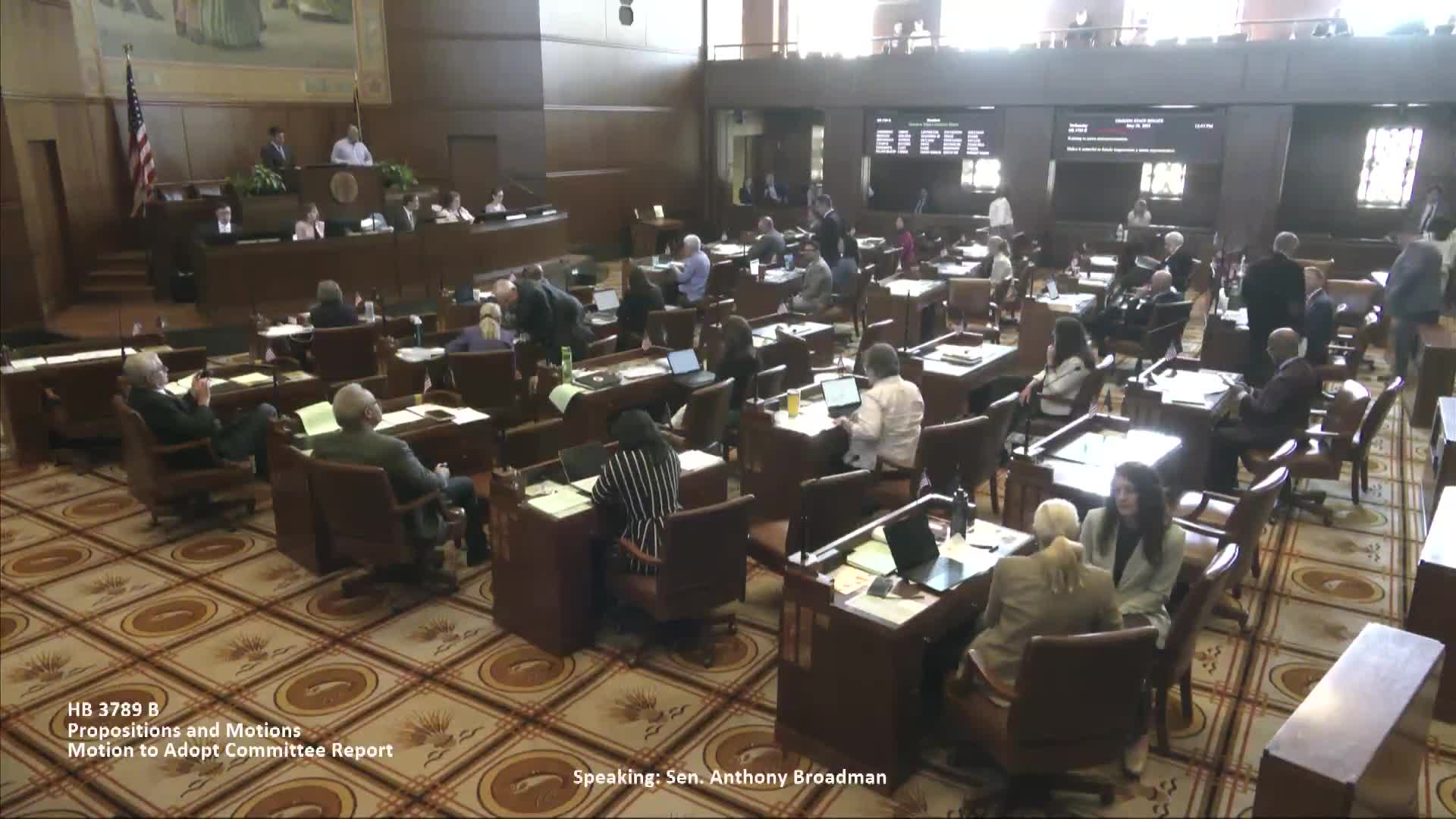
Senate approves law banning impersonation of union representatives after heated debate
Summary
The Senate approved House Bill 37 89 B, criminalizing intentional impersonation or fraudulent misrepresentation as a union representative and allowing covered entities to sue for damages. Supporters said the measure protects workers from deception; opponents argued it risks chilling speech and creates a tool for political litigation.
The Oregon Senate passed House Bill 37 89 B, a measure that bars individuals from fraudulently impersonating a union representative and creates a civil cause of action for unions or their members to seek damages.
Senator Broadman introduced the committee report and described the measure as making "it unlawful to falsely impersonate a union representative." Senator Bridal, the bill’s carrier, said the bill "prevents Oregon workers from being intentionally misled and defrauded by people impersonating union representatives." The Senate rejected a proposed minority report that would have extended certain protections or changed liability rules and then approved the bill on third reading.
Why it matters: Supporters argued the bill protects workers from targeted deception — for example, third-party mailers or canvassers using union branding to persuade members to opt out — and supplies a private right of action to hold bad actors accountable. Opponents said existing laws already criminalize impersonation, that the bill’s civil damages provision could chill constitutionally protected speech and would be used as a political litigation tool rather than a narrow worker-protection remedy.
Key points of the debate included the breadth of the definition and statutory damages. Senators arguing for the bill noted testimony that third-party actors sometimes use union-branded materials and logos to mislead members and that vulnerable workers may be targeted in their homes. Senator Gorsek said the measure "addresses misrepresenting yourself as a union representative" and called for tools to hold bad actors accountable. Senator Nieron Mislan said fraudulent communications that use union logos or signatures can mislead members, particularly those facing economic hardship or language barriers.
Opponents warned about free-speech implications and potential abuse of the law. Senator Jirard and others said the measure raised First Amendment concerns and noted a lack of quantified evidence in the record showing the scale of the problem. Senator Weber said a bipartisan minority amendment that would have applied protections symmetrically to public employees was rejected along party lines and argued the bill "weaponizes civil law" against political opponents.
Damages and enforcement: During floor questioning, a senator asked whether statutory damages in the bill would apply per mailing; the carrier responded that the language would be interpreted as "per piece," a point other senators said could expose organizations to very large potential liabilities and thus chill speech. Senator Robinson and others questioned how many documented incidents existed; the carrier said that number was not known on the floor.
Outcome and next steps: The Senate voted to pass House Bill 37 89 B on third reading and declared it passed with a constitutional majority. Supporters said the bill fills a gap they view in enforcement of worker-protection norms; opponents warned it creates uncertainty and could be subject to First Amendment challenges. The statute, as passed, creates a civil remedy and incorporates existing standards for fraud and misrepresentation that plaintiffs would have to prove in court.
Context and limits: Sponsors said the bill is narrowly targeted at intentional fraud and impersonation, not ordinary political speech, and that plaintiffs will still need to prove deception in court; critics noted existing criminal statutes and asked for data about actual harm before creating new civil remedies.