Get Full Government Meeting Transcripts, Videos, & Alerts Forever!
Get email alerts on the Odfw Budget topic
No spam. Unsubscribe anytime.
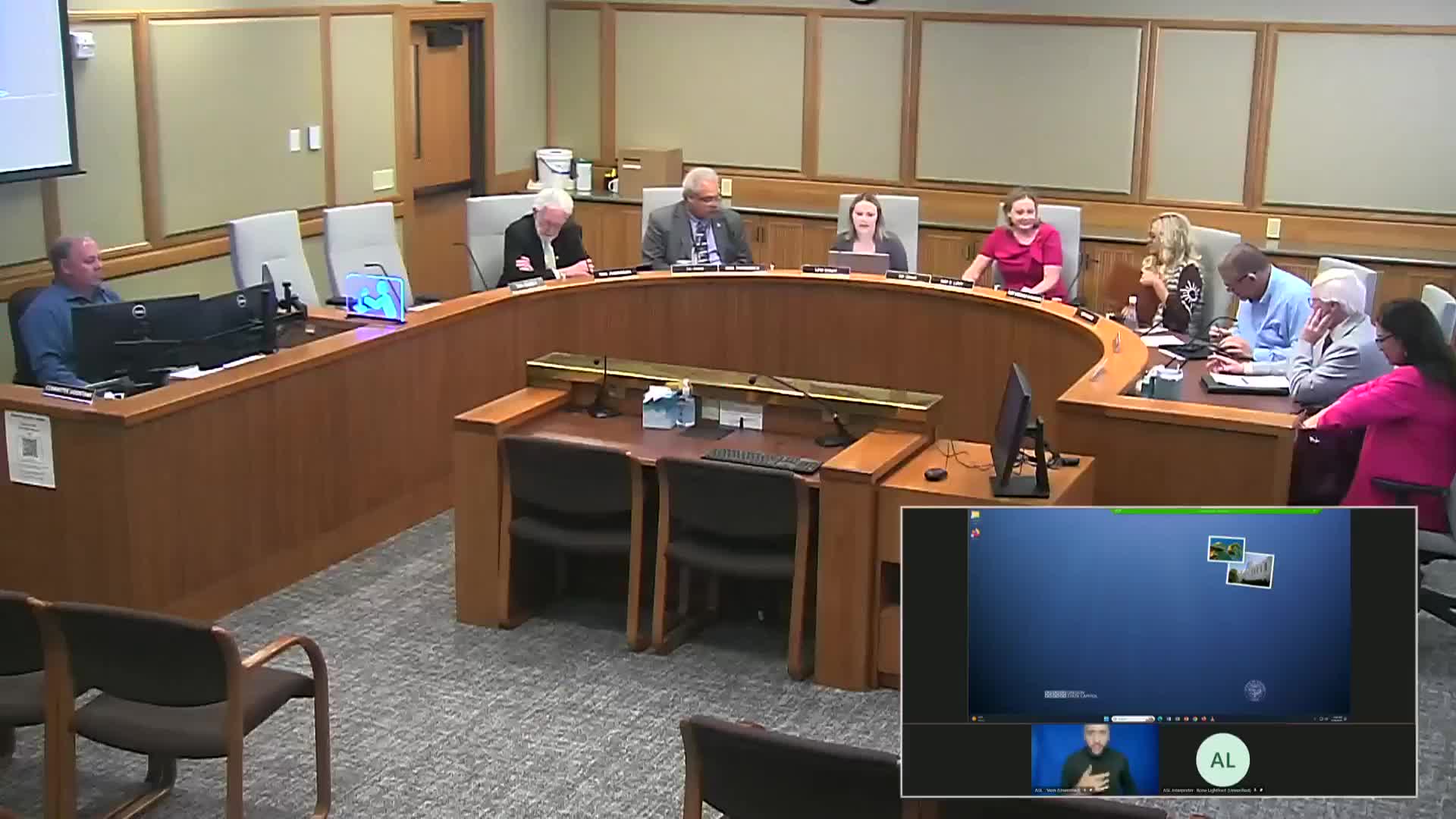
Panel advances ODFW budget bill totaling about $582 million, adopts dash-1 amendment
Summary
The Ways and Means Natural Resources Subcommittee on May 28 moved House Bill 5,009, the Oregon Department of Fish and Wildlife (ODFW) biennial budget for 2025–27, to the full committee with a due-pass recommendation after adopting the legislative fiscal office dash‑1 amendment.
The Ways and Means Natural Resources Subcommittee voted May 28 to move House Bill 5,009, the Oregon Department of Fish and Wildlife budget bill for the 2025–27 biennium, to the Ways and Means full committee with a due‑pass recommendation after adopting the Legislative Fiscal Office dash‑1 amendment.
The Legislative Fiscal Office recommendation sets the department’s budget at roughly $582.2 million for 2025–27, supported by a mix of general, lottery, other and federal funds, and provides authority for 1,347 positions equal to 1,167.02 full‑time equivalents. Katie, a Legislative Fiscal Office staff member, summarized the recommendation and told the subcommittee the package “provides 1,347 positions equal to 1,167 o 2 FTE.”
Why it matters: the recommended budget and amendment bundle program maintenance, new policy packages and several revenue adjustments that together affect hatcheries, inland and marine fisheries, wildlife management, habitat work and agency administration. The budget assumes companion legislation for fee increases and other bills that deliver dedicated revenue or alter fund authorities.
Most important details
- The LFO packet lists a recommended total of about $582.2 million made up of $76,935,412 in general fund, $10,003,606 in lottery funds, $285,790,694 in other funds and $209,487,427 in federal funds, with 1,347 position authorities (1,167.02 FTE). The LFO described the recommendation as a 2.1% decrease from the 2023–25 legislatively approved budget and a 3.6% increase over current service level, driven in part by the phase‑out of one‑time investments.
- The package includes 20 policy packages totaling roughly $20.2 million and reduces about 12 positions (reported as an 8.91 FTE net reduction in the LFO narrative). Several large adjustments are described as agency‑wide or cross‑division packages.
- A revenue shortfall package (package 70) reduces other funds expenditure limitation by about $8.6 million and reduces roughly 40 positions (28.18 FTE). The LFO said that reduction was paired with a fee increase (package 107, referenced in companion bill House Bill 23‑42) to limit the impact on fee payers.
- Specific program impacts the LFO identified include the closure of the Oregon Hatchery Research Center, closure of the Rock Creek and Salmon River hatcheries, and reductions to regional administration support and statewide research and monitoring programs. The LFO noted some research work will continue at other facilities and that the closures are discussed further in a companion bill.
- The recommendation includes targeted investments: fish passage projects funded by lottery bonds, expanded monitoring (for example in the Klamath Basin), harmful algal bloom monitoring and response, aquatic invasive species teams, chronic wasting disease surveillance, and a climate policy lead in habitat work.
Discussion and next steps
Subcommittee members asked questions about the fee structure and historical timing of past increases. The LFO and members noted the department’s intent to phase fee increases over six years, with the first increase effective Jan. 1, 2026, and the budget’s assumption that the companion fee bill will pass. Co‑chair Jared Frederick moved the LFO recommendation; the motion passed on a roll call with recorded “aye” votes from Representative Bruce Iverson, Representative Owens, Representative Lively, Representative Hartman, Representative Levy, Senator Anderson, Senator Gorsek and Senator Frederick (tally: 8 yes, 0 no recorded in the transcript excerpt).
The subcommittee also adopted the dash‑1 amendment, which formalized the appropriation totals and position authorities noted above, and then moved the bill as amended to the full Ways and Means committee with a due‑pass recommendation.
Ending
House Bill 5,009 as amended will advance to the full Ways and Means committee for further consideration; committee members signaled the budget relies on companion bills discussed in the same work session and on the phased fee increases that the department proposed.