Get Full Government Meeting Transcripts, Videos, & Alerts Forever!
Get email alerts on the Education topic
No spam. Unsubscribe anytime.
Committee advances K–12 accountability bill that sets statewide targets and escalating supports for districts
Summary
The Education Subcommittee advanced Senate Bill 141 as amended to the full Ways and Means Committee after adopting an amendment that adds implementation funding. The bill requires statewide and local growth targets, new metrics and a staged set of supports and interventions for districts that miss targets.
The Education Subcommittee of the Ways and Means Committee on Wednesday advanced Senate Bill 141, approving an amendment that adds implementation funding and moving the bill to the full committee with a due-pass recommendation.
The measure would require the State Board of Education and the Oregon Department of Education to establish statewide growth targets and metrics — including new measures for eighth-grade math proficiency and K–2 regular attendance — and require districts that receive State School Fund grants to adopt local performance-growth metrics and publicly measure progress. The amendment adopted in committee adds $2,625,296 from the Statewide Education Initiatives Account to support implementation and funds seven positions (5.75 FTE) for program leadership, metric management, research and data collection.
Supporters said the bill creates a shared-accountability structure that pairs targets with state support. Wendy, committee staff, summarized the measure during the work session: "School districts that receive a grant from the State School Fund are required to develop local performance growth metrics and measure progress towards achieving the targets in a public forum." She also detailed the timeline the bill sets for review and intervention: ODE would review targets starting in the 2026–27 school year; districts not meeting targets must accept coaching in the 2028–29 school year; after multiple years of missed targets districts would be moved into escalating levels of support, up to an intensive coaching program and, after four years of failure to meet targets, ODE may direct up to 25% of a district's State School Fund and Student Investment Account funding.
Several committee members cautioned against a strictly "top-down" approach and urged clear communications and supports for classroom teachers. Representative Wright said, "Top down doesn't work," arguing the focus should be support and materials for teachers. Senator Frederick urged broader community engagement: "We need to get the whole community ... parents, business people, folks on Main Street." Representative Yonker said she would vote no on the bill's motion out of concern that state-level accountability has not improved outcomes in past decades and expressed a preference for increasing classroom time and parental engagement rather than new oversight mechanisms.
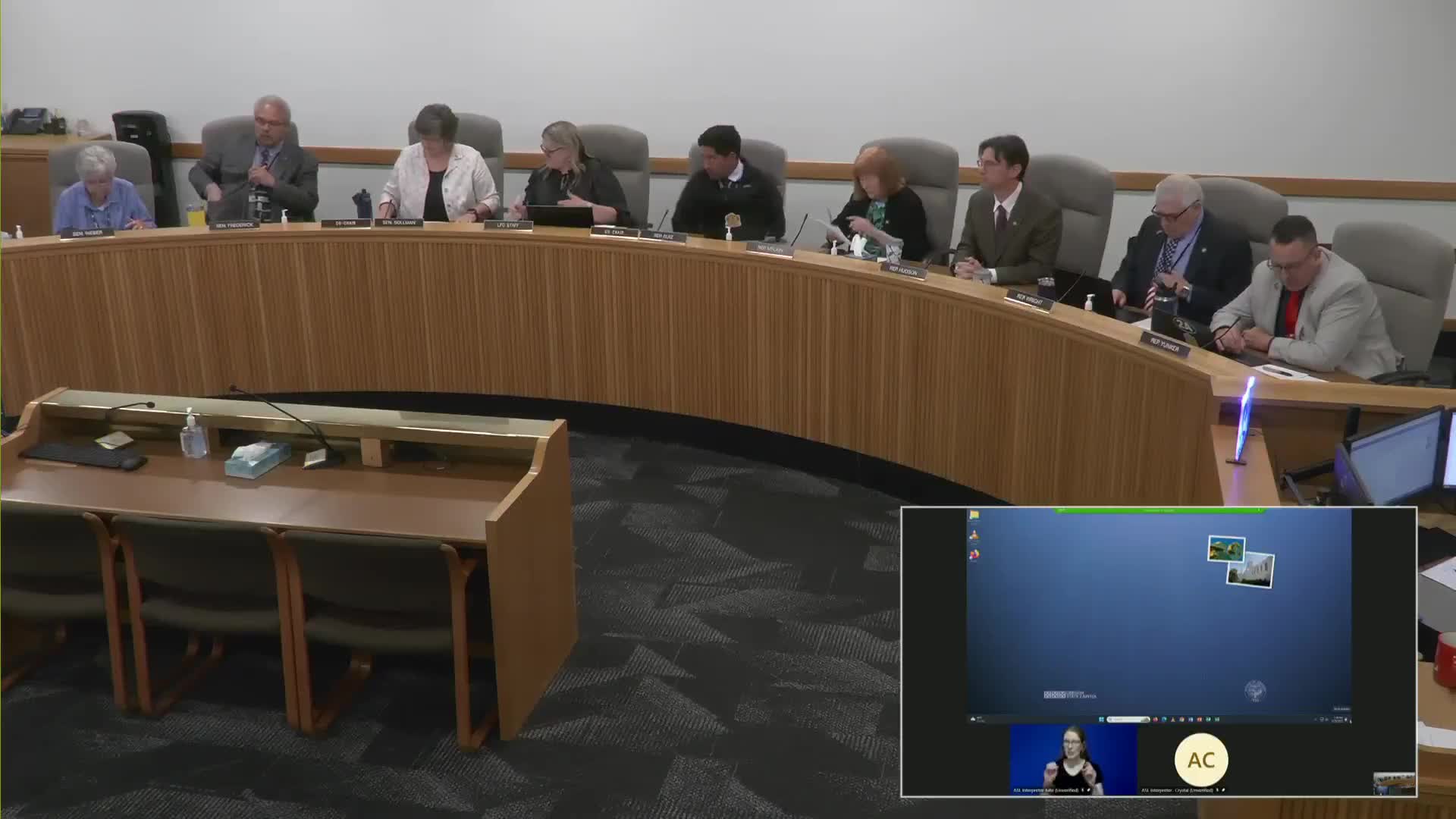
Committee action: the subcommittee adopted the A-7 amendment (adds $2,625,296 and seven positions) with no objections. Co Chair Ruiz moved the bill as amended to the full Ways and Means Committee with a due-pass recommendation. Roll-call recorded the following on the final motion to move SB 141 as amended to the full committee: yes — Representative McLean, Representative Hudson, Representative Wright, Co Chair Ruiz, Senator Frederick, Senator Weber, Co Chair Solman; no — Representative Yonker. The motion carried.
The bill also expands the statutory definition of "school district" for purposes of the accountability framework to include educational service districts (ESDs), public charter schools, approved recovery schools, youth corrections and juvenile detention education programs, the Oregon School for the Deaf, and eligible day and residential treatment programs. The measure renames and adjusts the existing "intensive program" to an "intensive coaching program" and expands ODE and district reporting requirements.
Next steps: SB 141 will go to the full Ways and Means Committee for further consideration and potential inclusion in the budget process.