Get Full Government Meeting Transcripts, Videos, & Alerts Forever!
Get email alerts on the Healthcare Drug Pricing topic
No spam. Unsubscribe anytime.
Senate restores federal 340B pharmacy access to neighborhood pharmacies in House Bill 23 85
Summary
The Oregon Senate passed House Bill 23 85 to prohibit drug manufacturers from restricting where 340B-covered entities can have outpatient prescriptions filled, restoring broader contract-pharmacy access and prompting competing arguments about transparency, hospital finances and patient benefit.
The Oregon Senate on the final reading passed House Bill 23 85, a measure aimed at restoring how the federal 340B drug-pricing program operates for hospitals and federally qualified health centers in the state.
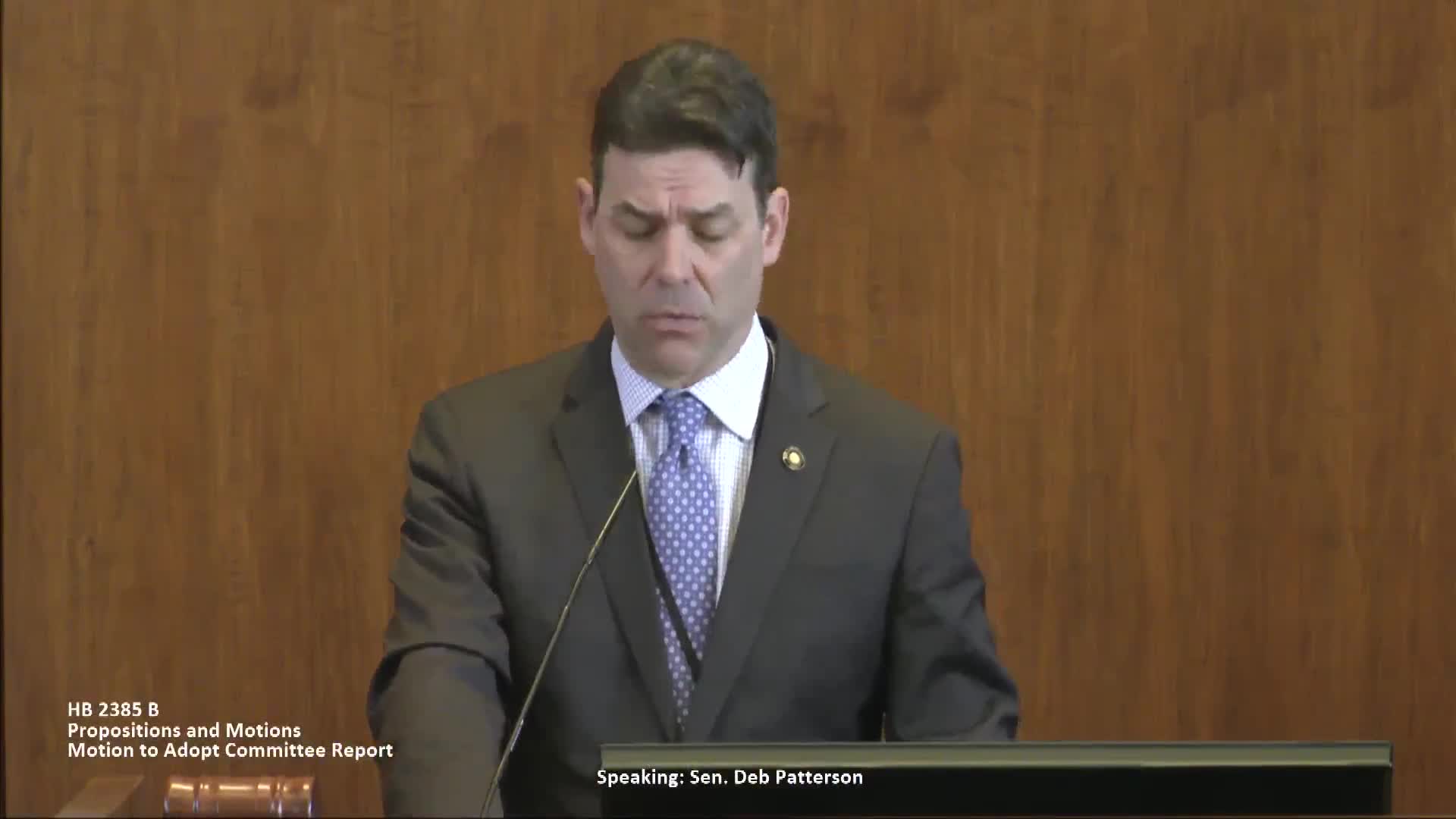
Senator Patterson, the bill’s carrier, told colleagues the 340B program "is a federal program that provides significant discounts on prescription drugs to eligible health care organizations serving low income patients" and that House Bill 23 85 "simply restores the program to its previous version by prohibiting drug manufacturers from restricting these entities' access to the 340B program." The bill passed after senators defeated a motion to substitute a minority report that would have added transparency and reporting requirements.
Why it matters: Supporters say reversing manufacturer-imposed limits will protect access to discounted outpatient drugs for safety-net providers and the communities they serve. Opponents argue the bill leaves unresolved how 340B savings are used, saying the program has grown into a large revenue stream for some hospitals and contract pharmacies and can drive up commercial insurance costs when savings are not passed to patients.
Senator Patterson described the program’s purpose and its history: Congress created 340B in 1992 to allow eligible safety-net providers to purchase outpatient medications at discounts so those providers could stretch resources to serve low-income patients. Patterson said manufacturers began adding contract restrictions in 2020 that limited where patients could fill prescriptions and, as a result, caused covered entities to lose savings intended by federal law.
Opponents pressed financial and oversight concerns. Senator Bonham and others said the program’s expansion has benefited large hospital systems and out-of-state contract pharmacies, citing national figures discussed on the floor, including a growth in 340B purchasing and concentrated profits among a small set of corporate pharmacies. Senator Brock Smith referenced a 2025 presidential executive order and federal activity directing greater access to discounted lifesaving medications in some contexts.
Proponents of additional reporting urged transparency measures. Senator Hayden, leading the minority report effort, described a version that would require annual disclosures to the state Department of Consumer and Business Services on 340B reimbursements, payments to third parties, contract-pharmacy counts and benefits to patients so the public could see how savings are used.
Debate also included patient-impact examples. Senator Linthicum cited testimony that insulin can be acquired under 340B pricing for as little as "a penny per milliliter," while a manufacturer (Eli Lilly) told lawmakers a pharmacy charged an uninsured patient more than $500 for a vial purchased for 15¢, a contrast supporters used to argue patients should see more of the savings.
Outcome and next steps: The Senate voted down the substitution of the minority report and then proceeded to third reading; the Senate declared House Bill 23 85 passed with a constitutional majority. The bill restores protections against manufacturers restricting which pharmacies may serve covered entities for 340B outpatient prescriptions. Implementation details, reporting requirements and impacts on payer mixes and hospital finances were discussed but left to future oversight and federal interactions.
Context and limits: Lawmakers emphasized this state bill does not change federal 340B regulations; instead it prevents manufacturers from imposing contract terms that block covered entities’ access at the state level. Supporters said nine other states have enacted similar protections and many more are considering such measures. Opponents urged addressing Medicaid reimbursement rates and other systemic issues rather than relying on changes that could shift costs among payers.
The Senate debate included multiple requests for data and transparency; lawmakers on both sides asked for clearer reporting to evaluate how restored access will affect patients, insurers and provider finances.