Get AI Briefings, Transcripts & Alerts on Local & National Government Meetings — Forever.
Senate advances bill tightening medical school admissions and grading standards
Loading...
Summary
The Senate advanced committee substitute for House Bill 52-94, which would require at least 50% of required medical coursework be graded A–F, require consideration of standardized test scores (not as sole factor), and bar race or ethnicity preference in admissions and employment decisions at Texas medical schools.
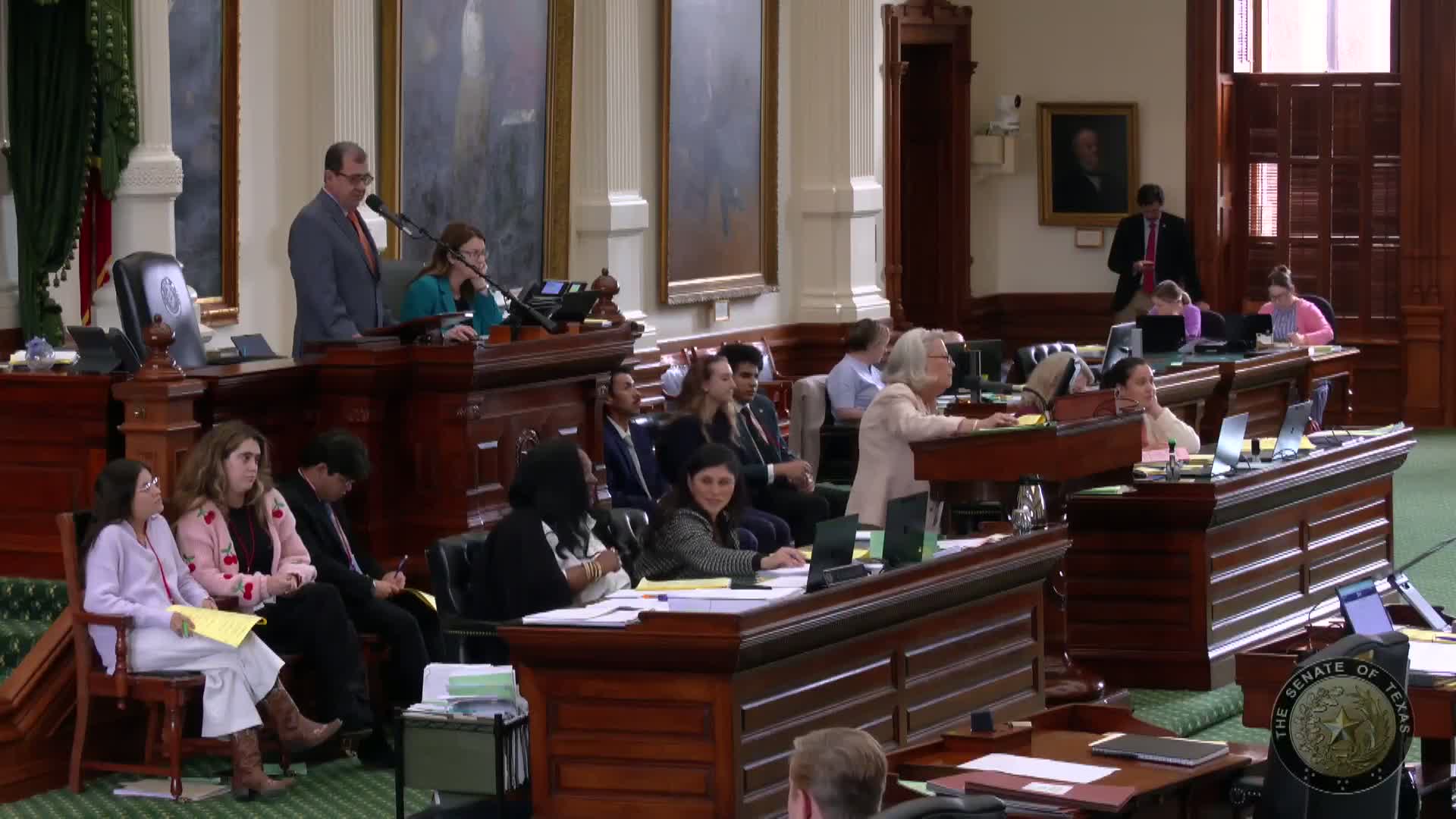
The Senate took up Committee Substitute for House Bill 52-94, a measure described by Senator Creighton as aimed at reinforcing ‘‘merit‑based standards’’ in Texas medical education. Creighton said the bill does three primary things: require at least 50% of required medical coursework be graded using traditional A–F grades; require consideration of standardized test scores (such as the MCAT) in admissions though not as the sole factor; and prohibit the use of race, ethnicity or national origin to give preference in admissions or employment decisions.
Why it matters: Supporters said the bill will strengthen academic rigor, create consistency in admissions, and ensure academic performance is meaningfully comparable across institutions. The committee substitute also requires that changes to academic or admission standards be submitted to the Legislature and the Higher Education Coordinating Board for transparency.
Process: Senator Creighton moved to suspend the regular order and take up the committee substitute. The rules suspension and motion to pass to third reading were approved; the clerk recorded 20 ayes and 11 nays to pass to third reading and the bill was advanced for further consideration.
Discussion vs. decision: Debate on the floor, as recorded, consisted primarily of sponsor explanation and a recorded roll for passage to third reading; no floor amendments were adopted during the excerpt provided.
Next steps: The bill was passed to third reading and will return to the floor for final passage or further amendment.