Get Full Government Meeting Transcripts, Videos, & Alerts Forever!
Get email alerts on the Labor Wages topic
No spam. Unsubscribe anytime.
Oregon House approves joint‑liability bill aimed at unpaid construction wages
Summary
The Oregon House passed Senate Bill 4 26 B on May 28, 2025, creating a joint‑liability pathway for unpaid wages in the construction industry with a 21‑day cure period, exemptions for certain owner‑occupied and small properties, and a shortened statute of limitations for wage claims.
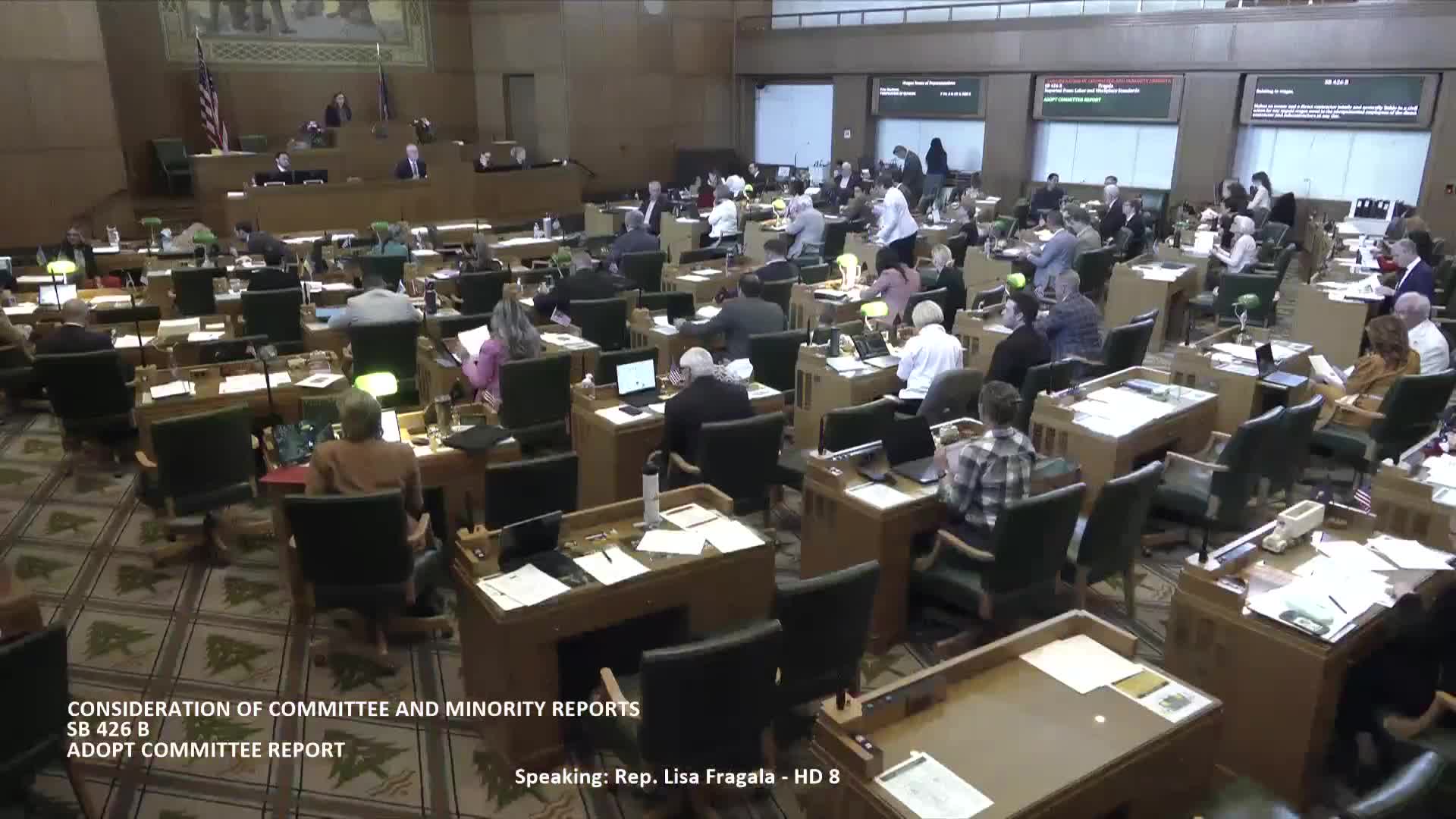
The Oregon House of Representatives passed Senate Bill 4 26 B on May 28, 2025, a measure that creates joint civil liability for unpaid wages in the construction industry and adds a 21‑day right to cure and targeted exemptions for owner‑occupied residences and small properties.
Supporters said the bill gives workers a faster route to recover stolen wages and promotes industry accountability. Representative Max Fragula, the bill carrier, said, "At the heart of the bill is the idea that the that hardworking Oregonians who help to build our community should be paid for the work they do." Proponents pointed to long complaint backlogs at the Bureau of Labor and Industries and to studies showing substantial uncollected wages in construction.
Under the legislation as debated on the House floor, a worker (or an authorized third party) may pursue unpaid wages up the contracting chain after providing written notice; owners or direct contractors have a 21‑day cure period to correct the unpaid wages before a civil suit can proceed. The bill also permits owners or direct contractors who are forced to cover unpaid wages to seek recovery from the responsible subcontractor. Sponsors said the measure includes limits and safeguards, including exemptions for primary dwellings and for some properties described in the bill as consisting of five or fewer units on a single tract.
The text discussed on the floor reduces the statute of limitations for many unpaid‑wage claims from six years to two years and allows owners and direct contractors access to payroll records and affidavits certifying compliance. Fragula told the chamber that the proposal "only applies to individuals in violation of state law to pay workers" and that in other states joint‑liability laws have sped recovery and increased compliance.
Opponents across the floor warned of consequences for owners, small businesses and housing. Representative Leona Elmer, who led the minority report, said the minority changes ‘‘remove owners from the chain of liability’’ and urged a narrower approach targeted at bad actors such as unlicensed labor brokers. Representative Derek Deal argued the bill "assigns blame without offering a single concrete step that a law abiding general contractor or property owner can take to avoid claims against them" and said the 21‑day cure could amount to owners paying wages and then attempting to recoup the money.
Speakers raised additional factual points during debate: a witness cited as Business Magazine was referenced for a figure of about $18,000,000,000 in lost wages in construction statewide; the Bureau of Labor and Industries (BOLI) was reported to have identified $50,000,000 in stolen wages and a backlog of more than 1,200 workers with pending claims; and proponents noted that only two construction labor contractors were then registered with the agency responsible for that licensure.
On procedural motions, the House refused a motion to substitute the minority report for the committee report and rejected motions to re‑refer the bill to committee or to rules. After extended debate and roll calls, the clerk announced that "Senate Bill 4 2 6 b, having received the constitutional majority, is declared passed." The final floor sequence included suspension of the requirement to read the bill section‑by‑section and the bill's advancement to final passage.
Supporters said the bill provides another enforcement tool for workers and would encourage contractors to use compliant subcontractors; opponents said the measure could increase costs for projects, chill hiring of newer or smaller subcontractors and fail to focus enforcement on labor brokers and traffickers.
Implementation details, including any effective date or administrative steps the bill requires, were not specified in the floor debate.