Get Full Government Meeting Transcripts, Videos, & Alerts Forever!
Get email alerts on the Impaired Driving Oral Fluid Testing topic
No spam. Unsubscribe anytime.
House committee advances bills to allow roadside oral‑fluid drug screening
Summary
The House Government Operations Committee on Wednesday advanced a set of bills that would authorize Michigan law enforcement to use preliminary oral‑fluid (saliva) screening at traffic stops and to collect oral‑fluid samples for laboratory confirmatory testing instead of transporting suspected impaired drivers for blood draws.
The House Government Operations Committee on Wednesday advanced a set of bills that would authorize Michigan law enforcement to use preliminary oral‑fluid (saliva) screening at traffic stops and to collect oral‑fluid samples for laboratory confirmatory testing instead of transporting suspected impaired drivers for blood draws.
The measures — introduced as House bills to permit roadside oral‑fluid screening and laboratory testing — were supported by sponsors and a range of witnesses, including Tom Chapman of the National Transportation Safety Board, Kristen Burke of the Society of Forensic Toxicologists, Chief Troy Meter (a certified Drug Recognition Expert and instructor), and Brian Swift, who urged the committee to act after losing family members in a crash involving an impaired driver.
Supporters said oral‑fluid screening provides a rapid, noninvasive way to detect recent use of a range of substances at or near the time of driving and can reduce demands on emergency departments. “Oral fluid collection allows for rapid and less invasive biological specimen collection,” Tom Chapman, a member of the National Transportation Safety Board, told the committee, citing the agency’s 2022 recommendation that states allow oral‑fluid screening to detect drug use by drivers. Kristen Burke, a regional toxicology liaison for the Society of Forensic Toxicologists, said laboratory comparisons show “good correlation” between oral‑fluid and blood testing when samples are collected promptly and that roadside devices can supply evidence consistent with observed signs of impairment.
Witnesses described how the roadside process typically would work: an officer documents observed impairment through the standard three‑phase detection process (vehicle in motion, personal contact and field sobriety testing), offers a preliminary oral‑fluid screen if there is reasonable suspicion, and — if appropriate — collects a sealed oral‑fluid sample for forensic laboratory analysis. Committee testimony said handheld screening devices provide a positive/negative result in roughly five minutes and that laboratories can perform more comprehensive testing within about 24 hours. Chief Troy Meter said the Sotoxa device was evaluated during Michigan pilot programs and that confirmatory laboratory testing was used for evidentiary purposes when arrests occurred.
Proponents framed the bills as restoring tools Michigan first piloted under 2016 legislation (referred to in testimony as the Barbara and Thomas J. Swift law and Michigan Public Acts 242 and 243) and cited a rise in drug‑involved crashes nationally. Brian Swift, who identified himself as the son of victims killed by an impaired driver, described the legislation as “life saving” and urged lawmakers to pass the changes statewide.
Opponents and civil liberties groups urged caution. Representatives of the ACLU raised concerns about device accuracy and data privacy, citing the pilot program’s reported mix of false positives and false negatives and asking for explicit limits on data retention, access and secondary uses of biological samples and test results. ACLU witnesses also noted that the presence of a drug in a bodily fluid does not by itself indicate impairment, and they urged stronger statutory privacy and evidentiary protections.
Committee members asked witnesses about the tests’ scope, detection windows and implementation details. Experts said preliminary roadside devices typically screen for a limited panel (witnesses described about six common drug classes on many devices) while laboratory analysis can detect many more compounds; they emphasized that oral fluid is most useful for detecting recent use because parent compounds such as delta‑9‑THC decline quickly in peripheral fluids. Witnesses and sponsors repeatedly stressed that preliminary oral‑fluid screening would be an investigative tool used alongside officer observations and field sobriety testing, not a standalone, court‑admissible evidentiary result unless later confirmed by laboratory analysis or otherwise entered into evidence by the defense.
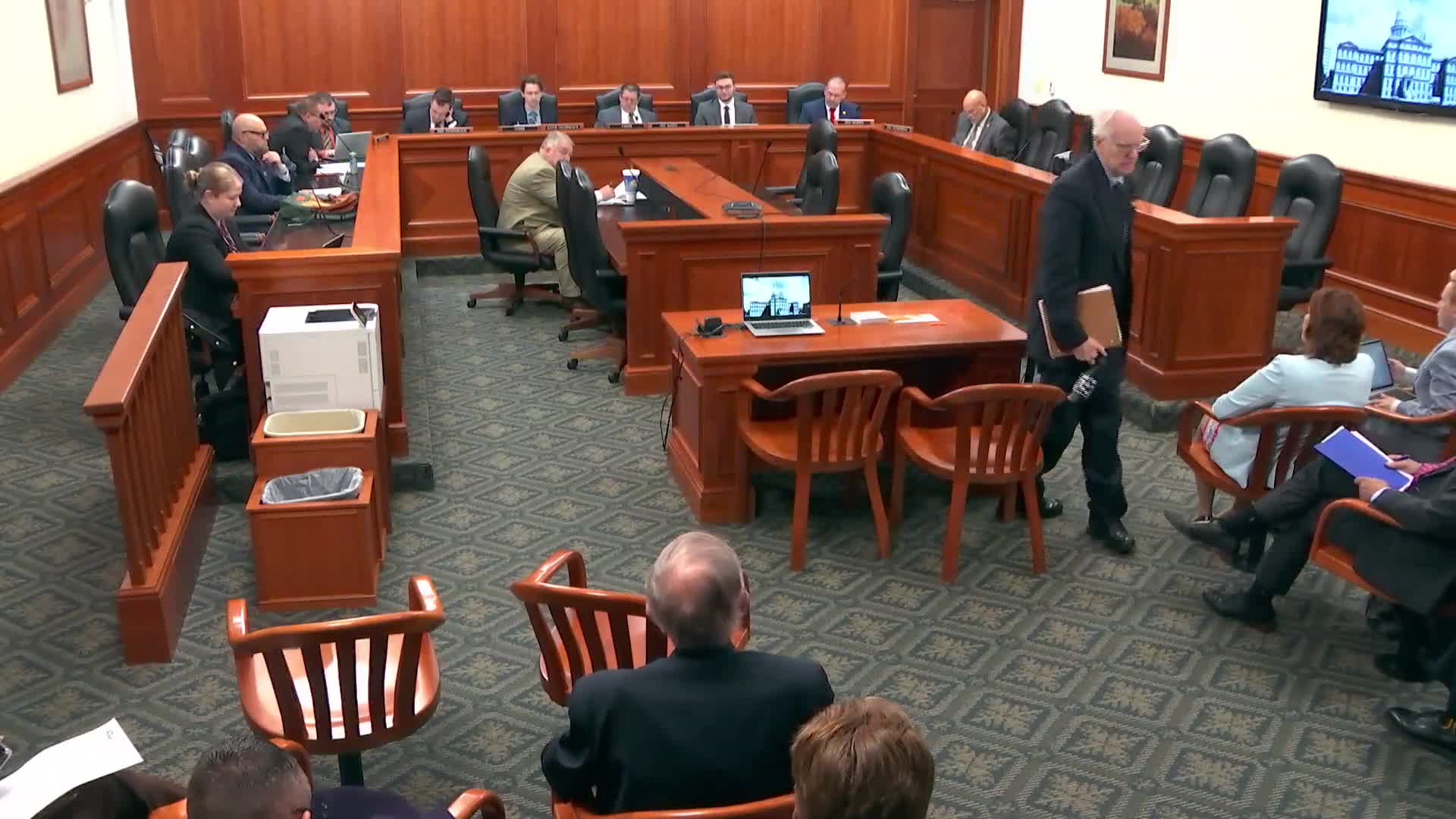
After testimony and questions, the committee voted without objection to report the bills with recommendation. Representative Vanderwall moved to report one bill with recommendation and Vice Chair Harris moved to report the substitute version of the companion bill; clerks recorded five “yes” votes and no “no” votes on each motion. One of the companion bills was reported to the House Rules Committee as substitute H‑2.
The bills would amend Michigan’s impaired‑driving law to allow preliminary oral‑fluid roadside screening and to permit oral‑fluid collection for laboratory analysis as an alternative to blood draws. The committee’s action sends the measures to the next legislative step; further floor action and possible amendments remain before any change to state law would take effect.