Get Full Government Meeting Transcripts, Videos, & Alerts Forever!
Get email alerts on the Higher Education Funding topic
No spam. Unsubscribe anytime.
Wayne State President warns $17 million in federal grants have been terminated, urges state support for research and student aid
Summary
Wayne State University President Kimberly Espie told the House Appropriations Subcommittee that roughly 32–33 federal research grants—predominantly from the National Institutes of Health—have been canceled or terminated, costing the university about $17 million and prompting a plea for continued state appropriations to support research and student aid.
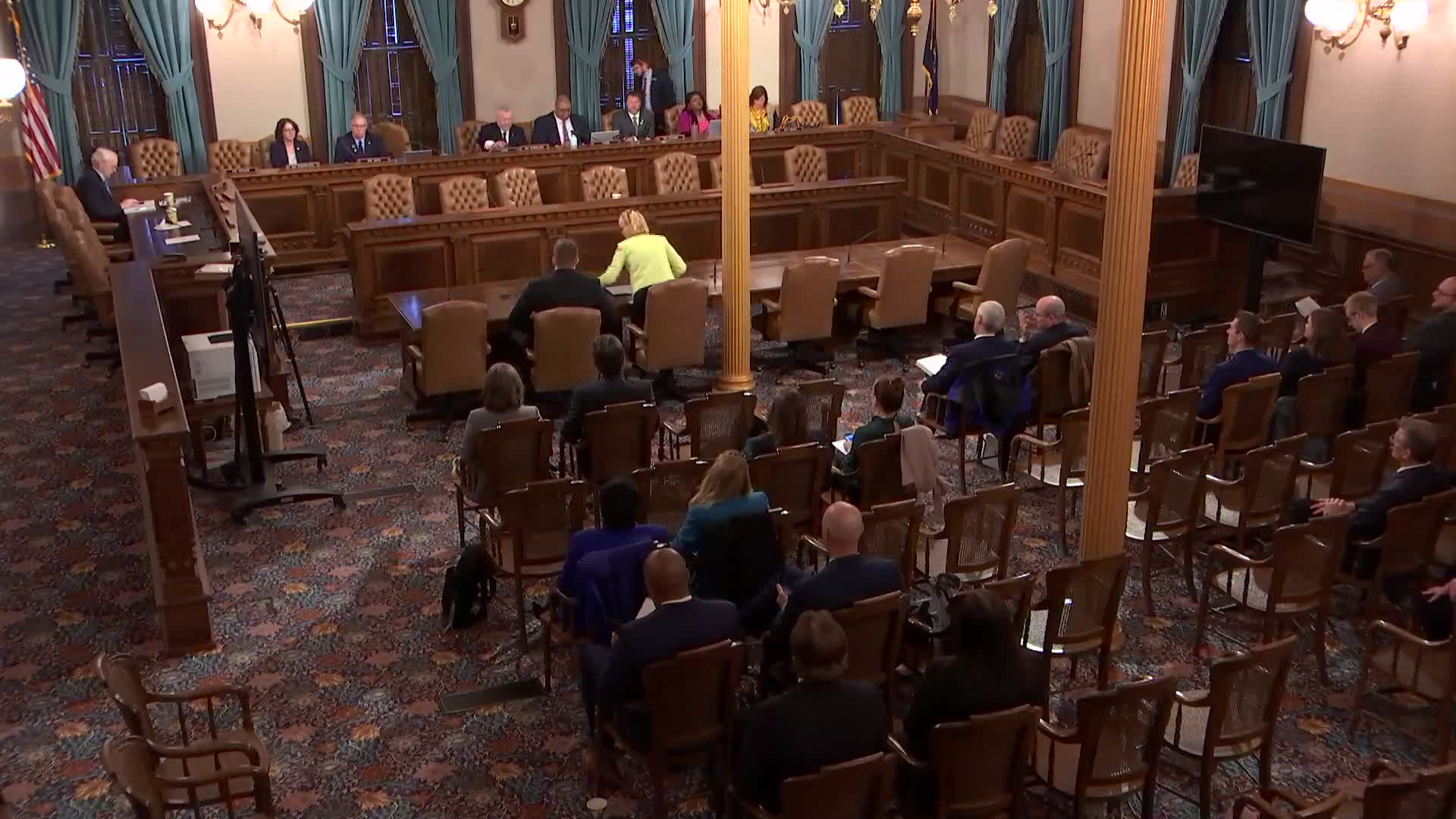
Chairman Markkanen and members of the House Appropriations Subcommittee on Higher Education and Community Colleges heard on the record that Wayne State University has lost federal research funding that supports faculty, students and Michigan businesses.
"We've had roughly, I think, 32 to 33 grants that have been canceled or terminated," Wayne State University President Kimberly Espie told the committee when Representative Zoe Rogers asked how much federal grant funding the university had had frozen or clawed back. Espie said the net value of those losses at Wayne State is about $17,000,000 and that about 80 percent of the affected funding had come from the National Institutes of Health.
The loss of federal awards comes as Wayne State described its role as a large public research university in Detroit that serves about 24,000 students, of whom Espie said about 92 percent are from Michigan and 42 percent are the first in their families to attend college. Espie told lawmakers Wayne State's research and development activity totaled about $290,000,000 last year, an increase of more than 17 percent compared with its urban top-tier peers.
Espie framed state appropriations as a direct way to reduce student cost burdens and support research that yields medicines, devices and startups. She told the committee state appropriations represent about 20 percent of Wayne State's operating budget and that the university uses a sizable share of state support for institutional financial aid. "Every dollar that you so generously allocate ... helps to lower the barriers for students who are academically ready and yet economically at risk," Espie said.
Espie and Austin Shirley, a recent Wayne State graduate who described launching a student-run venture fund, also highlighted student outcomes and community impacts: Espie said roughly six in 10 incoming students currently pay no tuition or fees at Wayne State and that about 81 percent of graduates remain in Michigan to live and work. She gave the university's average graduate loan debt as approximately $24,000 and estimated a typical monthly payment around $225.
In addition to research losses, Espie urged lawmakers to consider recurring funding to help with facility maintenance, technology upgrades and long-term capital renewal. "Taking care of these public assets that you all have helped us to build is an important part of that learning environment," she said, noting many campus buildings are historic and require ongoing investment.
Representative Rogers asked for an itemized accounting through the chair; Espie said she would provide estimates acknowledging that grant totals can change over time.
The presentation closed without committee action; the subcommittee moved on to the next university presentation.