Green Mountain Transit proposes reroutes, shifts frequency to create 15‑minute corridor between Burlington and South Burlington
Loading...
Summary
GMT presented proposed routing and frequency changes to routes 1, 11 and 9, citing new South Burlington development and budget pressure; two public hearings were scheduled and staff said the changes aim to concentrate service on higher‑ridership corridors.
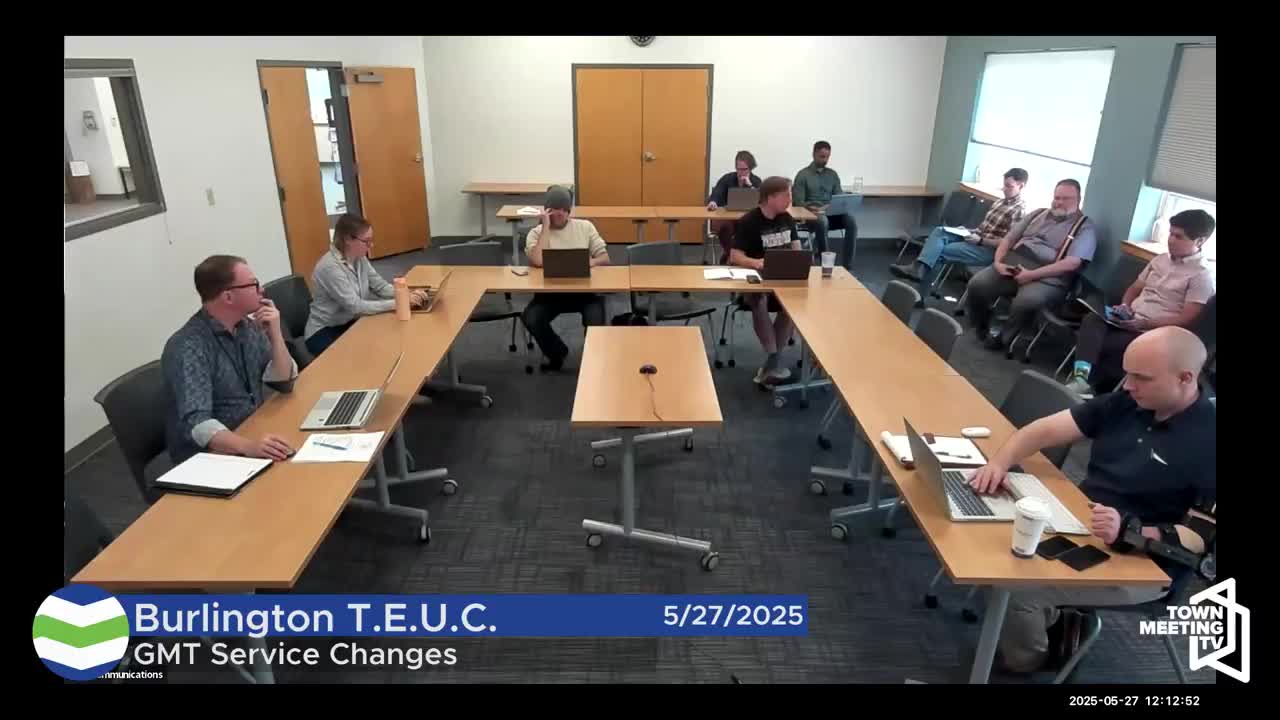
Green Mountain Transit (GMT) staff told the Burlington City Council Transportation, Energy and Utilities Committee that they plan to reroute and change frequencies on three routes to match new development patterns in South Burlington and to preserve service amid fiscal pressure.
GMT General Manager Clayton Clark said GMT is aiming for “service improvements” despite recent financial challenges and turned the presentation over to Chris, GMT’s director of planning, who outlined proposed changes to routes 1 (Wellston), 11 (Airport) and 9 (Winooski).
The agency proposed reducing the number 1 route’s weekday frequency from every 20 minutes to every 30 minutes during the bulk of the day and shifting the number 11 from 45‑minute headways to 30‑minute headways; the 1 and 11 would be scheduled in offset departure times so they operate together as an approximately 15‑minute corridor between Downtown Burlington and the South Burlington city center. Chris said the changes are driven by “new development that’s happening in South Burlington” and by stop‑level ridership data showing most demand is between Downtown Burlington and the Dorset/Market Street area.
GMT also described a routing change for route 9 to serve a Shaw’s in Colchester and to align Winooski Main Street stops to be bidirectional; a reduction in late‑night service on that route already went into effect in December. The agency noted that the revised 11 would no longer serve the airport directly — GMT staff said the airport is accessible by a roughly 10‑minute walk from the Wilson Road stop on route 1 and that few riders currently use the 11 for airport trips because flight times do not match the span of service.
On funding, GMT staff said the governor’s budget provided more funds than earlier expected, easing some near‑term reductions (previous reductions were in the roughly $1.0–$1.2 million range), but they cautioned about a projected FY27 funding gap they estimated at about $3 million. Clayton Clark said GMT plans to publish another service‑reduction list in late fall to align with the next legislative session if needed.
GMT said it will hold two public hearings on the proposed changes: June 9 at 5:30 p.m. at South Burlington City Hall and June 10 at noon via Zoom, and invited written comments to planning@ridegmt.com.
Committee members asked about medical center and university connectivity; GMT said the number 2 route will continue to serve the UVM Medical Center and that UVM and the medical center operate their own shuttles and are negotiating unlimited access and fare arrangements with GMT. GMT staff also noted ongoing improvement of passenger counting and fare‑system data collection, including required stop‑level counts done every three years and plans to install automatic passenger counters to better capture ridership patterns.