Get Full Government Meeting Transcripts, Videos, & Alerts Forever!
Get email alerts on the Thyroid Cancer Northeast Ga topic
No spam. Unsubscribe anytime.
Surgeons and university researchers flag higher thyroid cancer incidence in Northeast Georgia, propose local study
Summary
Surgeons and university researchers told the House study committee that multiple Northeast Georgia counties show thyroid‑cancer incidence well above the state average and proposed a phased study to investigate trends and environmental or epigenetic drivers.
During the committee’s Gainesville session, endocrine surgeons and university researchers described a sustained, above‑average rise in thyroid cancer diagnoses across parts of Northeast Georgia and proposed a coordinated local research effort to investigate causes and next steps.
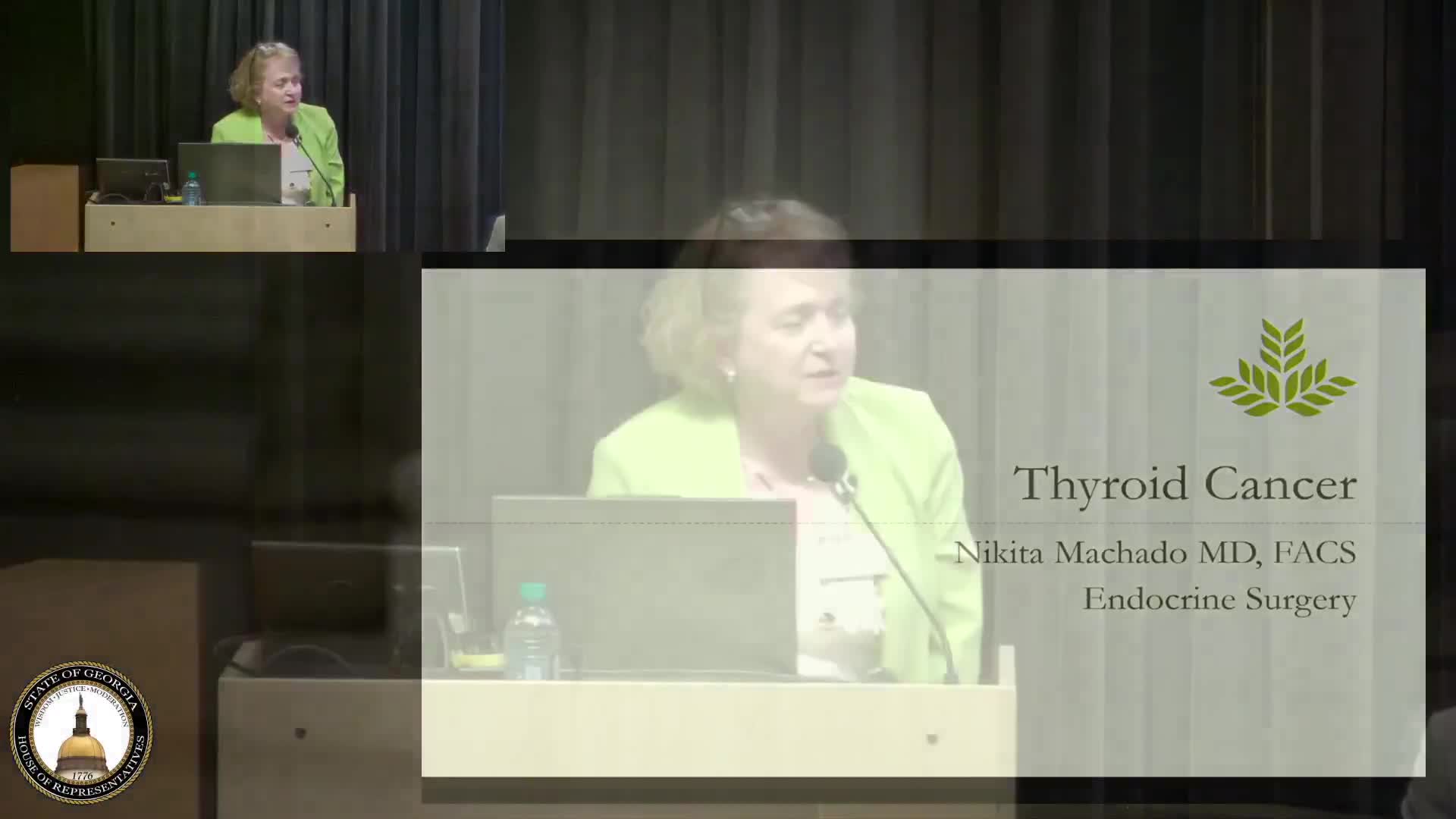
“While radiation is the number one cause, there’s a lot that we don’t know about endocrine‑disrupting chemicals,” said Dr. Parker Hyde of the University of North Georgia, summarizing evolving research into epigenetic modifiers such as per‑ and poly‑fluoroalkyl substances (PFAS). Dr. Nikita Machado, an endocrine surgeon, said the area’s age‑adjusted county incidence rates are substantially above the statewide rate and told the committee about a 38‑year‑old patient who required two operations and radioactive iodine—an example of the clinical and financial burdens that can follow a thyroid diagnosis.
The nut graf: presenters showed county maps and SEER/DPH incidence data indicating age‑adjusted thyroid cancer rates in several Northeast Georgia counties about double the state rate (state rate ~11.5 per 100,000; some local counties in the mid‑20s per 100,000). University of North Georgia faculty described a proposed multiphase research plan that will analyze year‑by‑year registry data, search for geographic subclusters and investigate possible environmental, genetic and epigenetic contributors, using geospatial analysis and student researcher teams.
Machado urged partnerships among hospitals, public health and university researchers to determine whether the rise represents overdiagnosis (smaller, indolent cancers identified by more imaging) or an increase in clinically significant disease with possible environmental drivers. “She’s undergone all of that treatment and I know for a fact that she’s going to do great in the long run…but her worries were different,” Machado said, describing the patient’s financial and family burdens from care.
Ending: UNG and Northeast Georgia Health System presenters offered to prepare a scope and fiscal estimate for a formal study and said they would collaborate across institutions; the committee asked them to provide a fiscal note and a phased research plan to guide potential state support.