Get Full Government Meeting Transcripts, Videos, & Alerts Forever!
Get email alerts on the Community Oncology Crisis topic
No spam. Unsubscribe anytime.
Rural oncologists warn of a crisis: independent community clinics struggle with reimbursement, staffing and prior authorization burdens
Summary
Community oncologists described systemic financial pressures—low practice reimbursement relative to hospital outpatient departments, high drug costs, pharmacy benefit manager practices and rising prior‑authorization burdens—that are encouraging consolidation, reducing independent rural oncology capacity and threatening local access.
The committee heard a sustained appeal from community practitioners that independent cancer clinics in rural Georgia are under severe economic pressure and that closures or consolidation into hospital systems are reducing access close to home.
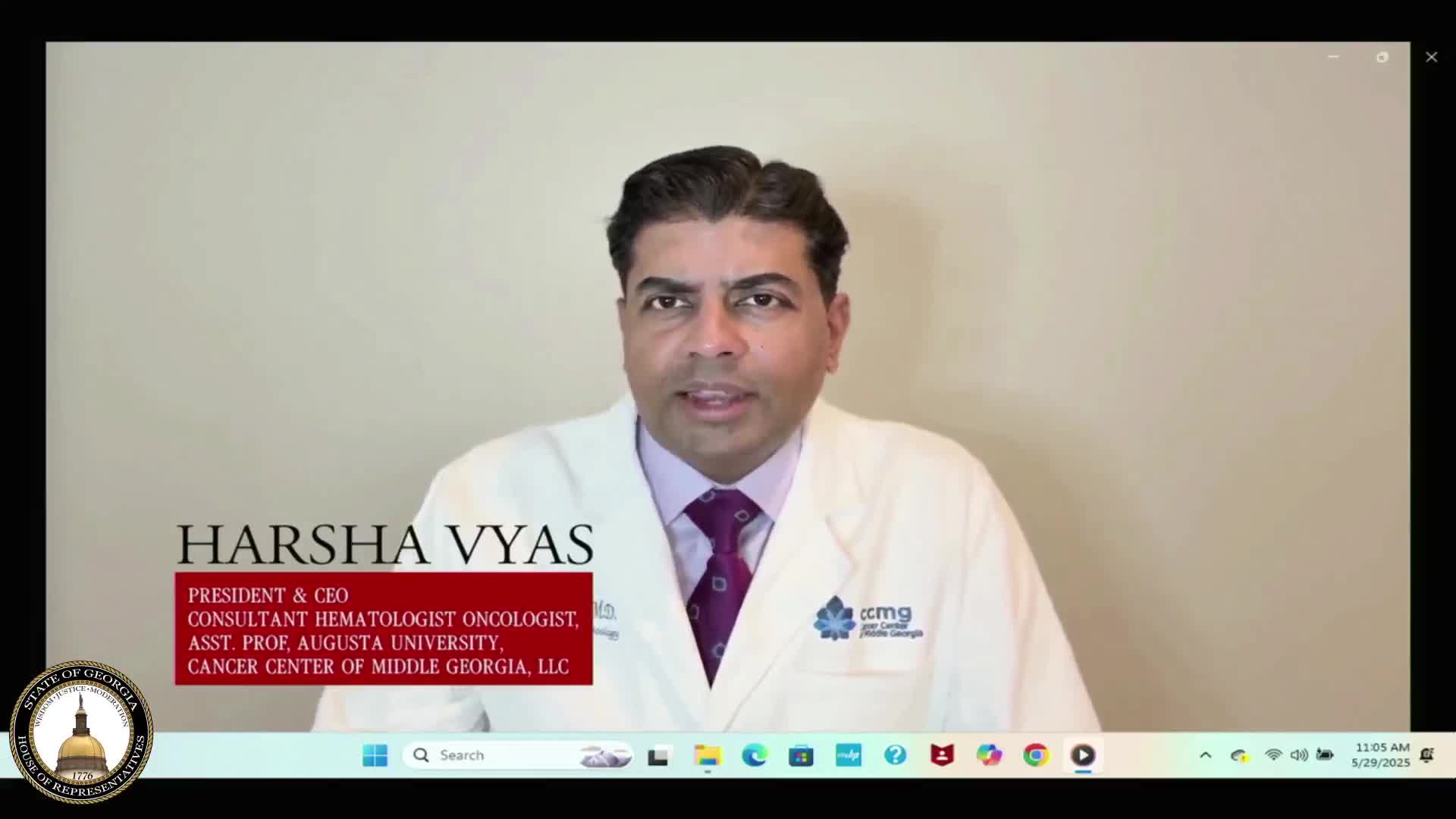
“About 7% of the nation's medical oncologists practice in rural areas where about 18 to 20 percent of the population lives,” said Dr. Harsha Avias, a board‑certified hematologist and medical oncologist who practices in Dublin. “I believe we are at a moment of crisis, and we need to act before the last of the few practitioners like me are either driven out of business or get consolidated into entities who really truly will not be able to provide the kind of care a full time doctor who lives in the community will likely provide.”
The nut graf: Avias and other presenters laid out causes: lower reimbursement to independent practices compared with hospital outpatient departments; rapidly rising drug costs and thin margins when specialty drugs are not fully reimbursed; administrative drains from prior authorizations and step‑therapy rules; and the effects of pharmacy benefit managers and 340B program dynamics that can favor hospital acquisition. Avias said practice closures reduce local capacity, leaving rural patients to travel farther for infusion, radiation and multidisciplinary care.
He urged state action on prior‑authorization reform, transparency around pharmacy benefit manager practices and targeted supports to sustain community oncology practices. Avias pointed committee members to a recent federal executive order (dated April 15, 2025) that addresses PBM transparency and Medicare incentives to shift drug administration toward hospital settings.
Ending: The presenter offered to share policy proposals from the Community Oncology Alliance and asked lawmakers to consider state‑level steps—prior‑authorization reform, payment parity for physician‑office drug administration and administrative support—to preserve community oncology care in rural Georgia.