Get Full Government Meeting Transcripts, Videos, & Alerts Forever!
Get email alerts on the Foreign Ownership topic
No spam. Unsubscribe anytime.
Senate approves ban on certain foreign land purchases aimed at protecting military training sites; critics warn of xenophobic echoes
Summary
Senate Bill 11‑09, which narrows prohibitions on some foreign national land ownership (targeting the People's Republic of China), passed the Arizona Senate May 28. Sponsors said it protects national security and training at Luke Air Force Base; opponents said the measure risks targeting Asian communities and repeats historical 'alien land' laws.
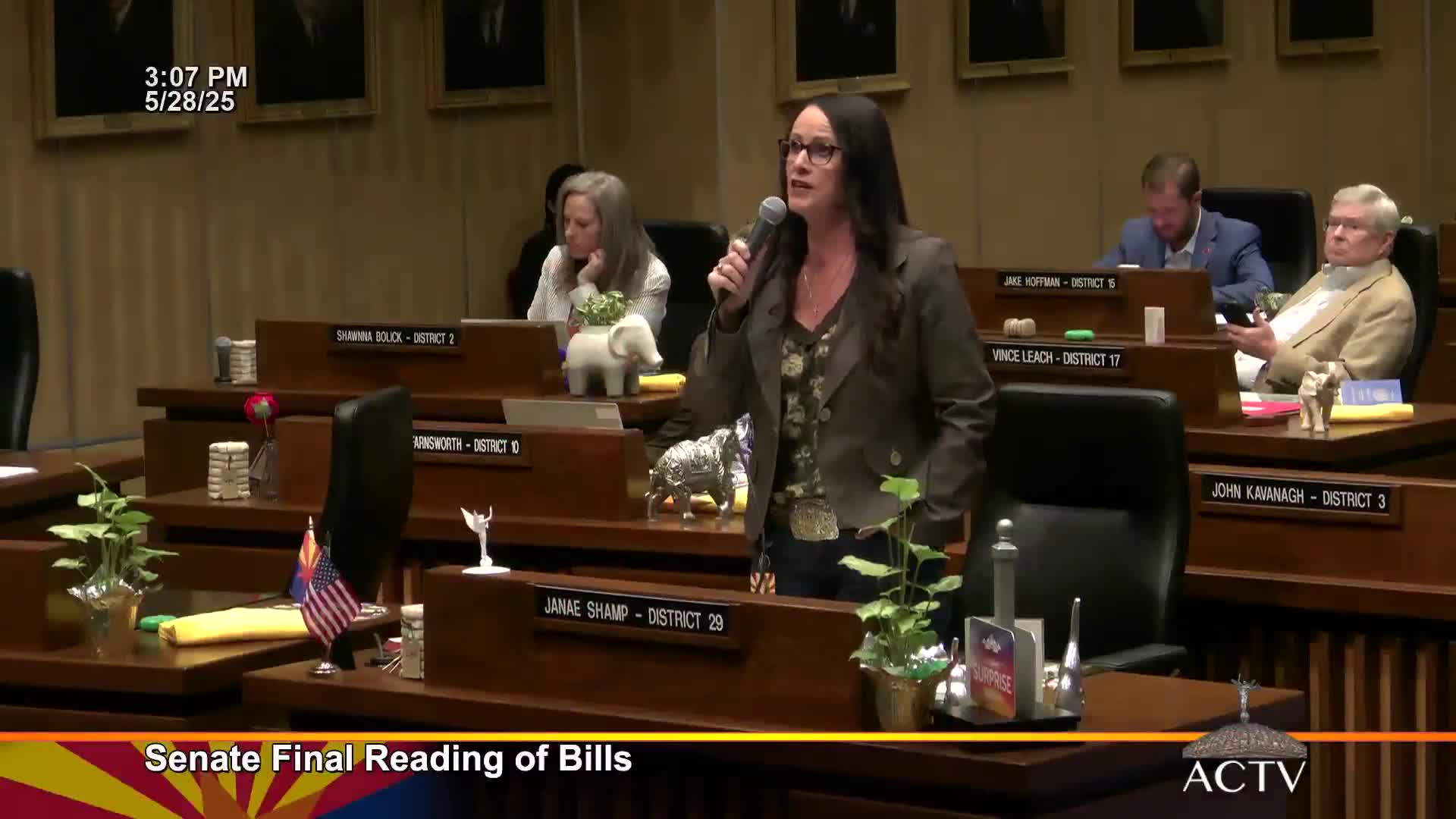
The Arizona Senate on May 28 approved Senate Bill 11‑09, a measure that restricts certain land purchases by foreign entities and was described on the floor as aimed at protecting national‑security interests such as training at Luke Air Force Base.
Supporters said the bill is narrowly tailored to address threats posed by actors associated with the People's Republic of China. Senator Farnsworth and the majority leader framed the legislation as protecting vital training operations in Arizona. The majority leader told colleagues the People's Republic of China is “an enemy of The United States” and cited concerns about spying on Luke Air Force Base and F‑35 training operations.
Opponents warned the bill repeated a long, regrettable history of ‘‘alien land’’ laws that targeted Asian Americans. Senator Sundarization invoked that history and urged colleagues to reconsider: “May is still Asian American and Pacific Islander month. And yet here we are hearing a bill that has been very narrowly amended so that it specifically targets foreign nationals from China from owning land in the state. What a way to celebrate Asian American Month.”
Other senators who supported the bill cited alleged national‑security incidents in other states and argued the measure is necessary to prevent hostile foreign actors from acquiring land near critical military installations.
On final reading the Senate recorded 17 ayes, 11 nays and 2 not voting; the clerk reported the bill passed and was sent to the governor for signature.