Get Full Government Meeting Transcripts, Videos, & Alerts Forever!
Get email alerts on the Msa Cancer Funding topic
No spam. Unsubscribe anytime.
Study committee reviews use of tobacco settlement funds and cancer investments in Georgia
Summary
Speakers told the Georgia House study committee that Master Settlement Agreement (MSA) dollars helped build cancer programs but that the share of MSA funding dedicated specifically to cancer has fallen over time, prompting calls to reassess priorities for prevention, screening and treatment.
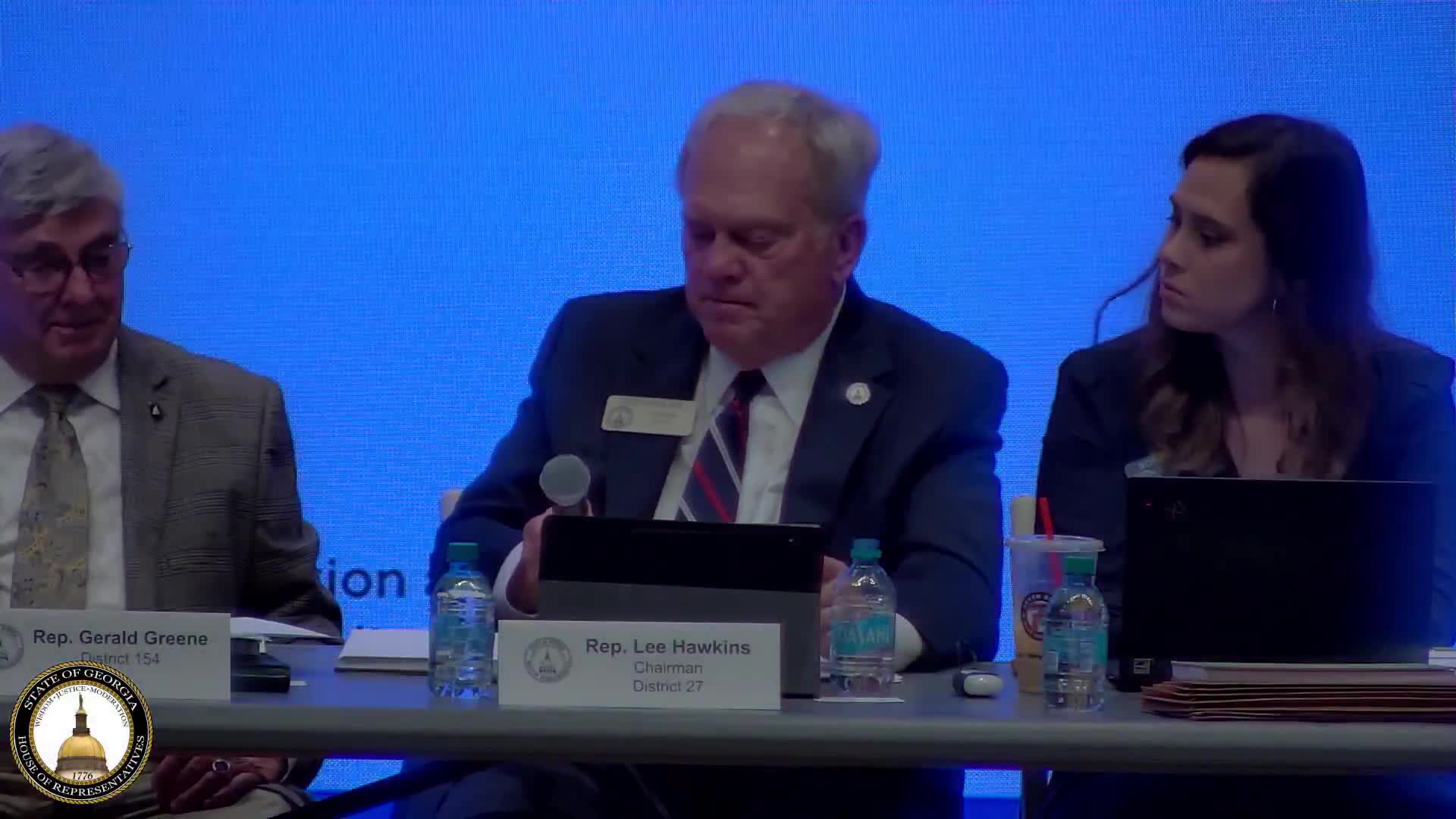
Members of the Georgia House Study Committee on Cancer Care Access heard a history of how state tobacco settlement dollars were used and how those allocations changed over two decades. Dr. Chris Parker, director of population and global health at the Georgia Health Policy Center, told the committee the state has received about $4 billion from the Master Settlement Agreement and that roughly $600.9 million of that was appropriated for cancer-related activities.
“The expectation was that the resources would be established in perpetuity,” Dr. Parker said, describing the original intent of the Master Settlement Agreement to reduce harms from tobacco and fund health initiatives. He said Georgia initially put a larger share toward cancer initiatives but that the proportion has declined and “we’ve kind of dropped to about 9% and held steady at that rate.”
The nut graf: committee members were shown that MSA funds supported screenings, treatment for low-income and uninsured patients (the Kansas State Aid—treatment—program was cited), clinical trials, and the Georgia Comprehensive Cancer Registry, but speakers said the relative share dedicated specifically to cancer control activities is smaller now than at the program’s outset. That shift has led presenters to urge the committee to consider whether and how state-level funding priorities should be adjusted to strengthen screening, prevention and access in underserved areas.
Parker and other presenters emphasized that much of the MSA money now flows to Medicaid and wider health-system supports; only a minority is used for targeted cancer-control programs. He said some MSA-funded activities remain important, including tobacco-prevention programs, clinical-trial support and a small treatment fund for underinsured patients. “Most of the resources that find a way to cancer specific or related activity are focused in on treating low income or uninsured populations,” Parker said.
Committee members asked whether shifting more resources to prevention and screening would be effective; Parker and other panelists said expanded insurance coverage helps but does not by itself solve access problems such as transportation, workforce shortages and health literacy. The committee did not take formal action at the meeting; speakers asked for further data and follow-up at upcoming sessions in Albany and at the Medical College of Georgia.
Ending: The presentation framed MSA dollars as an engine that has funded both treatment and prevention over time while raising questions about whether the balance should change as Georgia faces persistent rural access gaps and rising incidence for some cancers. The committee plans follow-up briefings and requested additional budget and program detail in later meetings.