Get Full Government Meeting Transcripts, Videos, & Alerts Forever!
Get email alerts on the Education Antisemitism topic
No spam. Unsubscribe anytime.
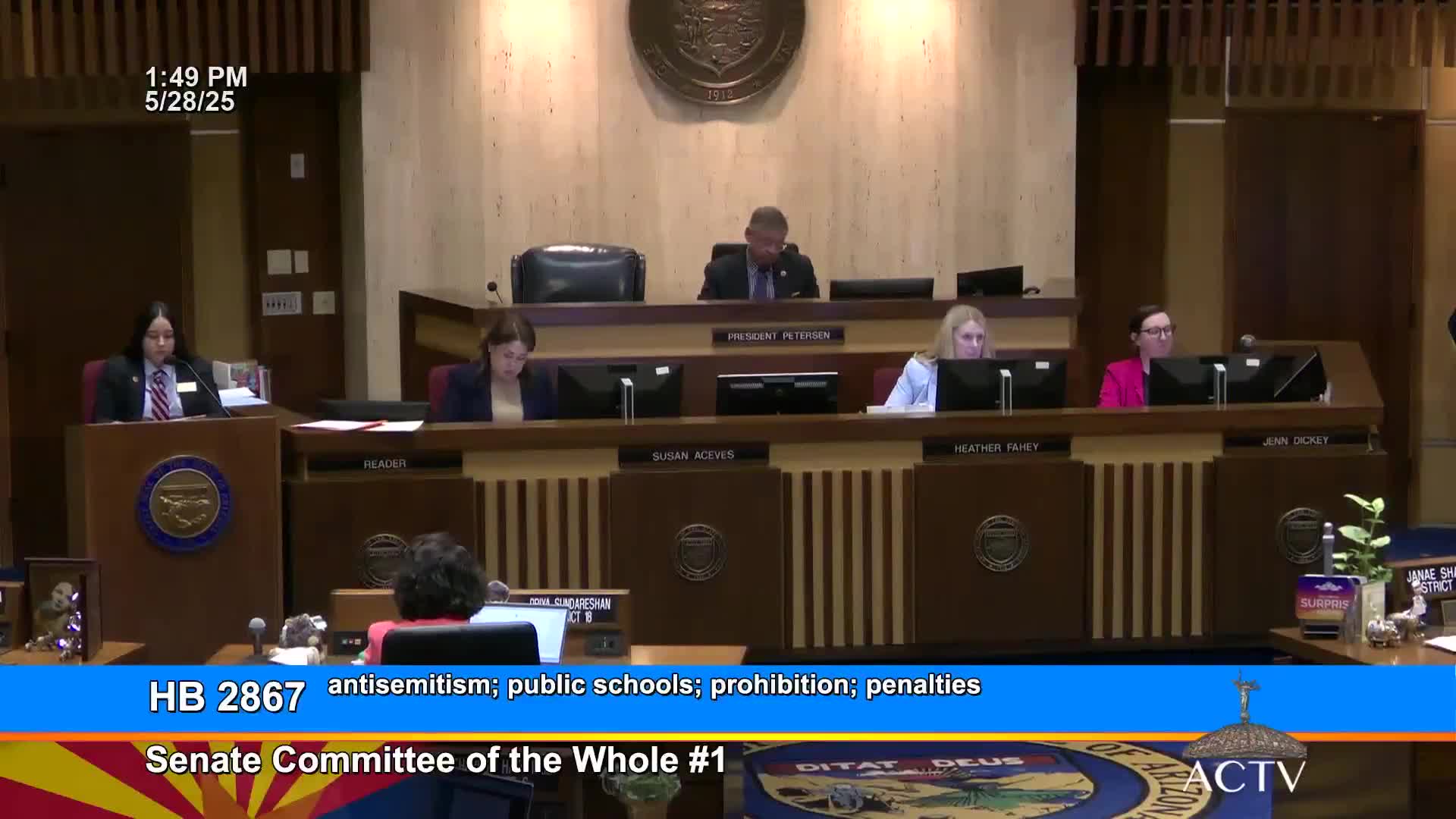
Arizona Senate passes bill on antisemitism in schools after heated debate over scope and penalties
Summary
The Arizona Senate on May 28 passed House Bill 28‑67, a measure targeting antisemitic conduct in K‑12 schools; floor amendments narrowed the bill to conduct (not all speech) and confined it to public schools while opponents warned it will chill classroom discussion and invite litigation.
The Arizona State Senate passed House Bill 28‑67 on May 28, adopting amendments that narrow the measure and limit its application to public schools after hours of floor debate and competing floor amendments.
Senators debated two high‑profile floor amendments. Senator Mitzi Epstein said of her amendment, “I urge a yes vote on my amendment,” arguing it would broaden protections against many kinds of unlawful discrimination, drop what she called “draconian punishments,” and extend coverage to private schools receiving public dollars. Senator J.D. Meznard described his floor amendment as clarifying process and scope: “we established a little more systematic, sort of hierarchy that you work through as part of that process,” and emphasized that the amendment focuses on conduct rather than protected speech.
The bill as amended adopts a definition of prohibited conduct based on the working definition commonly used to identify antisemitic acts (often referenced in testimony as the IHRA framework) and adds a structured complaint and remediation process, according to sponsors and amendment text explained on the floor. Proponents said the changes were intended to target discriminatory actions and not otherwise protected classroom speech; Senator Meznard told colleagues the amended language “makes clear that we are referring to actions, and not speech.”
Opponents argued the bill still risks constitutionally protected expression and would create heavy personal liability for educators. Senator Kuby called the measure “a content‑based restriction on speech” and warned it “violates the First Amendment,” and Senator Ortiz said the bill “is about censoring speech, chilling speech and it threatens to undo decades of work to build trust in public systems.” Several senators cited a recent federal case involving adoption of the IHRA definition at public universities as a warning the statute could be struck down in court.
Floor votes reflected the partisan split and intense debate. A procedural effort to include a broader amendment from Senator Epstein failed on the floor; the Meznard amendment was adopted. The Senate later passed the bill as amended on final reading by a roll call of 16 ayes, 12 nays and 2 not voting.
Supporters said the amended bill clarifies remedies and focuses on conduct with a stepwise complaint process, while critics said remaining provisions could be used to punish teachers and chill classroom discussion about Israel, Palestine and other international subjects. Several senators urged the authors to further refine definitions and procedural protections to avoid unintended consequences and litigation.
The bill will be transmitted to the House. If enacted, opponents predict legal challenges on First Amendment grounds; supporters said they intend the law to deter conduct that amounts to harassment or discrimination in schools.
Less critical items discussed in the same debate included procedural points about whether private schools receiving state funds should be covered; Senator Epstein argued that state funding via ESA/STO mechanisms justifies extending protections to those schools, while other senators argued public and private schools should be treated differently.