Get email alerts on the Land Use Buffers Setbacks topic
No spam. Unsubscribe anytime.
Commissioners flag small setbacks, enforcement lapses and ask staff to clarify buffer rules
Summary
Planning commissioners raised concerns May 19 about recent subdivisions sited close to state roads, small setbacks (15 feet) and buffer enforcement. Commissioners requested a staff presentation on setback/buffer standards and visuals to improve review and enforcement.
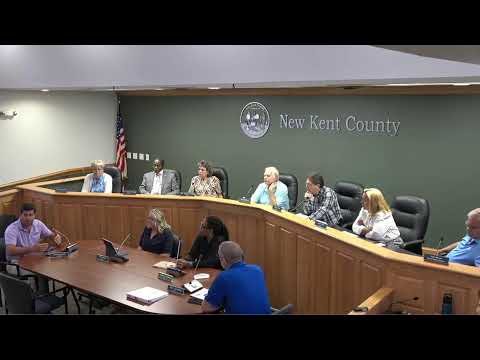
Planning commissioners at the May 19 meeting expressed concern that some recent subdivisions and site plans rely on minimal setbacks and weak buffers, and they asked county staff to present a clear primer and visual examples showing current setback and buffer requirements across zoning districts.
"We are really at a tipping point right at the moment of crisis with the way the traffic is dealing in that particular area," Commissioner Miss Townsend said during commissioner reports while raising safety and visibility concerns related to roadside development; she later pressed officials about nearby subdivisions where a 15‑foot setback left homes close to the state road. Townsend asked staff for visuals to show what a 50‑ or 75‑foot setback would look like on the ground.
Commissioner Mister Dabrowski argued the county should codify buffer content and thickness so developers cannot meet a numeric buffer with grass alone: "If we can look at this and change the code and then there's no question, then the developer has to fall within those lines for what we say we wanna do," he said. Several commissioners described instances where approved site plans were later built differently, and they framed those as enforcement lapses.
Planning staff acknowledged the issue and agreed to provide more visual material and a briefing on how setback and buffer requirements currently apply across zoning districts. Patrick Silva, principal planner, indicated staff time permitting they could present "a primer on setbacks and buffering" to help commissioners recognize when a proposed layout meets code and when it may warrant further enforcement or a condition on approval. Commissioners suggested the primer include example site plans, recommended plantings (evergreens and year‑round screening), and clear language so developers understand both distance and planting requirements.
No formal motion or regulatory change was adopted at the meeting; commissioners instead asked staff to prepare material and to consider buffer standards as part of the broader zoning rewrite work already underway.
AI generated
The text on this page is AI generated. Summaries, highlights, analysis, and video transcripts are all produced from the original source material.
AI can make mistakes, so if you spot one, and we will fix it for everyone.
Note: the source content is unaltered by us. Any content source we link to, be it a video, an audio recording, or a document, is presented exactly as its publisher released it. That publisher is usually a government body, sometimes an individual official or another organisation.