Get Full Government Meeting Transcripts, Videos, & Alerts Forever!
Get email alerts on the Trees And Utility Work topic
No spam. Unsubscribe anytime.
Residents and board press utilities over widespread tree removals during fiber work in East Aurora
Summary
At the Jan. 6 East Aurora Village Board meeting residents described extensive tree removals tied to utility and fiber‑deployment work, pressed village staff and counsel on options including legal action and grants for replanting, and asked the village to seek better notice and standards from NYSEG, Go Net Speed and contractors.
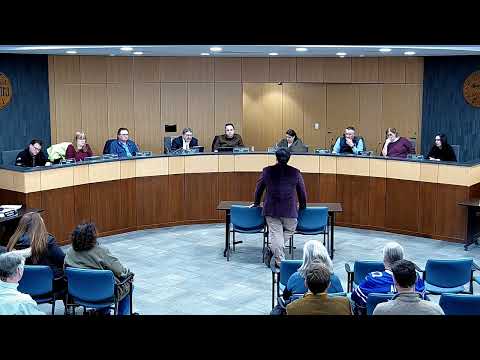
East Aurora village residents packed the board meeting on Jan. 6 to press elected officials and staff over recent utility trimming and tree removals tied to fiber‑optic and pole work.
Village Administrator Shane Krieger told the board that Go Net Speed had agreed “they are currently working on a plan to reroute the cable for the oak tree on South Grove and will not touch that oak tree.” That assurance relieved some neighbors but did not address broader concerns about trees removed elsewhere in the village, residents said.
The meeting’s nut graf: dozens of residents described a pattern they say shows heavy, uneven trimming and removals by utility contractors (NYSEG, O’Connell Electric and Go Net Speed were repeatedly named). Speakers raised questions about notice to homeowners, whether work is maintenance or an expansion, what happens to cut timber, whether environmental and public‑health impacts were considered, and what legal or administrative remedies the village can pursue.
Speakers said crews have removed mature maples, walnuts and other canopy trees in multiple neighborhoods. “They took a super old maple” and a black walnut on East Fillmore, resident Sheila Giblin said. Nancy Smith, who cited the U.S. Forest Service iTree tool, said East Aurora’s canopy covers about 41% of the village and estimated the village’s trees provide about $553,916 in annual ecosystem services. She urged the village to collect economic and canopy data to document damages and pursue grants for replanting.
Several residents described inconsistent communications from utilities. “They left you a postcard. There was no date on it. You called them. Nobody calls you back,” said a resident who said they had not received usable advance notice. Another resident described crews taking large logs and later hauling saw logs from collection points, raising questions about whether contractors or the village could salvage timber for community use.
Board members and staff discussed multiple avenues. Jesse Griffiths, chair of the village tree board, said the village has been working with O’Connell and contractor arborists to set a threshold for removals — for example removing trees that must lose more than half their canopy because they are unlikely to survive. He agreed to draft a short list of “significant trees” the village might ask state agencies to consider in cultural or landmark surveys.
Village Deputy Attorney Joe Trapp and Village Attorney Chris (last name not stated at the meeting) told the board that legal action is possible but difficult and costly. “We could certainly try,” Trapp said when asked about suing the Public Service Commission (PSC) or the utility, “but lawsuits are expensive. And there’s very limited opportunity to be successful in this type of action when you’re going uphill towards the state entity.” Chris said he would research inconsistencies in standards and other legal angles the village could use to press for relief.
Several residents suggested pursuing state grants and programs to repair canopy loss. Speakers noted Lancaster received a 2023 community forestry grant of $255,000; residents urged the village to apply for DEC community forestry and other funding to replant and document economic harm. Resident Monique Bridal, CEO of the Rural Outreach Center, cautioned that salvage wood may not be usable by some community organizations and asked the village to manage expectations.
Board members tasked staff and outside counsel with follow‑up work. The mayor and staff will continue talks with NYSEG and Go Net Speed; the attorney will research possible lawsuits, inconsistencies in PSC/utility standards, and whether a temporary court stay or other relief is feasible; Jesse will prepare a short list of priority trees for possible protection efforts; and staff will gather photos, maps and a timeline to document removals.
The meeting included repeated exchanges about burying lines during street reconstruction projects as a long‑term mitigation measure. Officials said burying utilities is expensive (estimates discussed at the meeting ranged into the high hundreds of thousands for individual streets) but feasible in limited cases when streets are already under reconstruction.
Residents and board members urged greater transparency and advance notice from utilities. Shane Krieger said contractors do leave postcards and knock on doors in some cases, but that scheduling information and detailed maps have not always been provided to the village. Trapp said the PSC rules make it difficult for the village to require advance notice, though the village can request it and raise the issue with state representatives.
Ending: Board members thanked residents for attending and agreed on immediate follow‑up steps including legal research, a prioritized tree list, documentation of canopy loss and exploration of grant funding and conduit installation during planned street projects. The village will report back at a future meeting.