Get Full Government Meeting Transcripts, Videos, & Alerts Forever!
Get email alerts on the Land Use Subdivision topic
No spam. Unsubscribe anytime.
Councilors recommend tightening minor resubdivision rules, urging drainage plans and servitude access
Summary
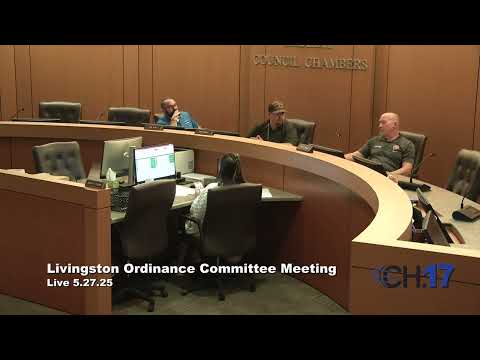
Members of the Livingston Parish Ordinance Committee discussed a proposed ordinance to prevent repeated minor resubdivisions of large tracts, recommend reducing the current nine‑lot minor resub threshold to four lots, and require drainage plans and servitude access for future minor subdivisions.
A Livingston Parish council member introduced an ordinance Friday aimed at closing what he called a loophole allowing repeated minor resubdivisions of large tracts into nine‑lot parcels, and asked the committee to send the proposal to the full council with a recommendation to lower the minor‑subdivision threshold from nine lots to four.
The measure responds to complaints from gravity drainage districts that repeated, small resubdivisions occur without drainage impact analysis or servitude for maintenance, leaving downstream systems uncertain where runoff will go and preventing crews from accessing private ditches. "We have no servitude of access," a resident who gave his address as 32774 Cobberwood Drive said during public comment. "We're left holding a bag trying to figure out...getting servitude of access from everybody." The resident also said many of the private roads created for these lots lack proper base and quickly deteriorate.
The presenting council member said the draft ordinance would preserve a "family petition" path allowing family members to subdivide property for immediate relatives while requiring broader development to meet drainage and roadway standards. He described two levels of drainage review used by the parish: a drainage plan and a more extensive drainage impact study, both prepared by engineers, and said the proposed rule would require at least a drainage plan and recorded drainage servitudes for any future minor subdivides above the proposed threshold.
Committee members and residents pressed for specifics: whether the requirement would be a drainage plan or the full study, who would certify compliance, and how the family‑petition process would be structured so longtime residents are not unfairly burdened. A planning‑process detail mentioned was that currently many minor resubdivisions are approved administratively by planning staff and do not appear before the council or a public committee.
After discussion, a motion was made to send the draft ordinance to the council recommending Councilman Gough’s change from nine lots to four lots; the motion was seconded and no formal vote was recorded in the committee minutes. The committee chair said the ordinance and supporting materials will be circulated to committee members and returned to a future ordinance meeting for further review and any legal guidance from the parish attorney.
The proposal would not immediately change final approval standards; it would send the draft to the council for ordinance drafting, legal review and further amendment. Additional technical details—how drainage plans will be certified, the dollar cost difference the parish expects between a plan and a full study, and precise family‑petition language—were left for staff and the parish attorney to clarify at a later meeting.