
Public and trustees push for early planning on electric-bus transition; district outlines constraints
Get AI-powered insights, summaries, and transcripts
Sign Up Free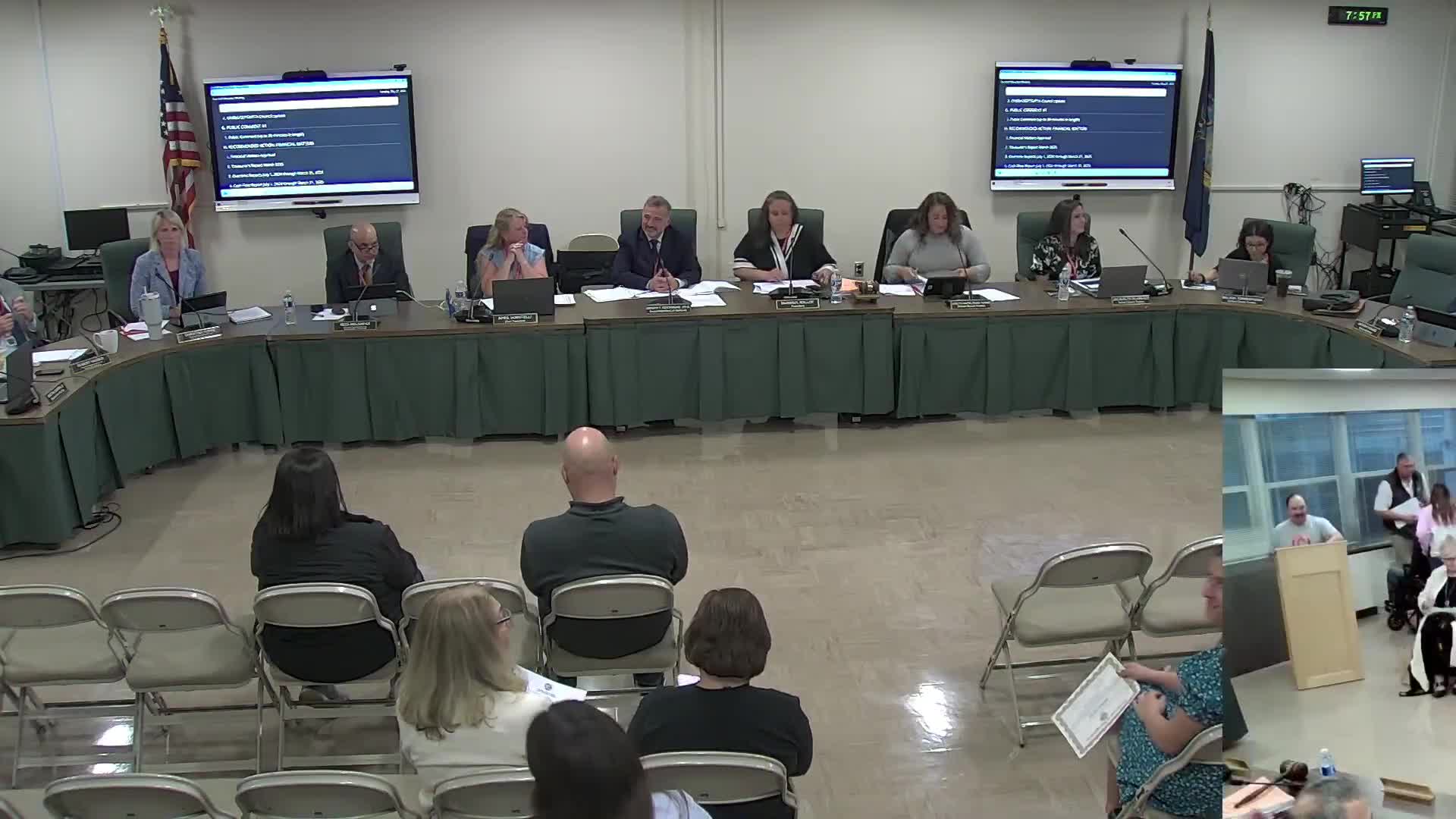
Summary
Public commenters and trustees urged CONNETQUOT Central School District to begin planning now for a mandated transition to electric buses; the superintendent described funding, infrastructure, fire-suppression and grid constraints and noted the district has filed an initial plan with NYSED.
A public commenter and several trustees pressed the CONNETQUOT Central School District Board to accelerate planning and budgeting for conversion of the districts bus fleet to electric vehicles. The districts superintendent said the district has filed an initial plan with the State Education Department and outlined technical and financial constraints.
A member of the public who spoke during open comment urged the board to begin work immediately on buying electric buses and the related charging infrastructure, saying the district should "start looking at that tomorrow" to avoid being caught unprepared for imminent requirements. The commenter suggested involving students and local engineering clubs to research manufacturers, lead times and charging-equipment vendors.
Trustees and district staff discussed federal and state grant opportunities and the NYSERDA electrification plan process. The superintendent said the district has not yet completed a full electrification study with NYSERDA and that such a study can be expensive; he said NYSERDA may fund 50% of the study cost (up to 70% for qualifying districts) but that initial study costs could be substantial. He also said charging infrastructure and grid capacity remain major hurdles and that a single large district fleet conversion could require tens of millions of dollars of infrastructure and vehicle purchases.
Trustees noted that an electric bus can cost several times a diesel bus (the superintendent cited example figures: large bus $400,000+, small bus $200,000+), and that charging-station installation can add roughly $30,000 per charger. The superintendent said there are also fire-suppression considerations described by local fire departments for electrified vehicles and that the district is awaiting details on the state's authorization process and any timeline-extension mechanisms included in recent legislation.
Board members agreed the district should continue advocacy and planning while waiting for clearer state guidance and funding details; no vote or formal directive was recorded in the transcript requiring immediate purchase or to begin a NYSERDA-funded study at district expense.