Get Full Government Meeting Transcripts, Videos, & Alerts Forever!
Get email alerts on the Budget And Taxes topic
No spam. Unsubscribe anytime.
Board weighs tax increase options as fund-balance, staffing and health-care costs shape final budget
Summary
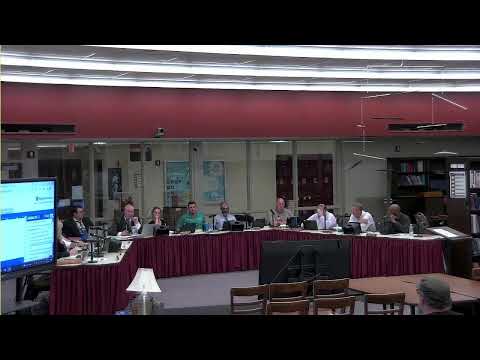
District business staff reviewed fund-balance history and drivers and presented three tax-increase scenarios (4%, 4.5%, 5.3%) for the June 9 budget vote; board members debated preserving fund balance versus raising taxes to the index and asked for clarity on staffing commitments.
Caleb, a district staff member presenting on the budget, reviewed the General Fund fund-balance history and the drivers behind recent increases, then laid out three tax-increase scenarios the board must decide for the final budget vote. "The state allocation [Homestead and Farmstead] went up about $215,000," Caleb said, and he showed three levy scenarios that would generate different levels of revenue: a 5.3% index increase producing about $1,850,000, a 4.5% increase producing about $1,590,000, and a 4% increase producing about $1,410,000.
Caleb reminded the board about recent one-time inflows that boosted fund balance, including unexpected real estate transfers and warehouse assessment growth around 2021–22, and listed current fund-balance uses the district has already authorized: technology purchases, maintenance and the James Byrd roof project (estimated at $1,400,000). He noted the district has been carrying a debt-service budget line higher than actual debt payments, which had helped build reserve room but is now eroding as new debt service comes online. Caleb asked the board for direction on which tax scenario to present at the June 9 meeting.
Board members asked substantive follow-ups. Board member Fred Scott pressed for clarity on the special-education curriculum purchase ($40,000) and whether federal Title funds or state flows might affect that obligation. Caleb and other administrators explained that Title funds pay mostly for reading specialists and that special-education funding is primarily a state responsibility; if federal delivery changes to a state-block mechanism, locally available amounts could be affected.
Several board members debated the trade-off between drawing on fund balance for capital and operating needs versus raising taxes. Board member Levi Kressler and others said raising taxes to the full index would be a way to invest in services and avoid depleting the fund balance, while others said incremental or lower increases could be justified given recent large increases last year. Caleb reported an informal count at the end of the meeting: three board members indicated support for a 5.3% increase and two for 4.5%; the administration said 4.5% is the level that can currently pass without further changes.
No final levy decision was made at this meeting; the board directed staff to prepare the budget options for formal action at the June 9 meeting. The administrators also flagged June 30 as the state budget deadline that could still change some assumptions before the district adopts its tax rate.
Ending: The board will receive the budget documents and the scenarios Caleb requested on or before the June 9 meeting, at which the board may vote on the final millage increase and the 2025–26 budget.