Get Full Government Meeting Transcripts, Videos, & Alerts Forever!
Get email alerts on the Public Health Vector Control topic
No spam. Unsubscribe anytime.
Missoula health officials say West Nile likely this summer; urge bird reports, horse vaccination and mosquito control
Summary
Missoula health department presenters said West Nile virus is expected in Western Montana this summer and advised residents to report dead corvids and raptors, vaccinate horses, remove standing water, and use DEET-based repellents, especially for older residents.
Missoula health officials told a public forum that West Nile virus is likely to reach Missoula this summer and outlined surveillance and prevention steps for residents and animal owners.
“We're leaning strongly that it's gonna be in Missoula this summer,” said Greg Oliver of the Missoula health department as presenters described how migrating birds, infected mosquitoes and local mosquito habitat drive spread.
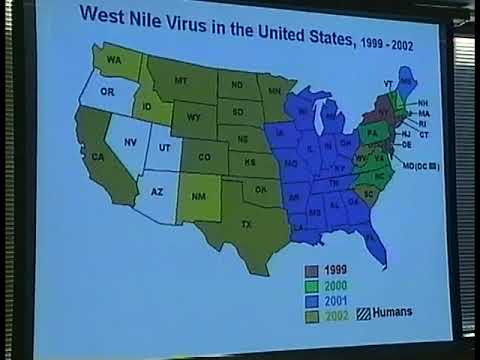
Health officials emphasized that birds are the reservoir and mosquitoes the vector for West Nile virus. Jim Carlson, environmental health director, said humans and horses are “dead end[s] in terms of transmission of the disease,” meaning infected people and horses do not generally pass the virus back to mosquitoes. Brent Good, the department’s lead epidemiologist, described national and state surveillance patterns showing human case onset typically peaks in late August and September.
The forum covered animal and human risks and practical prevention measures. Veterinarian Dr. Roulette Prine said horses are commonly affected because they spend more time outdoors; Montana had 134 confirmed equine cases last year with 38 horses dying or being euthanized. “The vaccine is approximately 85 to 90 percent effective,” Prine said, describing the licensed equine vaccine schedule as two doses given three to six weeks apart, with protection developing about three to four weeks after the second dose. He recommended owners arrange vaccinations so horses are protected by early July when mosquito exposure rises.
Presenters urged the public to help surveillance by reporting and, if willing, submitting recently dead corvids (crows, jays, magpies) or raptors to Fish, Wildlife and Parks for testing. “When West Nile hits bird populations in our area, we really do need your help in this effort,” Brent Good said, explaining that bird die-offs often precede human cases.
Speakers outlined household and landscape steps to reduce mosquito habitat and exposure: remove standing water in buckets, tires and birdbaths; change birdbath water twice weekly; clean gutters; use larvicides such as Bacillus thuringiensis israelensis (BTI) dunks in stagnant water; and maintain screens on windows and doors. An extension office speaker urged residents to check yards thoroughly because mosquitoes can breed in small containers.
For personal protection, Mary Lou Gilman, an environmental health specialist, recommended wearing long sleeves and pants at dusk and dawn and using DEET-based repellents. She gave specific guidance: do not use DEET on children under age 2; for children ages 2–12 use DEET concentrations under 10 percent; adults can use 30–50 percent formulations for longer protection; higher than 50 percent is not shown to increase duration. Gilman added that repellents should be applied to exposed skin (not under clothing) and that hands should be used to apply product to a child’s face to avoid direct spraying.
Speakers answered audience questions about pets, ponds and large-scale spraying. Officials said dogs have been reported to die from West Nile in rare cases and that owners should reduce evening exposure; flea collars do not provide reliable mosquito protection. On large ponds, presenters recommended pumps or moving water to avoid stagnation and noted BTI as a targeted larval control option that is safe for most non-target wildlife when used correctly.
Presenters reiterated key surveillance and timing details drawn from recent U.S. experience: most infected people are asymptomatic; about 1 in 5 infected people develop West Nile fever (flu-like illness); less than 1 percent develop severe neuroinvasive disease (meningitis or encephalitis), and risk for severe disease rises with age. They noted that nationally there were 4,156 human cases through the end of the prior year and that veterinary surveillance had recorded 14,358 equine cases in the United States the prior year.
Officials said the health department will notify the public if local testing confirms infected birds or horses. “We’ll be letting you know if we get a confirmed bird or a horse case or something like that,” Greg Oliver said, adding that bird or equine detections typically precede human cases. The forum concluded with a question-and-answer session on local mosquito habitat, larval surveillance, and horse vaccination timing.
Why this matters: West Nile can cause rare but serious neurologic illness and persistent disability in humans and can be fatal in some horses. Early detection in birds and horses can trigger public-health advisories and targeted prevention steps that reduce human and animal cases.