Get Full Government Meeting Transcripts, Videos, & Alerts Forever!
Get email alerts on the Conservation Bank topic
No spam. Unsubscribe anytime.
Council advances Conservation Bank ordinance amendments after contested public comments
Summary
Oconee County Council advanced an amendment to the Oconee County Conservation Bank ordinance at first reading after public commenters and former board members urged the council to preserve the bank's original purpose; supporters and opponents sparred over whether Duke Energy’s 2016 donation was restricted to easements.
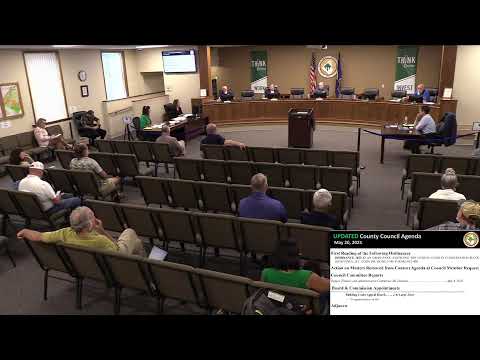
Oconee County Council held a contentious discussion on May 20 over proposed amendments to the county’s Conservation Bank ordinance and advanced the changes on first reading.
Residents, past board members and landowners spoke in public comment opposing broadening the bank’s eligibility criteria. Joseph Tinsley, a local landowner who received funds from the bank after placing a conservation easement on his property, told the council the bank’s original intent was to help landowners offset legal and transaction costs associated with permanent easements and called changes “too far.”
Former Oconee County Conservation Bank board chair Andy Smith, who served six years on the board, urged the council to respect the purpose of a $618,000 donation the county received from Duke Energy in February 2016. Smith said that donation was negotiated specifically for “putting conservation easements or otherwise permanently protecting this land” and warned that broadening the bank’s uses would deter future donors.
Council members disagreed about how narrowly the Duke Energy grant was restricted. One council member said they had spoken with Duke Energy in Charlotte and expected the company would view the grant as available for broader “conservation initiatives,” not strictly easements. A supporter of the ordinance changes argued the memorandum of understanding and relicensing documents the county reviewed did not explicitly require expenditure only on easements and said the revisions would allow the bank to support a wider range of conservation projects.
Speakers on both sides urged caution. Opponents described the language proposed as “mission creep” that could deplete funds donors intended for permanent land protection. Supporters said the Conservation Bank would remain governed by its board and that proposed language would enable stewardship and other conservation efforts that also serve public benefit.
Council took first reading of the ordinance amendment (OC code section cited during the meeting) and recorded a favorable vote to move the change forward for further consideration; council members said Duke Energy representatives would be contacted for clarification. No final appropriation of the remaining bank funds was made during the session.