Get Full Government Meeting Transcripts, Videos, & Alerts Forever!
Get email alerts on the Development Concurrency topic
No spam. Unsubscribe anytime.
Planning Committee clears three subdivisions but members warn about cumulative strain on services
Summary
Lexington County's Planning Committee approved concurrency reviews allowing three proposed subdivisions (Southwood Drive, Valleycrest, Terrapins/Pines) to proceed to permitting while several council members urged a closer look at cumulative impacts on fire, EMS, roads and schools.
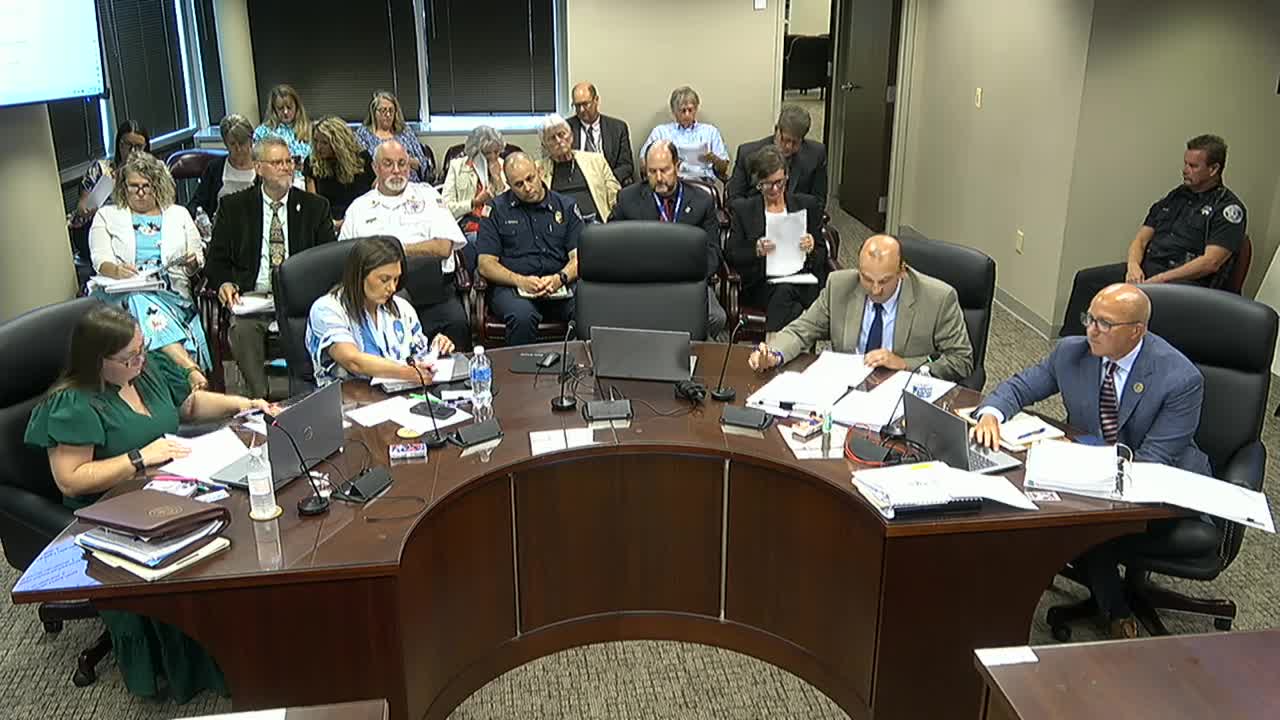
Lexington County's Planning Committee voted this week to approve planning-commission recommendations that allow three proposed single-family subdivisions to proceed to engineering and permitting, while several council members asked staff to report back on cumulative service impacts.
Robbie Derek, director of Community Development, summarized the three concurrency submissions: Southwood Drive (40 lots on about 20.94 acres, gross density ~1.91 du/acre; Council District 5), Valleycrest (198 lots on 129.6 acres; Council District 1) and Terrapins/Pines (119 lots on 80.31 acres; Council District 1). Each package was a sketch plan; staff said lot sizes, open space and infrastructure would be confirmed during permitting.
The Planning Commission recommended all three projects to council (votes reported in the packet and on the record). The committee approved the projects after motions on the floor: Southwood Drive (motion by Councilman Fisher, second by Mr. Cromwell; motion passed), Valleycrest (motion by Councilman Bishop, seconded by Councilman Fisher; motion passed), and Pines/Terrapins (motion by Councilman Fisher, second by Councilman Bishop; motion passed).
Several council members urged a stronger, cumulative accounting of pipeline development when staff performs future concurrency reviews. Chief Hood (fire/EMS) and other emergency-services staff told the committee the current concurrency checks rely on response-time standards (for EMS and fire) and that future growth could strain services even if current response-time metrics are being met. Council members said they want a one-time summary of development activity in the prior year (number of subdivisions and estimated dwelling units by school district and by region) and a review of how concurrency metrics are applied across multiple pending projects.
Officials also raised infrastructure questions: several sketch plans had not yet identified utility providers, and staff said developers must provide service-provider capacity letters during permitting. Committee members asked staff to add minimum-lot-size and council-district details to future memos to make density and lot-size comparisons clearer for the public.
The committee recorded a number of dissenting votes on individual motions (members noted several "against" votes on the record), but each motion ultimately carried and allowed the developers to proceed to the next step of engineering and permitting. Staff said approvals at this stage do not guarantee final plan approval and remain subject to engineering, wetland and site-review findings.