Get Full Government Meeting Transcripts, Videos, & Alerts Forever!
Get email alerts on the Curriculum Adoption topic
No spam. Unsubscribe anytime.
Evergreen board advances AP precalculus, physics curriculum adoptions to second reading
Summary
At its May 27 meeting the Evergreen Public Schools board moved both the proposed AP precalculus instructional materials and a physics curriculum (Patterns Physics) to a second reading; presenters described alignment to standards, use of open educational resources and modest implementation costs.
The Evergreen Public Schools Board of Directors voted on May 27 to advance proposed instructional materials for AP Precalculus and for Physics 1–2 to a second reading, following presentations from district curriculum staff.
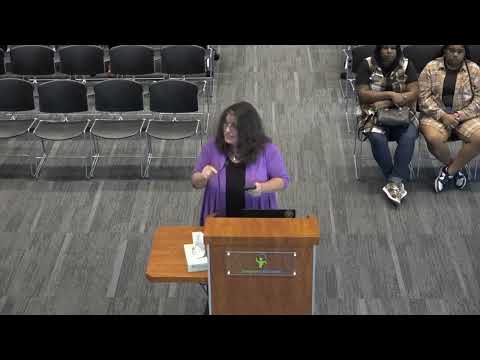
Diane Morris, the district secondary math TOSA, told the board that the district reviewed three low‑ or no‑cost, College Board‑approved resources for AP Precalculus and recommended an online AP‑aligned resource that mirrors the College Board unit structure. Morris said the recommended online option carries a per‑teacher subscription cost of $225 per year and that the committee recommended a free supplemental print‑format resource, "Precalculus and Investigation of Functions," for student access.
"Each of those three options ... are preapproved by the College Board for use in AP precalculus," Morris said in her presentation. The board voted to advance the materials to a second reading after a motion by Director Perkins and a second by Director Bocanegra.
Crystal Wolf, district science TOSA, presented a separate review for high school physics. The district’s review team compared three curricula and recommended Patterns Physics, an open educational resource the team said aligned to the district’s three‑year high school science sequence and emphasized phenomena‑based units and science practices.
Wolf described implementation costs for physics training and lab equipment but told the board the first‑year net cost of adopting the open resource would be about $5,000 and that ongoing costs would be lower than the district’s current per‑student textbook expense. "While the OER itself is free, with implementation there's always a requirement to train our teachers," Wolf said. The board voted to move the physics adoption to a second reading after a motion by Director Bocanegra and a second by Director Perkins.
What the board voted
- Motion to advance AP Precalculus instructional materials to second reading (mover: Director Perkins; seconder: Director Bocanegra). Outcome: advanced to second reading. - Motion to advance Physics 1–2 curriculum adoption to second reading (mover: Director Bocanegra; seconder: Director Perkins). Outcome: advanced to second reading.
Why it matters
Both proposals reflect the district's effort to adopt materials that align with course rigor and state standards while minimizing cost. The AP Precalculus recommendation seeks College Board alignment to allow students the opportunity to earn college credit, while the physics recommendation is part of a district‑wide effort to standardize a three‑year high school science progression (foundational 9th‑grade science, biology in 10th, chemistry in 11th) and to emphasize science practices and phenomena.
Speakers and presenters
- Diane Morris — Secondary math TOSA (presenter on AP precalculus) - Crystal Wolf — District science TOSA (presenter on physics) - Director Perkins — Board director (mover for AP precalculus advancement) - Director Bocanegra — Board director (seconder for AP precalculus; mover for physics advancement)
Authorities
[{"type":"policy","name":"Procedure 2020 (EPS curricular resource selection)","referenced_by":["AP precalculus adoption","Physics adoption"]},{"type":"other","name":"College Board AP course audit requirement (textbook or named resource for AP courses)","referenced_by":["AP precalculus adoption"]},{"type":"other","name":"Oregon instructional materials criteria (used as guidance)","referenced_by":["AP precalculus adoption","Physics adoption"]}]
Actions
[{"kind":"other","identifiers":{},"motion":"Advance AP Precalculus instructional materials to second reading as presented","mover":"Director Perkins","second":"Director Bocanegra","vote_record":[],"tally":{},"legal_threshold":{},"outcome":"approved","notes":"Motion carried by voice vote; 'Aye' recorded; second reading scheduled."},{"kind":"other","identifiers":{},"motion":"Move Physics 1–2 curriculum adoption to second reading","mover":"Director Bocanegra","second":"Director Perkins","vote_record":[],"tally":{},"legal_threshold":{},"outcome":"approved","notes":"Motion carried by voice vote; 'Aye' recorded; second reading scheduled."}]
Discussion_decision
- Discussion: Curriculum committees used Procedure 2020 and external criteria to review resources; AP Precalculus options were preapproved by College Board; physics reviewers prioritized phenomena‑based OERs and implementation training needs. - Directions: Both items were advanced to second reading for board approval at a future meeting. - Decisions: No final adoption vote occurred; the board advanced both items to second reading.
Clarifying_details
- AP Precalculus: recommended online AP‑aligned resource costs $225 per teacher per year; district has seven teachers in the precalculus program this year (source: Diane Morris). - Supplemental AP resource: committee recommended the free PDF "Precalculus and Investigation of Functions" as a student‑facing print/supplemental option (source: Diane Morris). - Physics: review team recommended Patterns Physics (OER); first‑year net implementation cost estimated at approximately $5,000, with longer‑term savings compared with current textbook costs (source: Crystal Wolf).
Proper_names
[{"name":"Precalculus and Investigation of Functions","type":"other"},{"name":"Patterns Physics","type":"other"},{"name":"College Board","type":"other"},{"name":"Open SciEd","type":"other"}]
Community_relevance
- Geographies: districtwide high school curriculum. - Funding_sources: district general fund / implementation training budget (discussed generally; no new appropriation approved at meeting). - Impact_groups: high school students enrolled in AP Precalculus and physics courses, high school teachers.
Meeting_context
- Engagement_level: Moderate — presentations from two content specialists followed by board motions; no public controversy at the time of adoption votes. - Implementation_risk: Low to medium — contingent on teacher training and lab equipment procurement for physics. - History: District began a multi‑year review of high‑school science sequencing in 2022 and identified alignment needs for physics and other courses.
Searchable_tags
["curriculum","AP-Precalculus","physics","Patterns-Physics","open-educational-resources","Procedure-2020"]
provenance
{"transcript_segments":[{"block_id":"5137.205","local_start":0,"local_end":220,"evidence_excerpt":"Tonight, we're here to present the proposed adoption of core instructional materials for our high school AP precalculus and physics courses.","global_start":5137,"global_end":5199,"tc_start":"01:25:37","tc_end":"01:26:39","reason_code":"topicintro"},{"block_id":"6427.995","local_start":0,"local_end":80,"evidence_excerpt":"I move that we, move the Physics 1 2 curriculum adoption to a second reading.","global_start":6427,"global_end":6447,"tc_start":"01:47:07","tc_end":"01:47:27","reason_code":"topicfinish"}]},