Get Full Government Meeting Transcripts, Videos, & Alerts Forever!
Get email alerts on the Sponsorship And Event Funding topic
No spam. Unsubscribe anytime.
Stonecrest film commission considers $15,000 sponsorship service, debates control of $40,000–$50,000 in city funds
Summary
At a special-call meeting, the Stonecrest Film and Entertainment Commission discussed hiring a private sponsorship firm to help raise corporate and nonprofit support, debated who controls roughly $40,000–$50,000 in city-allocated funds, and agreed to draft a calendar of events to guide future spending and sponsorship outreach.
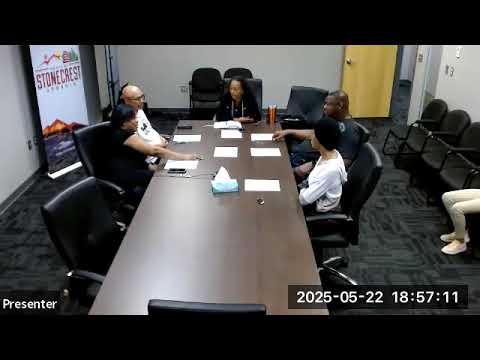
Acting chair (name not stated) opened a special-call meeting of the Stonecrest Film and Entertainment Commission to discuss funding and programming options, including a proposal to contract with a private sponsorship firm.
The commission discussed a proposal from a firm the group referred to as the Sponsorship Collective that offers 365 days of coaching and fundraising support. Acting chair said the commission had been quoted $15,000 for a 12‑month engagement and about $11,000 for six months, and that the service would provide templates, weekly coaching calls, one‑on‑one support and document review to help the commission target local and national sponsors. "12 months is $15,000," the acting chair said.
The discussion tied the sponsorship proposal to roughly $40,000–$50,000 in city-allocated funds the commission believes it may be able to access. A commissioner said those city funds appear to be divided into three categories and are not currently accessible without a city official to request or release them. Commission members raised repeated questions about what account the money would be deposited into and who would control expenditures. One participant summarized the commission's immediate need plainly: "We need money." (speaker listed as Commissioner, name not stated.)
Members voiced two consistent priorities: create a calendar of events that the commission will own and execute, and prioritize directing funds to local creatives. Commissioner Berta Watson (identified in the roll call and referenced in discussion) noted a recent local production and argued the commission should find ways to pay local participants and fund community projects if line-item control were available. Another commissioner said that even without new sponsorship revenue, the commission could be visibly active across a 12‑month cycle using the existing city allotment if the commission can clarify spending rules.
The group discussed specific services the Sponsorship Collective would provide if retained: sponsorship sales support, a cloud-based evaluation calculator, a private community for members, and strategic review of draft sponsorship agreements so the commission could, for example, negotiate better language or higher fees. The presenting member emphasized that the Collective would not produce events but would coach the commission on how to package and sell sponsorships; the commission would remain the event organizer.
Members also raised process and oversight issues. Several said the city altered the commission's original budget line item after leadership changes and that previous control of a dedicated line had shifted to other projects. A member identified "Rob" (role not stated) as someone who currently has access to a relevant line item and recommended clarifying that relationship. The commission agreed it must review city rules and any existing line-item restrictions before committing funds to an outside consultant.
For near-term next steps, the acting chair said she would email the Sponsorship Collective materials to commissioners and requested that all commissioners propose events for a shared calendar by email so the group can prioritize which activities to fund and which to pursue through outside sponsorships. There was no motion or vote to engage the Sponsorship Collective or to spend commission funds on the service during the meeting.
The group also discussed upcoming local events and coordination with other city departments, including a referenced May 30 community event sometimes called "Stonecrest Day," and the city communications and parks departments' roles in promotion and permitting. Members flagged workforce development as a possible non‑budget route for city support of local film projects and student participation.
The meeting concluded with agreement to compile a calendar of proposed commission‑owned events, circulate the Sponsorship Collective proposal, and return these items for further discussion at the commission's next meeting. A procedural motion to approve the meeting agenda and a later motion to adjourn were both approved during the session.