Get Full Government Meeting Transcripts, Videos, & Alerts Forever!
Get email alerts on the Parking Management topic
No spam. Unsubscribe anytime.
Consultant says paid parking could be viable for downtown Opa-locka; study recommends $1 hourly rate, residential permits
Summary
A consultant presented a limited feasibility study that found roughly 77% occupancy in targeted blocks and recommended a $1-per-hour on-street rate (four-hour max) with a residential-permit option; city commissioners asked staff to review the findings and consider recommendations before any policy decision.
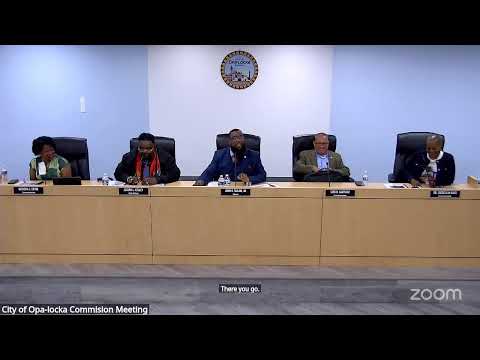
A consultant presenting a feasibility study to the City of Opa-locka commission on May 28 said a paid on‑street parking program could be viable in several blocks identified in the city’s request for proposals.
Donald Jones, vice president of SP Plus, told the commission the study sampled vehicle counts on eight sections of street at 11 a.m., 3 p.m. and 8 p.m. across four dates in March and April and found the identified sections were about 77% occupied during the counts.
The consultant recommended a $1 per hour rate with a four‑hour maximum for on‑street paid parking and a residential permit program for blocks that are primarily homes. Jones also said installing pay stations would add capital cost — he cited an estimate of roughly $72,000 to install traditional pay stations — and that many municipalities are moving to mobile payment platforms.
Vice Mayor Audrey Kelly, who led commission discussion after the presentation, emphasized the study was informational and said the city would not move to place meters in residential blocks without deliberation. "Nobody's trying to put parking meters in residential areas on this street or that street, so don't send the wrong message out," Kelly said.
Kelly and other commissioners said the study gives the commission data to consider where metered or permit parking might be appropriate, particularly in commercial corridors with development pressure. The commission did not vote on any ordinance or program after the presentation; staff was asked to review the consultant's findings, coordinate with the city manager and return recommendations for possible next steps.
Background: The study came from an RFP the commission authorized. Jones said the work was limited to the sections specified in the RFP and is not a city policy decision on its own.
The presentation and the questions that followed made clear the study was preliminary: the consultant said feasibility depended on which blocks the commission ultimately chose to include and how the city wanted to deploy enforcement, permits and technology.