
MAC executive urges county attention to trial court funding, revenue sharing and road plans
Get AI-powered insights, summaries, and transcripts
Sign Up Free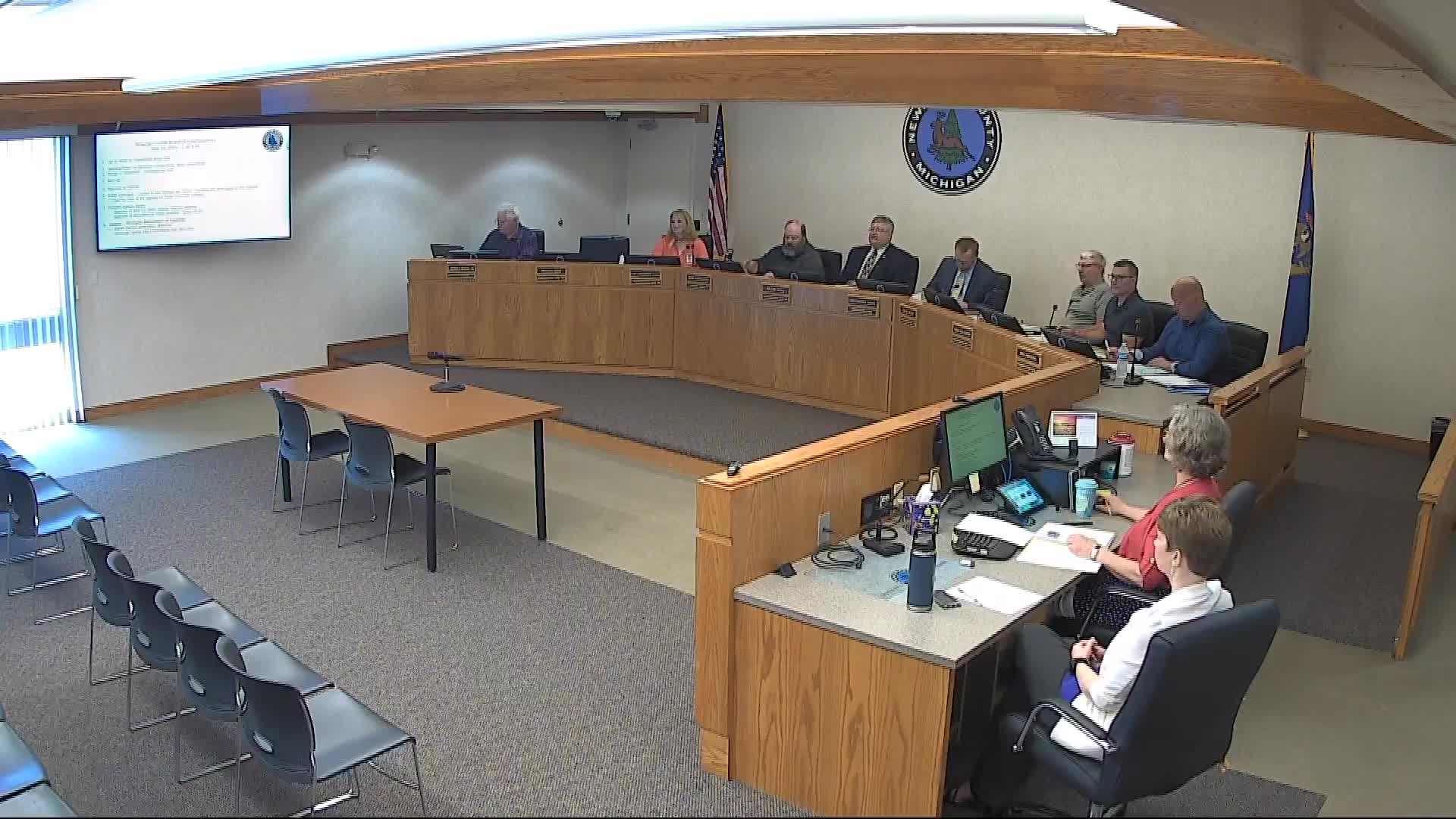
Summary
Steve Curry, executive director of the Michigan Association of Counties, briefed Newaygo County commissioners on MAC priorities including trial court funding work groups, revenue-sharing proposals, public-safety trust funding, and a house Republican road-funding plan that would replace some sales-tax revenue with a gas-tax mechanism.
Steve Curry, executive director of the Michigan Association of Counties, told the Newaygo County Board of Commissioners on May 14 that MAC is focused on several state-level policy areas affecting county budgets and services.
The most immediate issues, Curry said, include work groups updating trial-court funding recommendations and a potential sunset of fee authority in 2026 that could cost counties an estimated $30 million statewide if not extended or replaced. He said MAC has representation on the court-funding work groups and will continue advocacy in Lansing.
On revenue sharing and the state budget, Curry said the governor recommended a 3.6% base increase while the state senate passed a plan with a 10% increase; MAC supports the larger increase and is monitoring differing distribution models. He also described competing proposals for a public-safety trust fund and noted the governor and senate offered different funding levels and county eligibility rules.
Curry described a house Republican road plan that would repeal the sales tax on gasoline and replace it with a revenue-neutral gas tax dedicated to roads; he said the plan would increase local road funding by roughly 8–10% for many counties. He noted the long-term fiscal questions about vehicle-miles-traveled (VMT) fees and pilot studies that several states have tested.
Other priorities Curry raised included the reentry Medicaid waiver for pre-conviction detainees, reimbursement for the 2021 small-business personal property tax exemption changes (reimbursed to local governments in 2024), veteran service grant shortfall legislation, and concerns about a proposed minimum-staffing rule for local public-safety employees.
Why this matters: State-level decisions on revenue sharing, court funding, road funding, and health/justice programs materially affect county budgets and service capacity. County officials thanked Curry for the briefing and asked questions about specific items, including lake-level policy and gas-tax proposals.
Ending: Curry invited commissioners to MAC policy committees and upcoming conferences; the board received the presentation with no formal action required.