Get Full Government Meeting Transcripts, Videos, & Alerts Forever!
Get email alerts on the Municipal Finance topic
No spam. Unsubscribe anytime.
Commissioners weigh federal bond tax threat and state recordation tax momentum; plan letter to lawmakers
Summary
At a May 2025 work session Commissioner Blake warned that proposed federal changes to the tax treatment of municipal bond interest could raise local borrowing costs and urged the commission to send a letter to congressional delegation; commission also heard an update on a state recordation tax estimate.
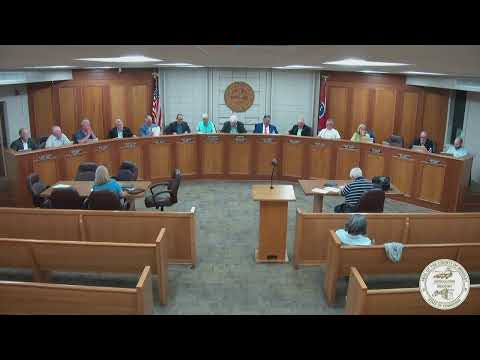
Commissioner Blake told the Bradley County Commission at a May 2025 work session that proposals in Washington, D.C., to limit or remove the federal tax exemption on municipal bond interest could raise local borrowing costs and hurt the county’s ability to finance schools, roads and emergency services.
“If this happens, the financial burden shifts to us,” Blake said, warning that investors would demand higher interest rates if they no longer received a federal tax exemption on bond interest. He presented a county example based on the county’s previous Price Center borrowing, saying an $18 million issuance paid about $5.4 million in interest under the current tax treatment but would pay an estimated $8.1 million if interest rates rose 1.5 percentage points — an increase he described as about $2.7 million over the life of the bonds.
Blake urged the commission to send a formal letter to the county’s federal delegation to explain the local impact; he said he would work with county staff (Lori) to draft the letter and requested it be placed on the agenda for the next voting session. Commissioner Gilbert later clarified the request: the letter would ask federal lawmakers to preserve the municipal bond interest exemption because removing it would raise borrowing costs for local infrastructure projects.
During the finance report, Blake also summarized items from a recent County Commissioners Association conference, including a state recordation tax measure discussed at the meeting. He said the recordation tax legislation passed but “didn’t get funded” in the budget yet and that local advocates estimate the county could see about $750,000 annually if the change is implemented and funded.
County staff and commissioners noted timing considerations for borrowing: officials said bond market capacity and existing payoff schedules make 2027 a likely window for new borrowing tied to larger facility projects, and that the finance committee will review the mayor’s budget proposal in early June. Commissioners did not take a formal vote on a letter at the work session but directed staff to prepare a draft for the next voting meeting.
No federal statute or specific bill number was cited in the meeting record; Blake referenced broad discussions in Congress and urged commissioners to inform federal representatives of local consequences.