Get Full Government Meeting Transcripts, Videos, & Alerts Forever!
Get email alerts on the District Funding Model topic
No spam. Unsubscribe anytime.
City manager proposes new district priority and events funding model to increase transparency and equity
Summary
City Manager Ramon Neff proposed a three‑fund model to structure district priority funding, discretionary district allocations, and city support matching for third‑party events and major signature events; staff said the approach is intended to reduce ad‑hoc spending and improve oversight and reporting.
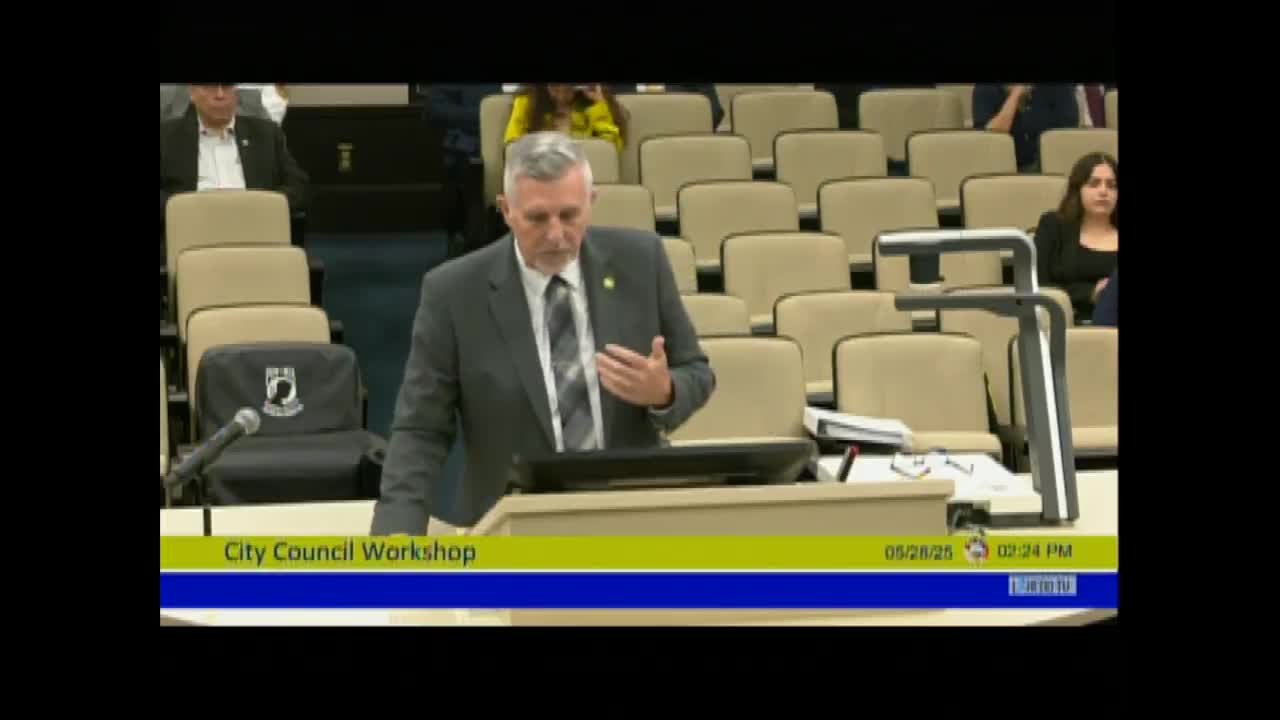
City Manager Ramon Neff presented a proposed restructuring of council district priority funding and third‑party event subsidies at the March 28 pre‑budget workshop, saying the objective is to increase transparency, ensure equity across districts and centralize support for large events.
Neff proposed a three‑fund model: 1) district CIP funds (for physical infrastructure projects tied to engineering review and public purpose), capped in his proposal at $150,000 per district per borrowing cycle; 2) district discretionary funds (DDF), a recurring smaller allocation intended for neighborhood outreach, supplies, noncapital beautification and non‑profit support—Neff proposed increasing the existing per‑district discretionary level to $20,000 and raising mayoral discretionary to $30,000; and 3) a city support matching fund and a major events/partnership fund (he proposed a $500,000 pot for third‑party support and $1.2M for signature events), which would be used for larger festivals, parades or major athletics or cultural events and would require performance contracts and reporting.
Neff said the model borrows elements used by larger cities such as San Antonio but adapts them to Laredo’s finances: smaller district projects remain funded from bonds/CIP when the city borrows, while routine discretionary spending and event subsidies are moved into the new DDF and partnership funds so those outlays are visible and budgeted. “That way you have the… structure in your hands in order to get there. So I was saying district discretionary funds at $20,000 per district,” Neff told council.
He told council that the city will require applications, documentation and post‑activity reporting so funds can be evaluated for public benefit and to reduce unbudgeted departmental absorption of event costs. Neff also told council that the city manager’s office would coordinate and verify compliance rather than leave departments to absorb unexpected costs.
Council members asked for more time to consider the proposed caps and the scope of reimbursable activities. Several members said projects such as paving, stormwater and sidewalks can be more expensive than $150,000 and requested flexibility and an option to sweep older district CIP balances toward priority street work. Neff acknowledged the district CIP cap ties to borrowing: if the city borrows less in a given year, less money will flow to the DDF/CIP pool. He proposed council submit annual plans for how they would use their DDF and CIP allocations during the budget process.
Neff said the objective is not to remove council discretion, but to systematize it and to avoid ad‑hoc or off‑books spending and to provide public tracking of where funds are spent. Staff will draft policy language and a proposed resolution for council consideration.